A phone call from a famous film director sounds like a career-making moment for any aspiring actor. In Kolkata, that call was allegedly fake. According to The Times of India, scammers used an AI-cloned voice resembling a prominent Bengali filmmaker to take ₹2.07 lakh from a hopeful actor, and the Raj Chakraborty AI voice scam is now a warning for anyone who answers casting offers online.
Key facts
- The Times of India reported on November 2, 2026, that scammers allegedly used an AI-cloned voice resembling a prominent Bengali filmmaker to defraud an aspiring actor of ₹207,000 (₹2.07 lakh).
- Bengali-language outlets Sangbad Pratidin and Hindustan Times Bangla identify director Raj Chakraborty as the person being impersonated, and the victim as Shubhajit Ghosh Dastidar of Kolkata's Bansdroni area.
- The victim was reportedly asked to pay ₹30,000 for enrollment, ₹92,000 for a profile shoot and ₹85,000 to finalize an agreement for a role in a historical film.
- Regional reporting says an FIR was registered at Bansdroni police station, and the perpetrators have not been identified or convicted in the cited reports.
What Happened in the Raj Chakraborty AI Voice Scam
The case, as reported by The Times of India and Bengali-language outlets, follows a pattern that investigators see often in entertainment fraud. A casting offer appeared online, a convincing authority figure joined the conversation, and the money requests arrived one at a time.
The fake casting advertisement
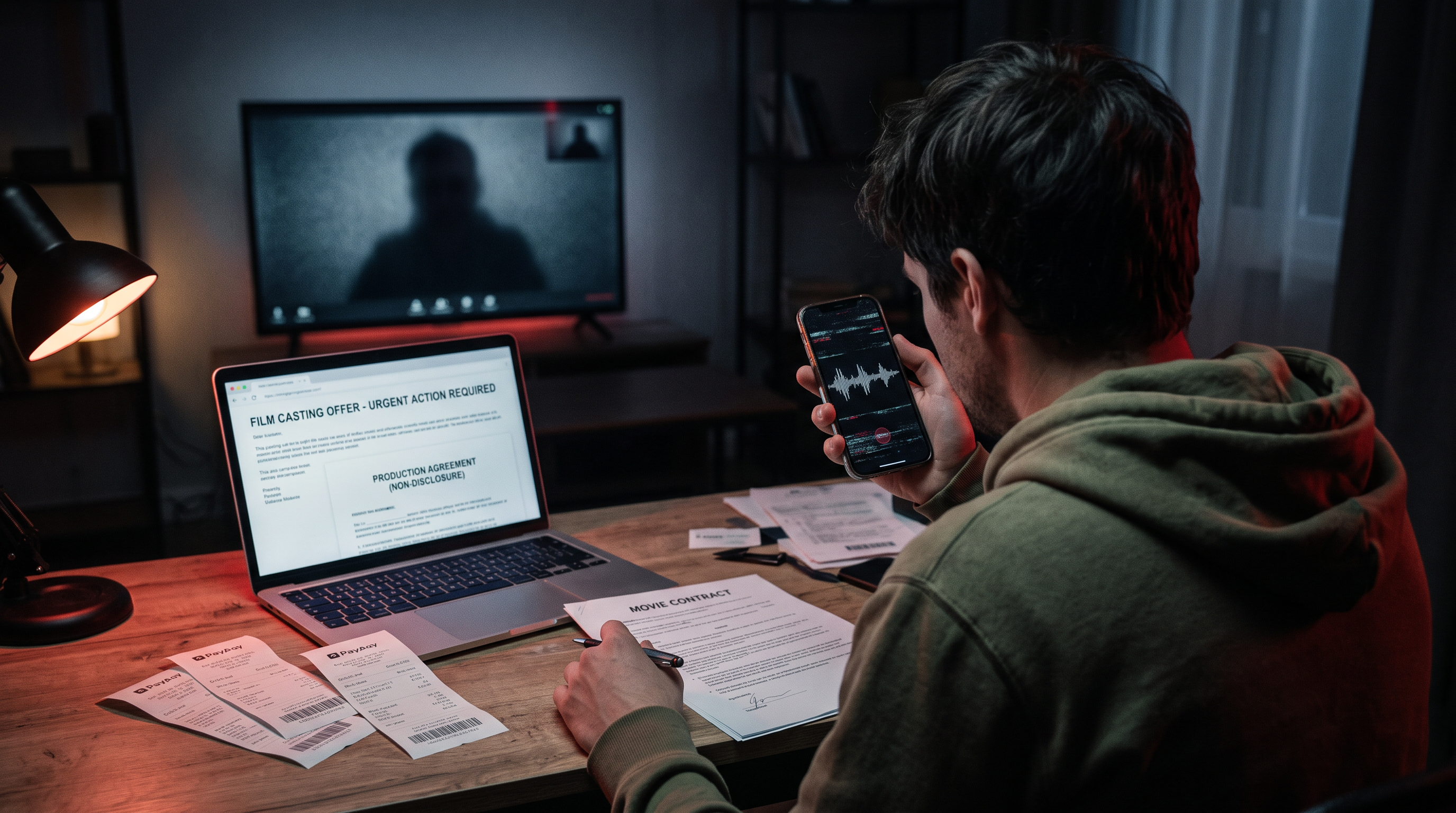
The victim reportedly responded to an online casting advertisement promising a part in a historical film. Sangbad Pratidin reports that he came to believe he was in touch with the production team of a well-known director.
To strengthen that belief, the perpetrators allegedly imitated the director's voice. They also reportedly supplied forged production-house documents and agreements that made the project look legitimate.
The three payment demands
According to the reporting, the scammers did not ask for everything upfront. They allegedly split the demand into three stages, each tied to a plausible step in the casting process:
- ₹30,000 for enrollment.
- ₹92,000 for a profile shoot.
- ₹85,000 to finalize the agreement.
Together these payments add up to ₹2.07 lakh. After the final payment, communications reportedly stopped, and the film role did not exist.
Is Raj Chakraborty Accused of Anything?
No. The reporting is clear that Chakraborty is not accused of wrongdoing. His name and voice were allegedly used as bait, which makes him part of the story as an impersonation target, not as a suspect.
It is also worth noting a difference between outlets. Sangbad Pratidin and Hindustan Times Bangla name Chakraborty as the director being impersonated. The Times of India article does not name him. Readers should treat the identification as coming from the Bengali-language reports.
What Police and Reports Say So Far
The victim reportedly submitted transaction records, phone numbers and documents to police. Regional coverage says an FIR was registered at Bansdroni police station. Jagran also reported on the case and said AI voice use was suspected.
That wording matters. Police suspicion of AI voice cloning is not proof of the exact technology used. A skilled impersonator, a recording, or a mix of methods could also explain a convincing call. The people behind the scheme have not been identified in the cited reporting, and no one has been convicted.
How AI Voice Cloning Scams Work
Voice cloning tools can build a synthetic copy of a person's speech from audio samples. Public figures such as directors, actors and politicians are easy targets because interviews, film promotions and social media clips are widely available online.
Fraudsters typically combine the cloned voice with other props. These can include fake letterheads, branded agreements, official-looking email addresses and staged video or chat conversations. The goal is to remove doubt before the victim thinks to verify anything.
Why the staged payments work
Splitting a demand into smaller fees makes each payment feel reasonable. Once a person has paid the first fee, they are more likely to pay the second to avoid losing what they already spent. This is a common feature of advance-fee fraud, and it appears in this case as described by the press.
Warning Signs of a Fake Casting Call
Genuine productions rarely charge actors to be considered for a role. The following red flags appeared in this case or are common in similar schemes:
- Fees for enrollment, registration, portfolios or profile shoots before any contract is signed.
- Contact only through phone numbers or messaging apps, with no verifiable office or production address.
- A famous name or voice that appears quickly, with no way to confirm it independently.
- Agreements that arrive as unsigned or poorly checked files and come with pressure to pay fast.
- Sudden silence once the final payment lands.
Casting-related fraud is not limited to India. A similar pattern appeared in the Patagonia casting scam in Korea, where fake casting offers were used to lure targets.
How to Protect Yourself From AI Voice Scams
A familiar voice is no longer reliable proof of identity. Cloned audio has also been used in advertising fraud, as seen in the Lee Ji Hye fake AI ad case, and in investment schemes, including one covered in our report on an Elon Musk deepfake scam arrest.
Before sending money to anyone offering work, take these steps:
- Contact the production company through its official website or verified social media accounts, not the number you were given.
- Ask for a call back from a number you can confirm, and be cautious if the caller refuses.
- Never pay fees for auditions, enrollment or shoots arranged by an unknown party.
- Ask a trusted friend or industry contact to review any agreement before you sign.
- Save chat logs, call records, bank receipts and documents in case you need to report the matter.
What to Do If You Were Targeted
Contact your bank right away and ask whether the transfer can be flagged or reversed. In India, victims can report financial cyber fraud through the national helpline 1930 and file a complaint with local police, as the Kolkata victim reportedly did. Readers in the United States can report fraud to the FTC and the FBI Internet Crime Complaint Center.
Early reporting helps investigators trace phone numbers and bank accounts. It also helps authorities spot repeat patterns across cases.
Where to Read the Original Reports
The core facts come from The Times of India. Additional details, including the name of the director being impersonated, appear in Sangbad Pratidin and Hindustan Times Bangla.
Conclusion: Verify Before You Pay
The Raj Chakraborty AI voice scam, as reported, shows how little it takes to make a fake offer feel real. A convincing voice, forged paperwork and three modest-looking fees allegedly added up to a loss of ₹2.07 lakh. The investigation is ongoing, and the allegations have not been tested in court.
If you work in or hope to enter film, make verification a habit. Check every casting offer through official channels, refuse upfront fees, and share this story with anyone chasing a big break online. If you have seen a similar scheme, report it to the authorities and to Blacklist so others can stay alert.
Frequently Asked Questions
What is the Raj Chakraborty AI voice scam?
It is an alleged fraud in which scammers used a voice resembling Bengali director Raj Chakraborty to convince an aspiring actor he had a film role. According to The Times of India, the victim paid ₹2.07 lakh in three stages. Chakraborty is not accused of any wrongdoing.
How much money did the Kolkata actor lose?
Reports say the victim lost ₹207,000, or ₹2.07 lakh. The payments were allegedly ₹30,000 for enrollment, ₹92,000 for a profile shoot and ₹85,000 to finalize an agreement. Communications reportedly stopped after the final payment.
Was AI really used to clone the director's voice?
Police reportedly suspect AI voice cloning, but that is not confirmed proof of the exact technology used. The perpetrators have not been identified in the cited reporting. Investigators would need to examine the audio and phone records to establish how the voice was produced.
How can I tell if a casting call is fake?
Be wary of any casting offer that asks for enrollment, shoot or agreement fees before a signed contract. Verify the production house through its official website or verified accounts, and call back on a number you confirmed yourself. A famous voice on the phone is not proof of identity.
Where can I report an online casting scam?
In India, you can call the national cyber fraud helpline 1930 and file a complaint with your local police station. In the United States, you can report to the FTC at reportfraud.ftc.gov or the FBI IC3 at ic3.gov. Keep transaction records, phone numbers and documents ready.