A job offer that looked routine may have opened the door to one of the largest cryptocurrency thefts ever reported. On November 3, 2026, Binance disclosed how attackers allegedly used a fake recruiter, staged interviews, and a booby-trapped coding task to get inside the exchange. The Binance fake job interview heist reportedly totals about $6.3 billion, not $6.3 million.
Key facts
- Binance disclosed on November 3, 2026 that a breach dated October 29 led to a reported theft of roughly $6.3 billion, according to Bloomberg and other reporting.
- The attackers reportedly approached a Binance software engineer through a legitimate job-search platform while posing as recruiters for a fictitious company.
- Binance attributed the operation to North Korean hackers, although the reporting cited here does not name individual perpetrators.
- Reports say about $2.85 billion in affected assets was frozen or intercepted and that Binance replenished most affected funds, though those figures have not been independently verified.
How the Binance Fake Job Interview Heist Allegedly Began
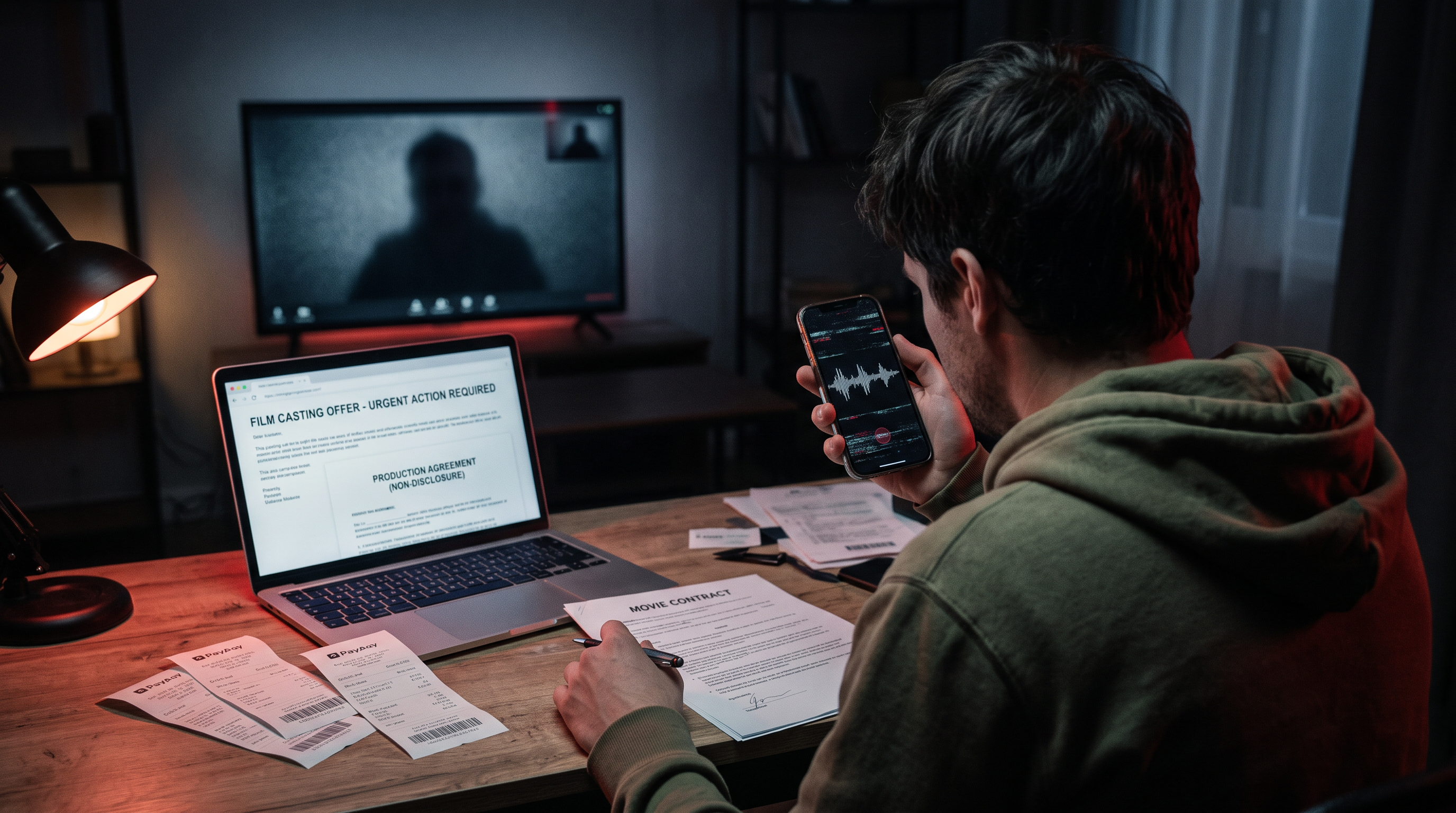
According to Bloomberg, the intrusion started with a simple message. Attackers contacted a Binance software engineer on a genuine job-search platform. They presented themselves as recruitment staff at a company that did not exist.
The engineer was then reportedly taken through fake interviews. These steps made the process feel like a normal hiring pipeline, which is exactly what social engineers want. A believable process lowers a target's guard.
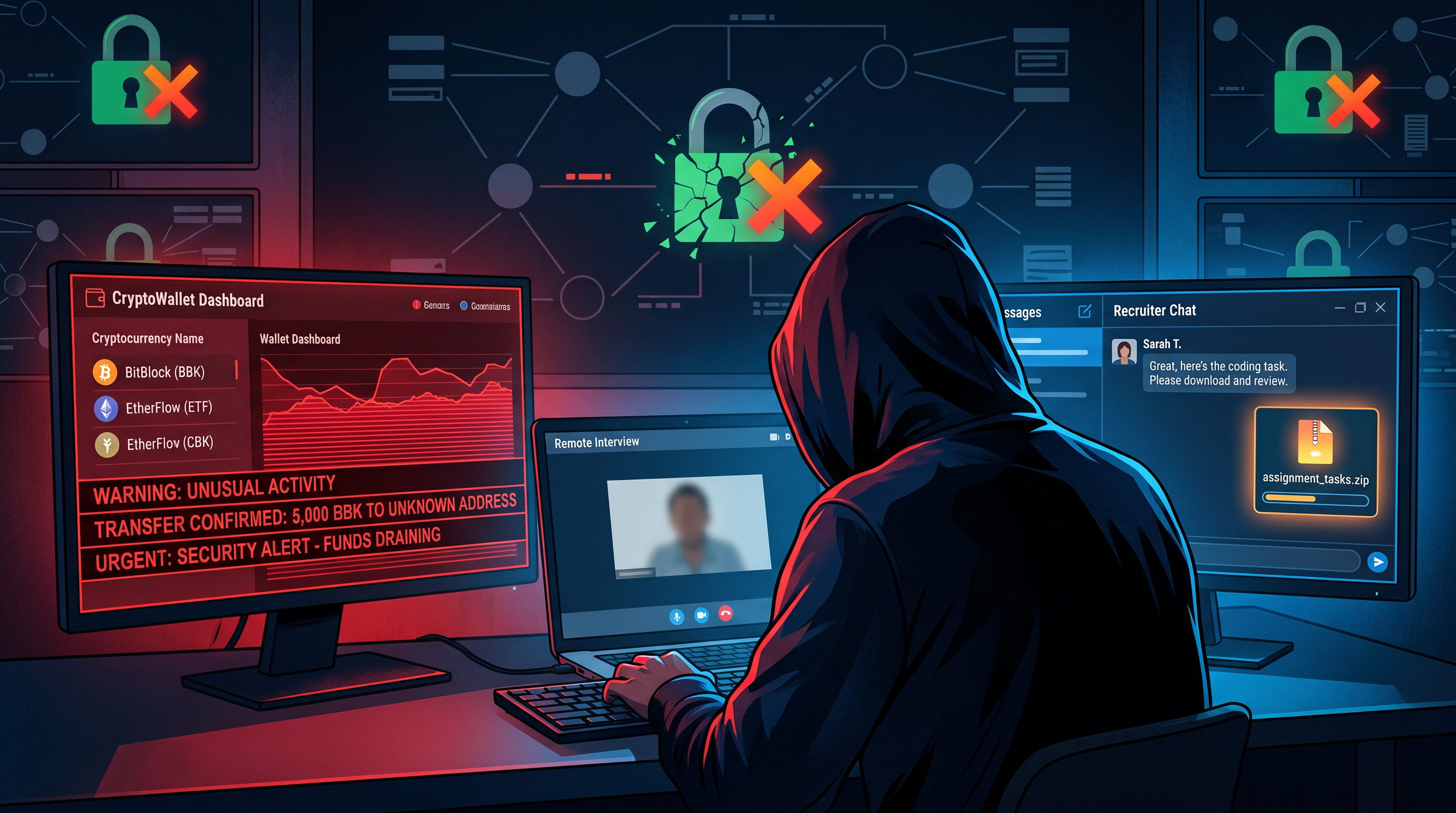
At the end came a coding assignment. Reporting says the assignment was malicious and persuaded the engineer to install compromised software. Tom's Hardware reported that the attackers used adulterated software and social engineering, with a malicious Homebrew download part of the story.
Why a Coding Test Alone Did Not Move Billions
It would be wrong to say one coding test sent billions of dollars out the door. The reporting describes a wider, multi-stage intrusion. The fake interview was reportedly the entry point, not the whole operation.
Once attackers had a foothold on the engineer's machine, they allegedly moved deeper. The intrusion reportedly reached internal systems and cryptocurrency wallet infrastructure. That progression is typical of advanced attacks, where an early compromise is used to climb toward more valuable targets.
The reported sequence looks like this:
- Contact through a legitimate job-search platform by fake recruiters.
- Staged interviews that built trust.
- A malicious coding assignment that led to compromised software on the engineer's device.
- A multi-stage intrusion into internal systems and wallet infrastructure.
- The reported theft of about $6.3 billion on October 29.
North Korean Hackers Blamed by Binance
Binance attributed the operation to North Korean hackers. The cited reporting does not identify individual perpetrators, and attribution of this kind usually rests on technical indicators and past behavior rather than named suspects. Readers should treat the attribution as Binance's claim, as relayed by the press.
TechCrunch reported that researchers had warned about North Korean hacking tactics years before the record heist. That suggests the fake recruiter approach was not new to the security community. The tactic appears to have been documented well before this incident.
North Korean activity has also surfaced in other fraud contexts. Our earlier coverage of a North Korean remote IT worker conspiracy shows how hiring channels can be exploited from both directions, by fake employers and by fake employees.
What We Know About Recovery and Losses
Reports say roughly $2.85 billion in affected assets was frozen or intercepted. They also say Binance replenished most affected funds. These points come from Binance's account and the reporting built on it.
It is important to separate those claims from independently verified recovery figures. The research behind this story does not confirm that outside parties have audited the frozen amount or the replenishment. Until that happens, the numbers should be read as reported, not proven.
Here is how the reported figures stack up:
- Reported theft: about $6.3 billion.
- Reported frozen or intercepted: about $2.85 billion.
- Reported replenishment: most affected funds, according to reports.
Binance is the victim in this case. It is not accused of fraud. The people behind the intrusion, if the attribution holds, are the ones alleged to have committed the crime.
Why a Fake Recruiter Scam Works So Well
Recruitment scams exploit a normal and emotional process. Job seekers expect messages from strangers, expect to complete tests, and expect to install tools. A skilled engineer is used to cloning repositories and running unfamiliar code as part of the job.
That is what makes the Binance fake job interview heist so striking. The attack did not need a flashy exploit at the start. It reportedly needed a convincing recruiter and a task that looked like ordinary work.
Impersonation is the common thread in many modern scams. We have seen it in an AI voice scam involving Raj Chakraborty, where a trusted voice was used to deceive a target. The medium changes, but the playbook of borrowed trust stays the same.
Warning signs of a fake job interview
- A recruiter from a company with a thin online footprint and no verifiable staff.
- Pressure to complete a coding task quickly on your own work machine.
- Instructions to install unfamiliar software, scripts, or packages to run the test.
- Requests to move the conversation off the original platform.
- Offers that seem unusually generous for little vetting.
Steps engineers and companies can take
- Run coding assignments only inside an isolated virtual machine or disposable environment, never on a device with access to company systems.
- Verify the recruiter and the company through independent channels before sharing any files.
- Keep personal job hunting separate from work devices and credentials.
- Train staff on social engineering, with specific examples of fake recruitment lures.
- Limit what any single employee device can reach, so one compromise cannot cascade.
What This Means for Crypto Users
Exchange breaches matter to ordinary users because custody is concentrated. When attackers reach wallet infrastructure, the size of the loss can reach into the billions. Reports say Binance replenished most affected funds, which, if accurate, would limit direct harm to customers, but readers should wait for independent confirmation.
Crypto crime also continues beyond hacks. Prosecutors pursue investment fraud across borders, as seen in the case of an extradited crypto scam suspect, Zheng Zhao. Users should stay alert to phishing, fake support staff, and impersonation of known figures.
If you think you have been targeted by a scam, report it. In the United States, you can file a report with the FTC or the FBI Internet Crime Complaint Center. For technical detail on this incident, see BleepingComputer's coverage and the original Bloomberg report.
The Bottom Line
The reported $6.3 billion theft shows that even a major exchange can be breached through one person and one convincing story. A fake recruiter, staged interviews, and a malicious assignment were reportedly the first steps in a longer intrusion. Many details, including recovery figures, still rest on Binance's account and have not been independently verified.
Treat every unsolicited job offer with the same caution you would give a request for your password. Verify the employer, isolate any test code, and report suspicious approaches. Share this story with anyone in tech or crypto who is job hunting, because the next lure may look just as ordinary.
Frequently Asked Questions
How did the Binance fake job interview heist happen?
According to Bloomberg and other reporting, attackers contacted a Binance software engineer on a legitimate job-search platform while posing as recruiters for a fictitious company. After fake interviews, a malicious coding assignment reportedly led the engineer to install compromised software. That became the foothold for a wider, multi-stage intrusion.
How much was stolen from Binance?
The reported loss is roughly $6.3 billion, not $6.3 million. Reports say about $2.85 billion in affected assets was frozen or intercepted and that Binance replenished most affected funds. Those recovery figures have not been independently verified.
Who does Binance blame for the attack?
Binance attributed the operation to North Korean hackers. The reporting cited does not identify any individual perpetrators. The attribution is Binance's claim as relayed by the press.
Did one coding test cause the whole Binance breach?
No. The coding assignment was reportedly one step in a more complex compromise. Attackers allegedly used that foothold to reach internal systems and cryptocurrency wallet infrastructure.
How can I spot a fake job interview scam?
Warning signs include a recruiter from a company you cannot verify, pressure to run a coding test quickly, and requests to install unfamiliar software. Verify the employer independently and run any test code in an isolated environment, not on a work device. If you are targeted, report it to the FTC or the FBI's IC3.