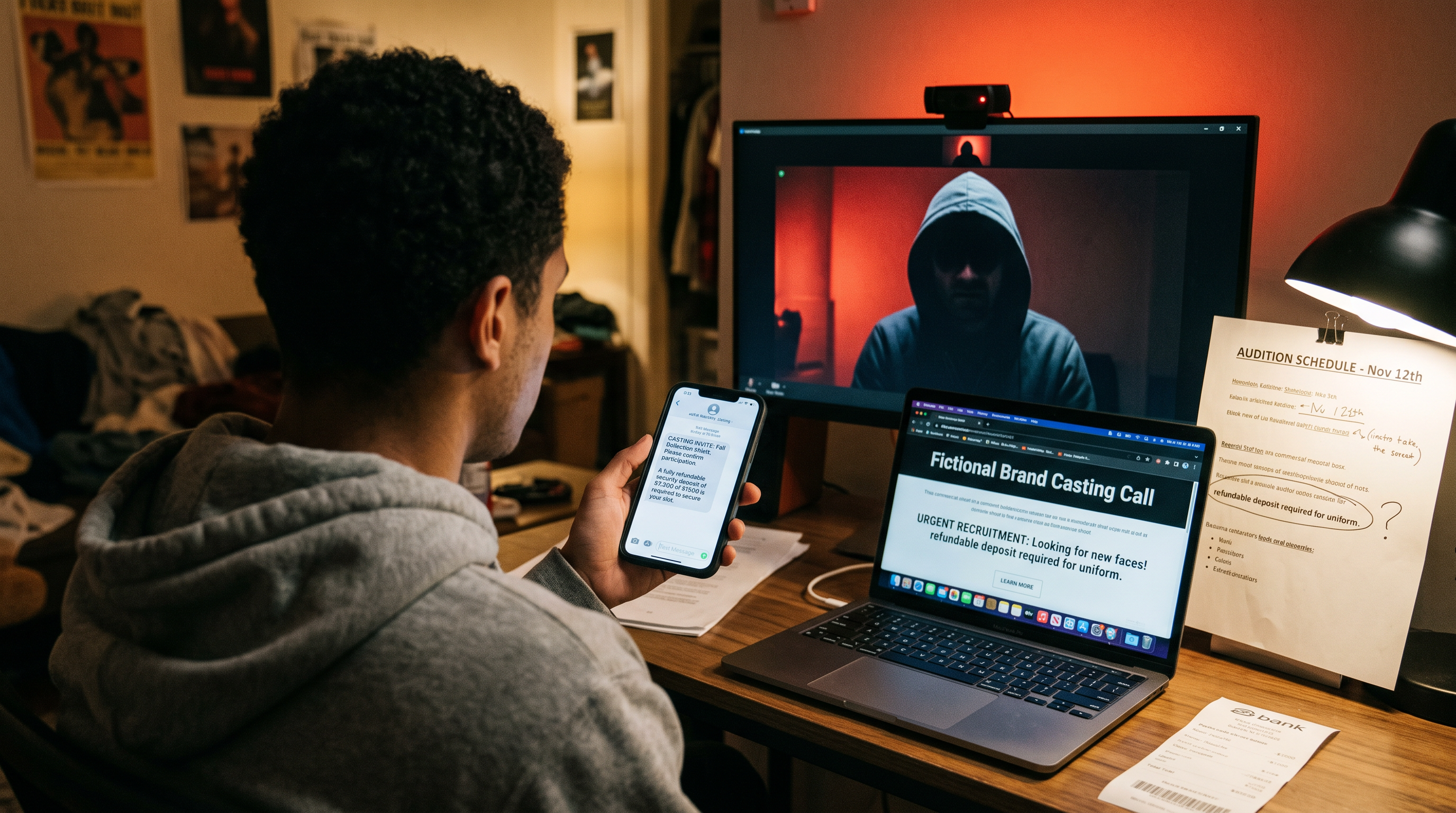
Imagine landing a spot in an ad shoot for a famous outdoor brand, only to lose money before you ever see a camera. That is what reportedly happened in South Korea in a Patagonia casting scam that used the company's name to recruit people for a shoot that did not exist. A Jeju City resident answered what looked like a legitimate casting notice, paid a deposit, and then heard nothing more.
Key facts
- SBS News reported on October 29, 2026 (updated October 30) that a scammer impersonated Patagonia Korea to recruit people for a nonexistent advertising shoot.
- According to SBS News, a Jeju City resident was told to pay a 300,000 won deposit, then the sender stopped responding and the recruitment ad disappeared.
- Patagonia Korea issued a warning on October 27, 2026, stating the recruitment was unrelated to the company and that it never demands deposits for advertising shoots.
- The scammer's identity and the number of possible victims have not been established, according to the SBS News report.
What Happened in the Patagonia Casting Scam
According to SBS News, the scheme began with a casting notice that appeared to come from Patagonia Korea. A resident of Jeju City responded to it and soon received detailed messages describing the shoot. Those messages reportedly covered the concept, the schedule, and the location.
That level of detail is a key part of the story. A vague post asking for money usually raises suspicion. A polished set of instructions that reads like real production paperwork can lower a person's guard.
Then came the payment request. The sender reportedly demanded a 300,000 won deposit. The stated reasons were to cover clothing arrangements and to discourage participants from failing to show up.
How the Deposit Demand Was Justified
The message reportedly went one step further. According to the report, the sender mentioned a celebrity's participation in the shoot to justify the requirement. The suggestion was that a high-profile name meant the production needed firm commitments from everyone involved.
This is a common pressure tactic in impersonation fraud. A famous name adds excitement and urgency, and it makes a strange request feel more reasonable. In this case, the promise of appearing in an ad alongside a star appears to have been the hook.
What Happened After the Transfer
After the applicant transferred the money, the sender reportedly went silent. The recruitment advertisement also disappeared. SBS News reported that the resident suspects other applicants may have been targeted too, and the resident reportedly plans to file a police complaint.
No arrest or charge has been reported. This is an account of an alleged impersonation incident, not a conviction, and the person behind it remains unidentified.
Patagonia Korea Responds to the Fake Casting Call
Patagonia Korea issued a public warning on October 27, two days before SBS published its report. The company stated that the recruitment had nothing to do with it. It also said it never asks for monetary deposits from people who take part in advertising shoots.
It is important to be clear about roles here. Patagonia is the impersonated brand, not a suspect. The company's name and reputation were borrowed to make a fake offer look credible.
For job seekers, that statement from the brand gives a simple rule to remember. If a legitimate company says it never charges participants, any request for a deposit in its name is a warning sign.
Why Fake Casting Call Scams Work
Casting and modeling scams target people who want a break in entertainment, advertising, or social media. Many applicants are young and eager, and they may not know how real productions operate. Scammers know that hope can override caution.
Several factors make this type of fraud effective:
- Trusted brand names. A well-known company makes a notice feel safe.
- Realistic details. Concepts, schedules, and locations make the offer look like a real project.
- Celebrity bait. A famous participant adds prestige and urgency.
- A small, plausible fee. A deposit of 300,000 won can seem modest compared with the promised opportunity.
- Disappearing posts. Once money moves, the ad vanishes and the trail goes cold.
The same playbook appears in other cases we have covered. Our report on the Philip Foster modeling scam shows how promises of work in the industry can be used to extract money from hopeful applicants.
How to Spot a Fake Advertising Shoot Recruitment
No single check is perfect, but a few habits can help you avoid a fake casting call. These are general consumer tips, not findings from the SBS report.
Red Flags to Watch For
- You are asked to pay a deposit, a booking fee, or a clothing fee before the shoot.
- The sender pushes you to pay quickly or says your spot will be lost.
- The payment goes to a personal account instead of a company account.
- The notice appears only on social media or a messaging app, with no link to the brand's official site.
- The sender uses a celebrity's name to explain unusual rules.
Steps to Verify a Casting Offer
- Check the brand's official website and verified social media accounts for the same notice.
- Contact the company through a number or email you found yourself, not one the sender gave you.
- Ask for the name of the production company and search for its history.
- Look for public warnings. In this case, Patagonia Korea posted one on October 27.
- Do not send money until you have confirmed the offer independently, and ideally never for a job.
Impersonation Fraud Keeps Spreading
This case fits a wider pattern in which scammers borrow trusted names to win trust fast. In South Korea, fraudsters have also used the likeness of well-known figures in fake promotions, as seen in our coverage of the Lee Ji Hye fake AI ad. In the United States, the Kenny Chesney impersonator scam showed how a famous name can be used to pull people into paying money.
The tools change, but the method stays the same. Scammers take an identity people trust, add a believable story, and ask for a payment that feels small enough to risk.
What to Do If You Paid a Casting Scammer
If you sent money to a fake recruiter, act quickly. Speed can matter when you try to stop or trace a transfer.
- Contact your bank or payment service right away and report the transfer.
- Save every message, screenshot, account number, and the original ad if you still have it.
- File a police complaint, as the Jeju City resident reportedly plans to do.
- Warn the brand being impersonated so it can issue a public notice.
- If you are in the United States, report the fraud at the FTC's ReportFraud site and file a complaint with the FBI Internet Crime Complaint Center when the scam involved online contact.
Reporting also helps other people. If other applicants were targeted, as the resident suspects, each complaint can help investigators connect cases.
What We Still Do Not Know
Several questions remain open. The scammer's identity has not been established. The number of people who may have paid is unknown. It is also unclear where the original recruitment notice was posted and how long it stayed online, beyond the report that it disappeared after the transfer.
We will update this story if police or Patagonia Korea release more details. You can read the original reporting at SBS News.
Bottom Line on the Patagonia Casting Scam
The reported Patagonia casting scam is a simple but costly reminder that real opportunities rarely come with an upfront fee. A famous brand name, a celebrity mention, and a detailed schedule can make a fake job look real. Patagonia Korea has said clearly that it never asks for deposits for ad shoots.
Before you respond to any casting call, verify it through the brand's official channels. If someone asks you to pay first, stop and walk away. Share this article with friends who are chasing modeling or acting work, and report any suspicious recruitment notice to the authorities.
Frequently Asked Questions
What is the Patagonia casting scam?
It is a reported impersonation scam in South Korea in which someone posed as Patagonia Korea to recruit people for a fake advertising shoot. According to SBS News, a Jeju City resident paid a 300,000 won deposit and then lost contact with the sender. The recruitment ad was later removed.
Does Patagonia ask for a deposit to appear in an ad shoot?
No. Patagonia Korea stated on October 27, 2026 that it never demands monetary deposits for participation in advertising shoots. The company also said the recruitment in question was unrelated to it.
How much money did the victim lose in the Patagonia Korea scam?
SBS News reported that the sender demanded a 300,000 won deposit, and the Jeju City resident reportedly transferred it. The total number of victims and the total amount taken have not been established.
How can I tell if a casting call is fake?
Be wary if you are asked to pay a deposit, fee, or clothing cost before a shoot. Check the notice against the brand's official website and verified accounts. Contact the company through contact details you found yourself, not those the sender provides.
What should I do if I paid a fake casting recruiter?
Contact your bank right away, keep all messages and screenshots, and file a police complaint. In the United States, you can also report it to the FTC at reportfraud.ftc.gov and the FBI at ic3.gov. Reporting quickly can help investigators and warn others.