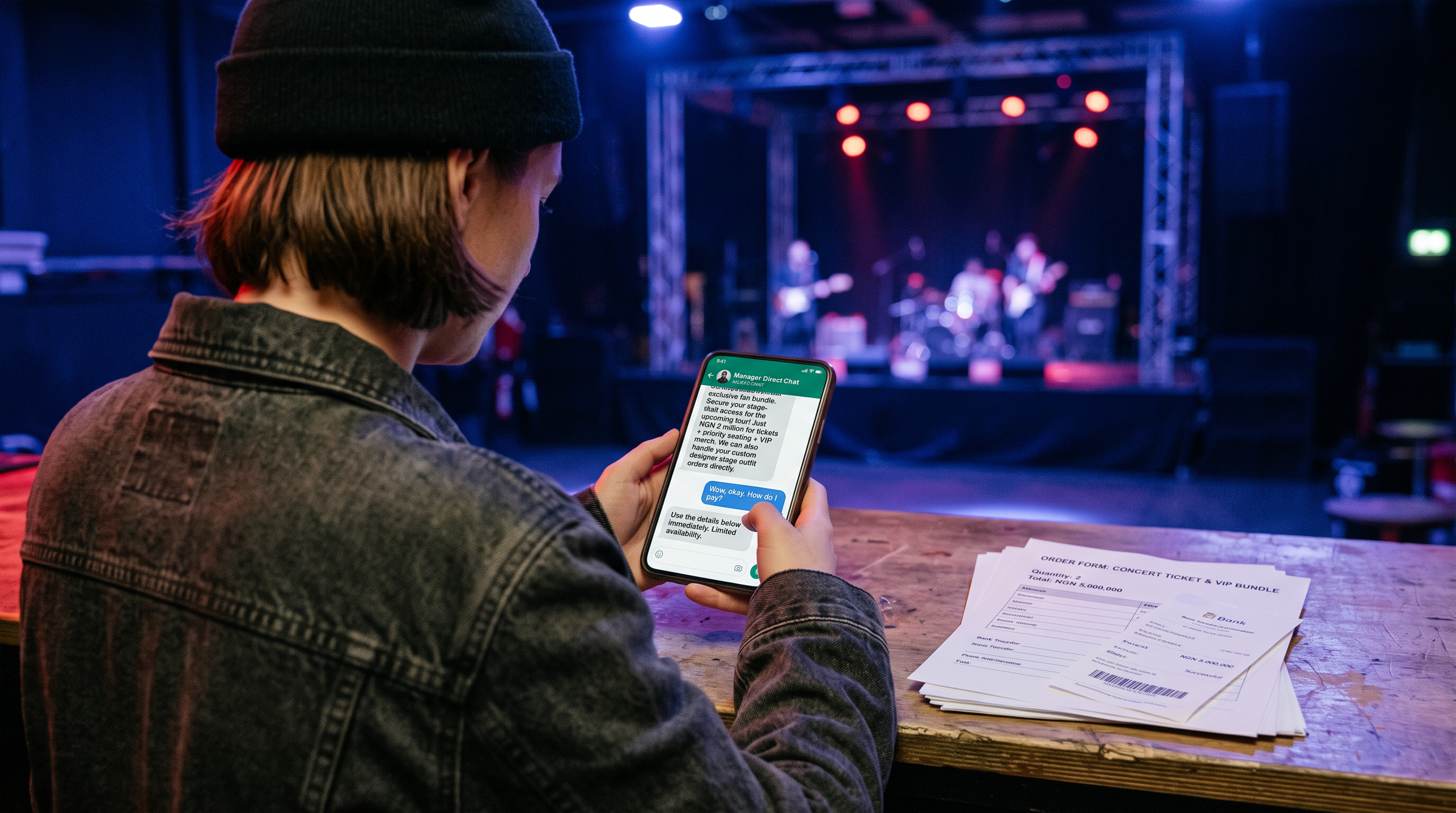
A disputed ₦5 million payment has pulled one of Nigeria's best-known Fuji stars into a public row he says he had no part in. The KS1 Malaika impersonators scam allegation began circulating on November 17 and 18, 2026, after a benefactor said he sent millions of naira to people he believed spoke for the musician. Malaika says those people were impostors, and that the matter is now with the police.
Key facts
- According to Legit.ng, a benefactor known as King Prime said he paid ₦5 million to people he believed represented Fuji musician KS1 Malaika, expecting event-related tickets and outfits that were allegedly never delivered.
- Malaika reportedly said impersonators used his identity and his manager's identity, and that the matter has been reported to the police.
- Malaika reportedly denied that actor Baba Lanko was involved in the alleged fraud, while Lanko's role has been publicly disputed.
- Reports from November 17 to 18, 2026 describe competing public accounts, not court findings, and no one has been convicted.
What Is the KS1 Malaika Impersonators Scam Claim?
The story centers on a payment of ₦5 million and a promise that, according to the complainant, was not kept. King Prime told Legit.ng that he was connected with people he believed were acting for Malaika. He said he paid in the expectation of receiving tickets and outfits tied to an event.
Those items were allegedly never delivered. That is the core of the payment and delivery allegation, and it remains an allegation. Independent confirmation of the transfers and of who received the money has not been published in the coverage reviewed.
Malaika is not accused of wrongdoing in these reports. He is described as the person whose name and image were allegedly used to make the offer look real.
What King Prime Says Happened
According to Legit.ng's report on Malaika breaking his silence, King Prime believed he was dealing with the musician's circle. That belief reportedly led him to send ₦5 million to purported representatives.
A follow-up report describes King Prime answering Lanko's denials. As Legit.ng reported on King Prime's response, the exchange also touched on a separate disagreement over gifts and cash. Those side claims are not evidence of fraud, and readers should not treat them as proof of the main allegation.
Competing accounts, not findings
Everything published so far comes from public statements made by the people involved. No court, prosecutor, or police statement confirming the facts has surfaced in the available coverage. Until that happens, the account of who took the money and why remains unproven.
Malaika's Response: Impersonators Used His Identity
Malaika reportedly said that impersonators used his name and his manager's name to deal with the benefactor. In his account, the people King Prime dealt with were not part of his team. He also reportedly said the case had been reported to the police.
That framing matters. If the impersonation claim holds up, Malaika is a target of the scheme in the same way the paying benefactor would be a victim of it. If it does not, that would need to be shown by evidence, not by social media argument.
Where Baba Lanko fits in
Actor Baba Lanko was drawn into the controversy, and his role has been publicly disputed. Malaika reportedly denied that Lanko was involved in the fraud. Lanko has also denied involvement, according to the follow-up coverage.
Being named in a public dispute is not the same as being found responsible for a crime. No one in this story should be described as a convicted scammer, and this article does not suggest that anyone is.
Why Celebrity Impersonation Scams Work
The most striking part of this story is how apparent access to a famous musician allegedly persuaded someone to send millions of naira. Fame lends instant credibility. When a message seems to come from a star's circle, many people lower their guard.
Scammers often copy the same playbook in many countries. Similar tactics appear in cases such as the Chancey Williams impersonation scam, and in AI-driven cases like the Ioan Gruffudd AI impersonator story. The target changes, but the pattern of borrowed trust stays the same.
Voice cloning has raised the stakes further. The Raj Chakraborty AI voice scam shows how convincing a fake voice or message can be.
Red Flags in Celebrity Ticket and Merchandise Offers
Whether or not this particular claim is proven, the situation offers a useful checklist. Fans, sponsors, and event hosts can watch for these warning signs:
- A middleman says they can reach the celebrity but cannot arrange a call, video, or meeting with the official team.
- Payment is requested in advance to a personal account, not a company or verified booking channel.
- The deal includes urgency, such as limited tickets or outfits that must be reserved immediately.
- Contact comes through a new or unverified social media account, or a phone number that cannot be confirmed.
- The person asking for money will not put the terms in writing.
What Remains Unproven in the ₦5M Scam Allegation
Several points are still open. The coverage does not establish who received the ₦5 million, whether the transfers were made as described, or who was behind the accounts used. It also does not publish police documentation, such as a case number or a formal statement.
The gifts and cash dispute reported in the follow-up article is a separate matter. It should not be merged with the impersonation claim. Evidence on this story is also limited to a small number of reports, so readers should treat details with care and watch for updates.
What would settle the questions
- A confirmed police statement or case record.
- Bank or transfer records showing where the money went.
- Screenshots or messages showing how the impersonators presented themselves.
- Verification from Malaika's management about which accounts and contacts are genuine.
How to Protect Yourself From Celebrity Impersonation Fraud
Always verify a celebrity's representative through official channels, such as a verified social media page or a publicly listed management contact. Ask for a company name and registration details, and check that the payment account name matches the business. Never pay in full before you have confirmed the person on the other end.
Keep every message, receipt, and transfer record. If you think you have been targeted, report it to your local police and your bank straight away. Readers in the United States can file a report with the FTC at ReportFraud or the FBI Internet Crime Complaint Center, and readers elsewhere should use their national cybercrime or police channels.
Bottom Line on the KS1 Malaika Impersonators Scam Story
For now, this is a disputed case built on public statements. A benefactor says he paid ₦5 million and got nothing. Malaika says impersonators used his name and that of his manager. Baba Lanko denies involvement, and the police have reportedly been notified.
The responsible reading is to wait for documents, not to pick a side on social media. If you deal with anyone who claims to speak for a public figure, verify first and pay later. Share this article with friends and event organizers so more people know the warning signs, and check back for updates as the facts become clearer.
Frequently Asked Questions
What is the KS1 Malaika impersonators scam?
It is a disputed claim that a benefactor known as King Prime paid ₦5 million to people he believed represented Fuji musician KS1 Malaika. He reportedly expected event-related tickets and outfits that were allegedly never delivered. Malaika says impersonators used his identity and his manager's identity.
Is KS1 Malaika accused of scamming anyone?
No. According to the reports, Malaika is described as a target of impersonation, not as the accused. He reportedly said the matter was reported to the police.
Was Baba Lanko involved in the alleged ₦5 million scam?
Baba Lanko's role has been publicly disputed. Malaika reportedly denied that Lanko was involved in the fraud, and Lanko has denied involvement. These are competing public accounts, and no court has made any finding.
How can I avoid celebrity impersonation scams?
Verify any representative through the celebrity's official, verified channels before sending money. Avoid paying personal accounts in advance, and be wary of urgent offers for tickets or merchandise. Keep records and report suspected fraud to the police and your bank.