A message from your favorite singer feels like a rare moment of connection. That feeling is exactly what scammers are counting on. Wyoming country artist Chancey Williams has warned fans about a Chancey Williams impersonation scam in which fake accounts send affectionate direct messages and, reportedly, work toward asking for money.
Key facts
- Wyoming country singer Chancey Williams warned fans around November 11, 2026, that scammers are impersonating him in social media direct messages, according to local coverage.
- According to reports, the fake accounts send flattering or affectionate messages, sometimes claiming a fan's comment personally touched the singer.
- The apparent goal of the messages is to build trust and eventually solicit money from fans, according to the reporting.
- The cited coverage does not confirm a loss amount, a number of victims, or a single platform behind the messages, and no scammer has been publicly identified.
What Chancey Williams Warned Fans About
According to the Cheyenne Gazette, Williams advised fans to verify social media messages before engaging with anyone claiming to be him. Local outlets, including Casper Cowboy, also carried the warning.
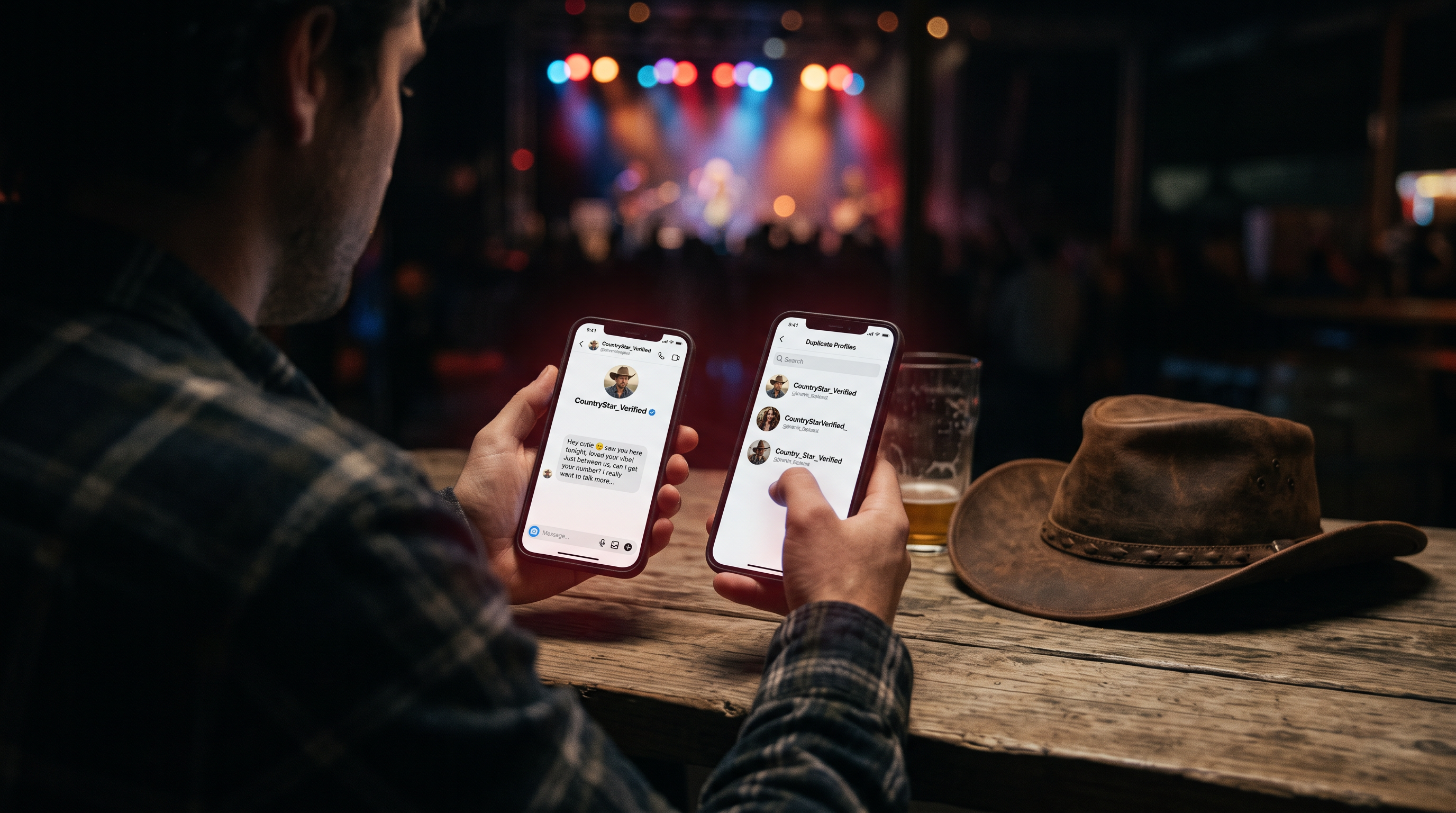
The reports describe fake profiles that reach out to fans with warm, personal notes. Some messages reportedly claim that a fan's public comment moved the singer, which gives the target a reason to believe the contact is real.
Williams is the person being impersonated here. He is not accused of wrongdoing, and the coverage does not name any individual behind the fake accounts.
How the Celebrity Impersonation Scam Works
The scheme leans on a familiar dynamic between performers and fans. A supposed private message from an artist makes the recipient feel singled out. Fans who have followed a musician for years often feel a real bond, and scammers try to borrow that trust.
Based on the reporting, the pattern tends to move in stages:
- Contact. A fake account sends a friendly or flattering direct message, often referencing a comment the fan posted.
- Bonding. The conversation becomes more personal over time, with compliments and affection.
- The ask. Once trust is built, the person on the other end eventually looks for money.
The gradual pace is the danger. No single message looks alarming, yet the fan can end up deep in a relationship that was never real.
What Is Not Confirmed
It is worth being clear about the limits of the public record. The cited coverage does not establish how much money fans may have lost, how many people were targeted, or which platform carried the messages.
Some online posts may claim fans lost large sums, including figures in the hundreds of thousands of dollars. Those claims are not verified in the available sources and should not be treated as fact. The confirmed part of the story is the warning itself and the described method of approach.
A separate Wisevoter report also covered the fake celebrity DM warning, though it does not change those limits.
Warning Signs of a Fake Celebrity DM
Fans can protect themselves by knowing what a fraudulent message usually looks like. Watch for these red flags:
- An unsolicited direct message from a famous person you have never interacted with.
- An account without a verified badge, with few posts, or with a handle that is slightly misspelled.
- Heavy flattery or romantic language very early in the conversation.
- Requests to move to a private messaging app.
- Any mention of money, gift cards, crypto, fan club fees, or payment for access or meetups.
Real artists rarely start private romantic conversations with fans they do not know. If a message feels too good to be true, treat it as suspect.
How to verify an account
Start with the artist's official website, which usually links to authentic social profiles. Compare the handle in your inbox with the one listed there. Check follower counts, post history, and whether the platform has verified the account.
You can also look for an announcement on the artist's official pages. In this case, Williams himself has urged fans to verify accounts, so his verified channels are the right place to confirm anything.
A Pattern Seen Across Entertainment
This is far from the only case of a public figure being copied online. Our earlier coverage of the Kenny Chesney impersonator scam shows how country fans have been targeted before. The same tactic also appears with technology, as in the report on an AI impersonator of actor Ioan Gruffudd.
Scammers also pose as athletes. A related case, the fake NFL player scam, shows the same approach of using a famous identity to gain trust. The names change, but the playbook of borrowed fame and emotional pressure stays consistent.
What to Do If You Received a Message
If you think you were contacted by a fake Chancey Williams account, or any celebrity impersonator, act quickly:
- Stop replying and do not send money or personal information.
- Take screenshots of the conversation and the profile.
- Report and block the account using the platform's tools.
- Report the incident to the FTC at reportfraud.ftc.gov.
- File a complaint with the FBI's Internet Crime Complaint Center at ic3.gov.
If you already sent money, contact your bank or payment provider right away. Speed can matter when trying to stop or flag a transfer.
Protecting your accounts
Scammers often find targets through public comments. Consider tightening privacy settings, limiting who can message you, and being cautious about what personal details you share under artists' posts. Tell older relatives or less experienced social media users about this tactic, since they may be more likely to trust a message that seems personal.
Why This Warning Matters
Fan communities are built on genuine affection, which is why they make attractive targets. A scammer does not need to hack anything. They only need a convincing profile picture, a few kind words, and a person who wants to believe the message is real.
Williams speaking up publicly helps in two ways. It alerts fans who may already be in a conversation with a fake account, and it reminds everyone that verification is a simple first step. The warning reportedly came directly from the artist, which gives fans a clear reference point for what to trust.
Bottom Line on the Chancey Williams Impersonation Scam
The facts so far are narrow but useful. Fake accounts are reportedly messaging fans in Williams' name, using affection to build trust, and apparently aiming for money. No loss figures, victim counts, or suspects have been confirmed.
If you follow Williams or any other artist, verify before you reply, and never pay anyone who contacts you out of the blue. Share this article with a fellow fan, and report suspicious accounts to the platform, the FTC, and the FBI so others are less likely to be caught.
Frequently Asked Questions
Is Chancey Williams really messaging fans on social media?
Williams has warned that scammers are impersonating him in direct messages, according to local coverage. Fans who receive unsolicited, affectionate messages from an account claiming to be him should assume it may be fake. Check his official website and verified profiles before replying.
How does the Chancey Williams impersonation scam work?
Reports say fake accounts send flattering or affectionate messages, sometimes claiming a fan's comment touched the singer. The conversation becomes more personal over time, and the apparent goal is to eventually ask for money. The method relies on making the fan feel special and trusted.
How much money have fans lost in the Chancey Williams scam?
The available reporting does not confirm any loss amount or number of victims. Claims of very large losses have not been verified. Only the warning and the described tactics are confirmed in the cited coverage.
How can I tell if a celebrity DM is fake?
Be wary of unsolicited messages, unverified accounts, misspelled handles, early romantic language, and any request for money or a move to another app. Compare the account with the artist's official website links. When in doubt, do not respond.
Where do I report a celebrity impersonation scam?
Report the account to the social media platform and block it. In the United States, you can also file a report with the FTC at reportfraud.ftc.gov and with the FBI's Internet Crime Complaint Center at ic3.gov. Keep screenshots as evidence.