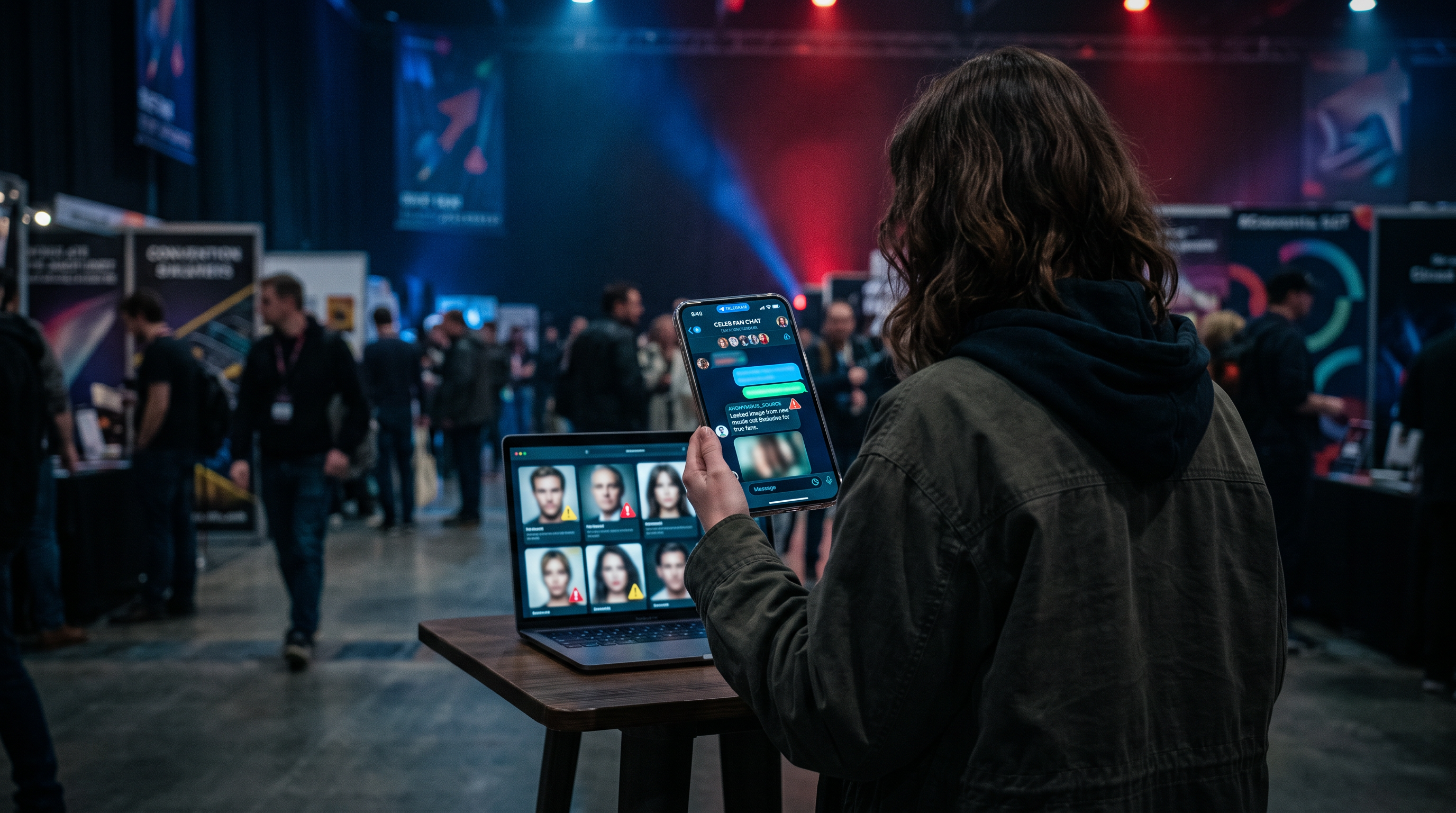
A woman walked up to actor Ioan Gruffudd at a fan convention convinced she had been in a relationship with him for more than a year. She was wrong. According to the BBC, she showed him hundreds of images and videos she believed he had sent, and every one of them was fabricated. The Ioan Gruffudd AI impersonator case is now a stark example of how generative AI is being used to build false romances with public figures.
Key facts
- Actor Ioan Gruffudd, known for Fantastic Four and Titanic, publicly warned on November 9, 2026 that an impersonator had used explicit AI-generated images and videos to convince a woman she was in a relationship with him.
- According to reporting, the woman approached Gruffudd at a fan convention believing they had been romantically involved for more than a year, and showed him hundreds of fabricated images and videos.
- Contact reportedly began through a Facebook page associated with the television series Elsbeth, then moved to a phone number and the Telegram messaging app.
- Gruffudd said he has reported the incident to police, and the impersonator has not been publicly identified.
What Ioan Gruffudd Said About the AI Impersonation
Gruffudd, who has appeared in Fantastic Four, Titanic and the series Elsbeth, described the material as explicit and disturbing. He said the woman was sincere and clearly believed she was communicating with the real him. The encounter, he said, left him alarmed at how convincing the fakes had become.
He used the moment to warn other fans. Gruffudd said he communicates only through his official Instagram account. He added that he does not give personal phone numbers to strangers and would never ask fans for money.
The warning was covered by the BBC, the Independent and the Press Association, which supplied copy to regional outlets such as the Alloa Advertiser and the Belfast Telegraph.
How the Celebrity Romance Impersonation Reportedly Worked
Based on the published accounts, the contact followed a pattern that fraud investigators know well. It started in a public, fan-friendly space and then moved somewhere more private.
- Public approach: Contact reportedly began through a Facebook page associated with the series Elsbeth.
- Move to private channels: The conversation shifted to a phone number and then to Telegram.
- Fabricated intimacy: The impersonator allegedly sent hundreds of explicit AI-generated images and videos to build the illusion of a real relationship.
- Long-term bond: The woman believed the relationship had lasted more than a year before she met the real actor.
Moving a target from a public page to an encrypted or private app is a common tactic. It takes the conversation away from moderators and from friends or family who might spot red flags.
Was Money Involved? What the Reports Do and Do Not Say
It is important to be precise here. The reporting does not establish that the woman transferred any money. Gruffudd and the outlets covering the story describe a deceptive impersonation and a potential financial scam, not a confirmed theft.
That distinction matters. Romance impersonation schemes often escalate toward requests for gifts, payments or investments once an emotional bond is built. In this case, the public record shows the deception and the distress, but no confirmed loss.
Gruffudd is the victim of impersonation in this story. He is not accused of any wrongdoing, and the person behind the fake accounts has not been publicly identified.
Why AI Celebrity Impersonation Scams Are Growing
Image and video generation tools have become cheap and easy to use. A scammer no longer needs stolen photos or a skilled editor. A handful of publicly available pictures can be enough to generate a stream of new, personalised content.
This case shows a darker side of that trend. The fabricated material was reportedly explicit, which adds a layer of harm beyond financial risk. Victims can feel shame, which scammers may exploit to keep them quiet.
The pattern is not limited to one actor. Our earlier coverage of the Kenny Chesney impersonator scam showed how fans can be targeted by someone claiming to be a famous musician. A separate report on an Elon Musk deepfake scam arrest shows authorities are starting to act against synthetic media fraud. Another story, the Lee Ji Hye fake AI ad, shows how a celebrity likeness can be borrowed without consent.
Warning Signs of a Fake Celebrity Account
Most impersonators leave clues. Fans who know what to look for can often stop the contact before it becomes emotionally or financially costly.
Red flags to watch for
- A famous person messages you first, or quickly says they love you.
- The conversation moves from a social media page to a personal phone number or Telegram.
- The account is not verified or is not linked from the star's official profiles.
- The person sends large volumes of intimate photos or videos without being asked.
- They refuse live video calls, or the video quality looks oddly smooth or glitchy.
- They ask for money, gift cards, crypto, or personal details at any point.
Gruffudd's own guidance is a useful baseline. If a celebrity has said they only use one official account, anything else claiming to be them should be treated as fake.
What to Do If You Suspect an Impersonator
Gruffudd urged people to block and report impersonators. He also said he had reported this incident to police. Those steps are sensible for anyone who finds themselves in a similar situation.
Practical steps
- Stop replying and block the account on every platform.
- Report the profile or page to the platform where you found it.
- Save screenshots, usernames, phone numbers and dates before anything is deleted.
- Do not send money, gift cards or crypto, and contact your bank at once if you already have.
- Report the case to authorities. In the United States, you can file a report with the FTC or the FBI Internet Crime Complaint Center. In the UK, contact your local police.
- Talk to someone you trust. Shame is a common reason victims stay silent.
Victims of explicit fabricated content should also know that platforms generally have reporting tools for non-consensual intimate imagery, and that reporting does not mean they did anything wrong.
What This Case Means for Fans and Public Figures
The encounter at the convention was unusual because the victim and the real person met face to face. In many cases that moment never happens, and the deception continues for years. Here, a public warning from the actor may help others recognise the same scheme.
It also raises questions for platforms. Fan pages and fan groups can be a hunting ground for impersonators, since they gather people who already feel connected to a star. Stronger verification and faster takedowns would make that harder.
For celebrities, the case is a reminder to be clear about where they actually communicate. Gruffudd's statement that he uses only his official Instagram account, and never asks for money, gives fans a simple test they can apply.
Bottom Line on the Ioan Gruffudd AI Impersonator Case
The facts so far are limited but serious. An unidentified person allegedly used AI-generated explicit images and videos to convince a woman she was in a long relationship with a famous actor. No confirmed financial loss has been reported, though the setup carries the hallmarks of a romance scam. Police have been notified, according to Gruffudd.
If you follow celebrities online, treat any private message from a supposed star as suspect. Verify through official channels, never send money, and block and report anything that feels wrong. If you want to keep up with the latest scam alerts and impersonation cases, keep reading our coverage at Blacklist and share this warning with fellow fans.
Frequently Asked Questions
What happened with the Ioan Gruffudd AI impersonator?
On November 9, 2026, Ioan Gruffudd warned that someone had used explicit AI-generated images and videos to pose as him. A woman approached him at a fan convention believing they had been in a relationship for over a year. He said he has reported the matter to police.
Did the woman lose money in the Ioan Gruffudd impersonation case?
The reporting does not establish that she transferred any money. The case is described as a deceptive celebrity romance impersonation and a potential financial scam, not a confirmed theft. The impersonator has not been publicly identified.
How does Ioan Gruffudd contact fans?
Gruffudd said he communicates through his official Instagram account. He said he does not give personal phone numbers to strangers and would never ask fans for money. Any other account claiming to be him should be treated as fake.
How can I tell if a celebrity messaging me is fake?
Be suspicious if a famous person contacts you first, moves the chat to Telegram or a private number, or sends large amounts of intimate content. Refusing live video calls and asking for money are also warning signs. Block and report the account, and file a report with the FTC or the FBI IC3 if you are in the United States.