A man who allegedly pretended to play for the San Francisco 49ers is now facing a federal wire fraud indictment. Prosecutors say Daejon Labrayae Delenar Love, 35, used dating apps and social media to build romantic relationships, then asked women for money. The alleged fake NFL player scam reportedly reached at least 26 victims and about $1.3 million, though none of it has been proven in court.
Key facts
- A federal indictment announced October 14, 2026 accuses Daejon Labrayae Delenar Love, 35, of posing as a San Francisco 49ers player and wealthy real-estate investor to deceive women, according to the U.S. Justice Department.
- An earlier Justice Department announcement identified at least 26 alleged victims and approximately $1.3 million obtained in the scheme, according to federal prosecutors.
- Love has pleaded not guilty, and the allegations have not been proven at trial, according to reporting on the case.
- The case involves a fake NFL identity only. No actual 49ers player or the team itself is accused of any wrongdoing.
What Is the Fake NFL Player Scam Alleged Against Daejon Love?
According to federal investigators, Love allegedly presented himself as a professional football player with the San Francisco 49ers. He also reportedly claimed to be a rich real-estate investor. Prosecutors say those claims were false.
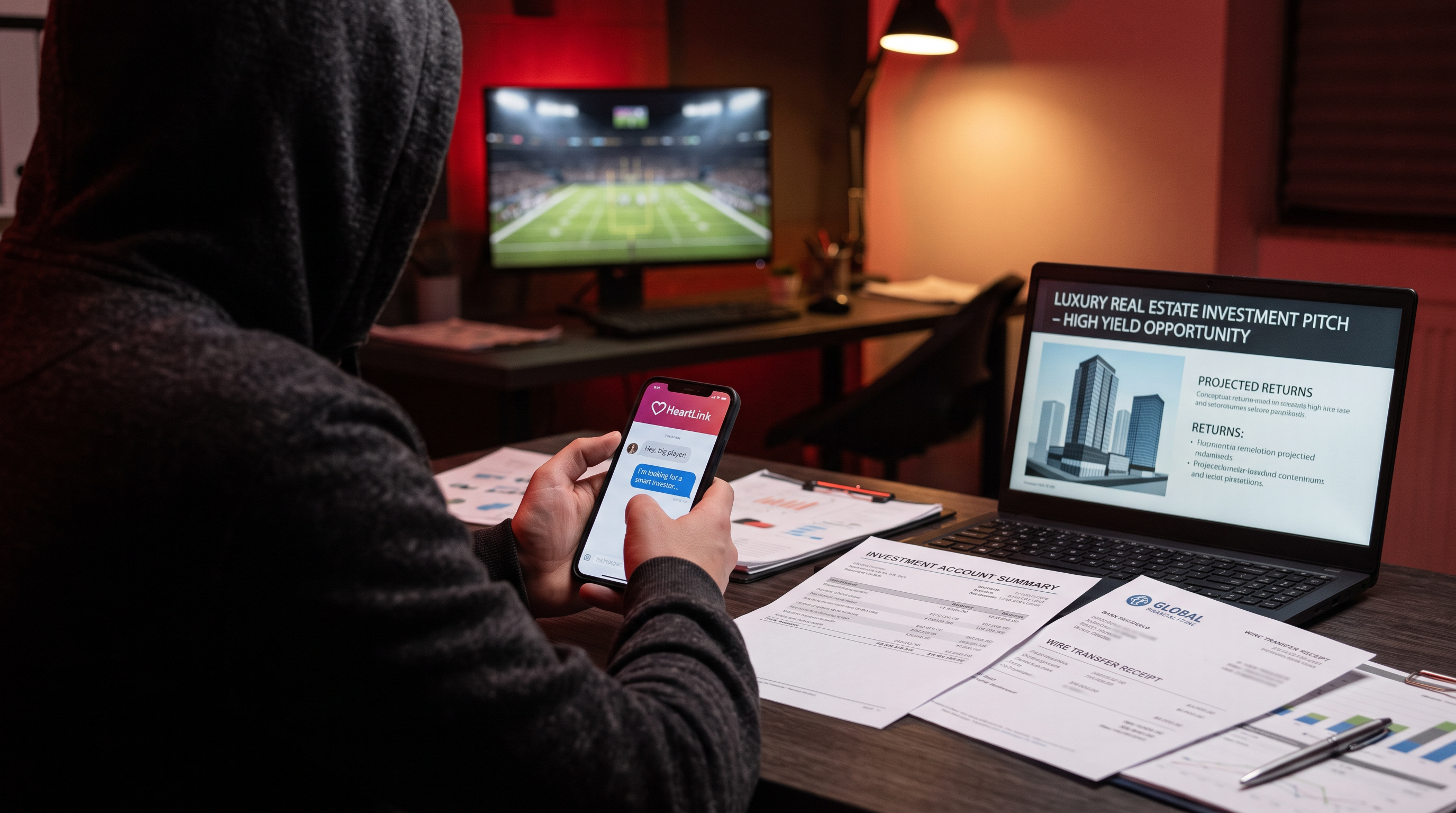
The Justice Department alleges that he met women through dating apps and social media. He then reportedly cultivated romantic relationships and made false statements about his wealth and career. Once trust was established, investigators say, he persuaded women to hand over money for investment opportunities that did not exist.
Reporting by Realtor.com adds that Love also allegedly used a second persona, a wealthy Swiss real-estate investor. The outlet reports that fabricated financial documents were allegedly used to support his claims.
Timeline of the 49ers Impersonation Fraud Case
The case first drew public attention in August, when the U.S. Attorney's Office announced charges. According to that Justice Department announcement, Love was charged with defrauding more than two dozen women out of more than $1.3 million.
On October 14, 2026, prosecutors followed with an indictment. The indictment announcement describes a wire fraud scheme. Local station KPTV also covered the Oregon wire fraud case the same day.
Realtor.com published its coverage on October 16 and updated it on October 22. The renewed attention has pushed the story back into the news cycle.
- August: The Justice Department announces charges and cites at least 26 victims and about $1.3 million.
- October 14, 2026: A federal indictment is announced.
- October 16: Realtor.com publishes its report, later updated on October 22.
How the Alleged Romance Investment Scam Worked
Romance investment fraud blends emotional manipulation with financial pressure. Prosecutors describe a pattern that fits this model, though each detail remains an allegation.
Step 1: A glamorous identity
The alleged scheme began with a profile built to impress. A professional athlete with real-estate holdings signals success and stability. That image can lower a person's guard quickly.
Step 2: A relationship before a request
According to investigators, Love built romantic connections first. Fraud experts commonly note that scammers spend time on trust before they ever mention money. The delay makes the later request feel natural rather than suspicious.
Step 3: A fabricated investment
Prosecutors allege the women were then asked to contribute money to investment opportunities that were not real. Reporting says fake financial documents may have been used to make the pitch look legitimate. Paperwork can look convincing, but it is not proof that an investment exists.
Why the Case Is Not About a Real 49ers Player
It is important to read the story correctly. The allegation is that Love falsely claimed to be a 49ers player. No real NFL athlete or the franchise is accused of misconduct in the indictment coverage reviewed for this article.
Love is not a genuine NFL player according to the charges. The central claim is that the identity itself was invented to win trust and money. That distinction matters for readers who may see the headlines and assume a professional athlete was charged.
What Love's Not Guilty Plea Means
Love has pleaded not guilty. An indictment is a formal accusation, not a finding of guilt. The prosecution must prove each charge beyond a reasonable doubt at trial or through a plea.
The figures of 26 victims and about $1.3 million come from the Justice Department's description of the alleged scheme. They are not court-established findings. Readers should treat them as claims that a court has yet to test.
Warning Signs of a Fake Athlete or Celebrity Scam
Impersonation cons are not new, and they often follow familiar patterns. Our coverage of the Jon Bon Jovi romance scam and the Kenny Chesney impersonator scam shows how fame is used as bait. The same tactics apply when someone claims to be an athlete.
Watch for these red flags:
- A new match who claims to be a famous athlete or wealthy investor but avoids live video calls.
- Quick declarations of love, followed soon after by talk of money or investments.
- Pressure to move money fast because an opportunity is "limited."
- Financial statements or account screenshots sent as proof of success.
- Requests to keep the relationship or the investment secret from friends and family.
How to Verify Someone Who Claims to Be an NFL Player
A few simple checks can stop a scam early. None of them require special tools.
- Search the team's official roster and compare names, photos, and jersey numbers.
- Run a reverse image search on profile photos to see if they appear elsewhere.
- Ask for a live video call and be wary of repeated excuses.
- Never send money, crypto, or gift cards to someone you have not met in person.
- Verify any investment through a registered adviser or your state securities regulator.
What to Do If You Think You Were Targeted
Speed matters when money has left your account. Contact your bank or payment provider right away and ask about reversing the transfer. Save every message, screenshot, and receipt.
You can then file a report with the FTC at reportfraud.ftc.gov and with the FBI Internet Crime Complaint Center at ic3.gov. Reports help investigators spot patterns across cases. They may also connect victims with other people targeted by the same actor.
Victims should not feel embarrassed. These schemes are designed by people who study how to earn trust, and they catch smart, careful people every year.
The Bottom Line on the Fake NFL Player Scam
The Daejon Love case shows how a famous job title can be turned into a tool for romance and investment fraud. Federal prosecutors allege he used a fake 49ers identity to take about $1.3 million from at least 26 victims. Love denies the charges, and a court will decide what the evidence shows.
Until then, the lesson for everyone is practical. Verify who you are talking to, slow down any request for money, and report suspicious activity. If something feels off, share this story with someone who dates online and file a report at the FTC or IC3.
Frequently Asked Questions
Who is Daejon Love?
Daejon Labrayae Delenar Love is a 35-year-old man indicted on federal wire fraud charges, according to the Justice Department. Prosecutors allege he posed as a San Francisco 49ers player and wealthy real-estate investor to deceive women. He has pleaded not guilty.
How much money was allegedly taken in the fake NFL player scam?
An earlier Justice Department announcement cited approximately $1.3 million and at least 26 victims. These figures are allegations from federal prosecutors. A court has not established them.
Was a real 49ers player involved in this case?
No. The allegation is that Love falsely claimed to be a 49ers player. No actual NFL athlete or the team is accused of wrongdoing in the coverage of this case.
How can I spot a romance investment scam?
Common warning signs include a match who avoids live video, moves fast toward love, and soon raises an investment opportunity. Be cautious about fake financial documents and pressure to act quickly. Verify identities independently and never send money to someone you have not met.
Where can I report a dating app or investment scam?
You can report it to the FTC at reportfraud.ftc.gov and to the FBI Internet Crime Complaint Center at ic3.gov. Also contact your bank or payment provider right away. Keep all messages and receipts as evidence.