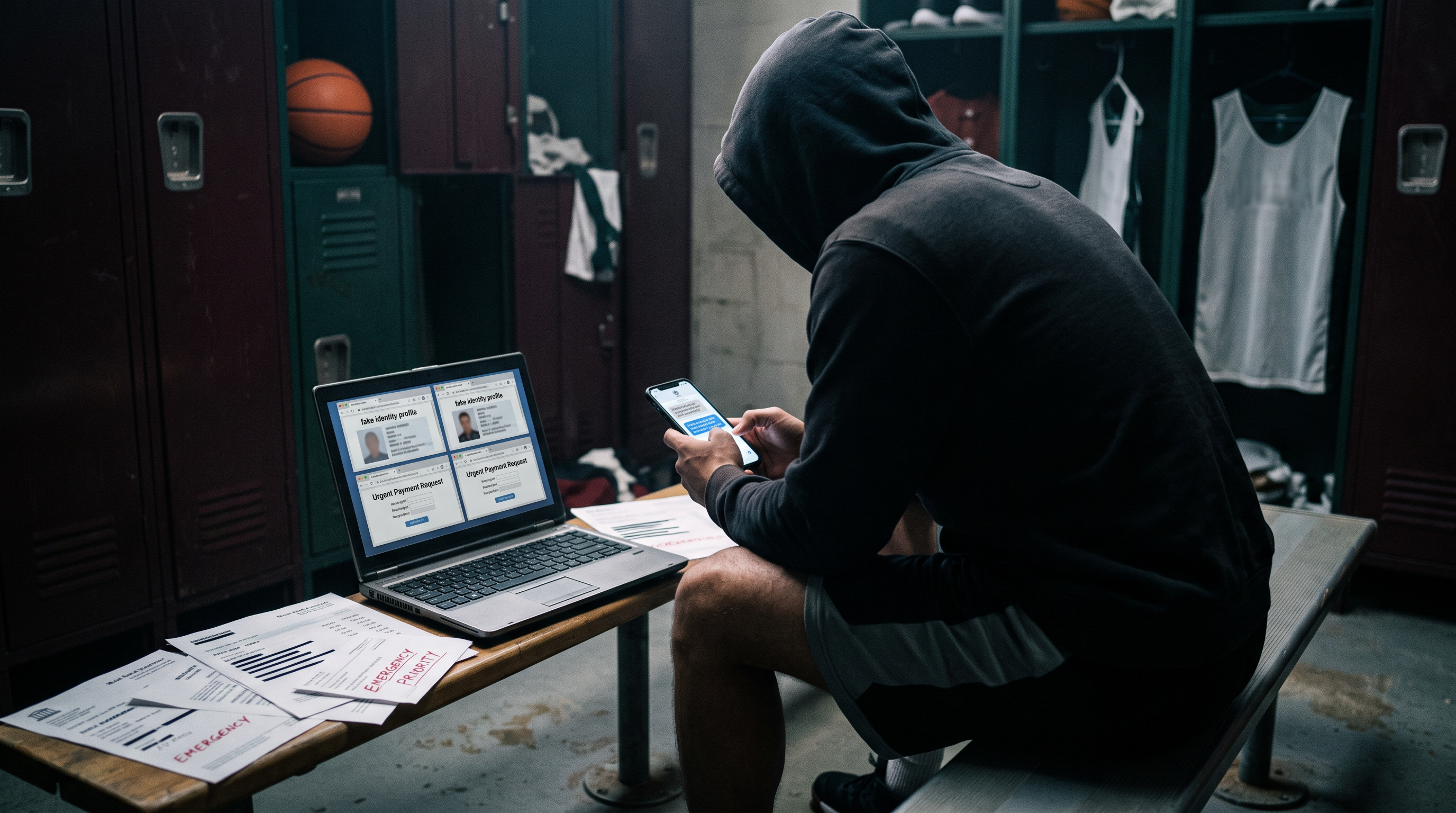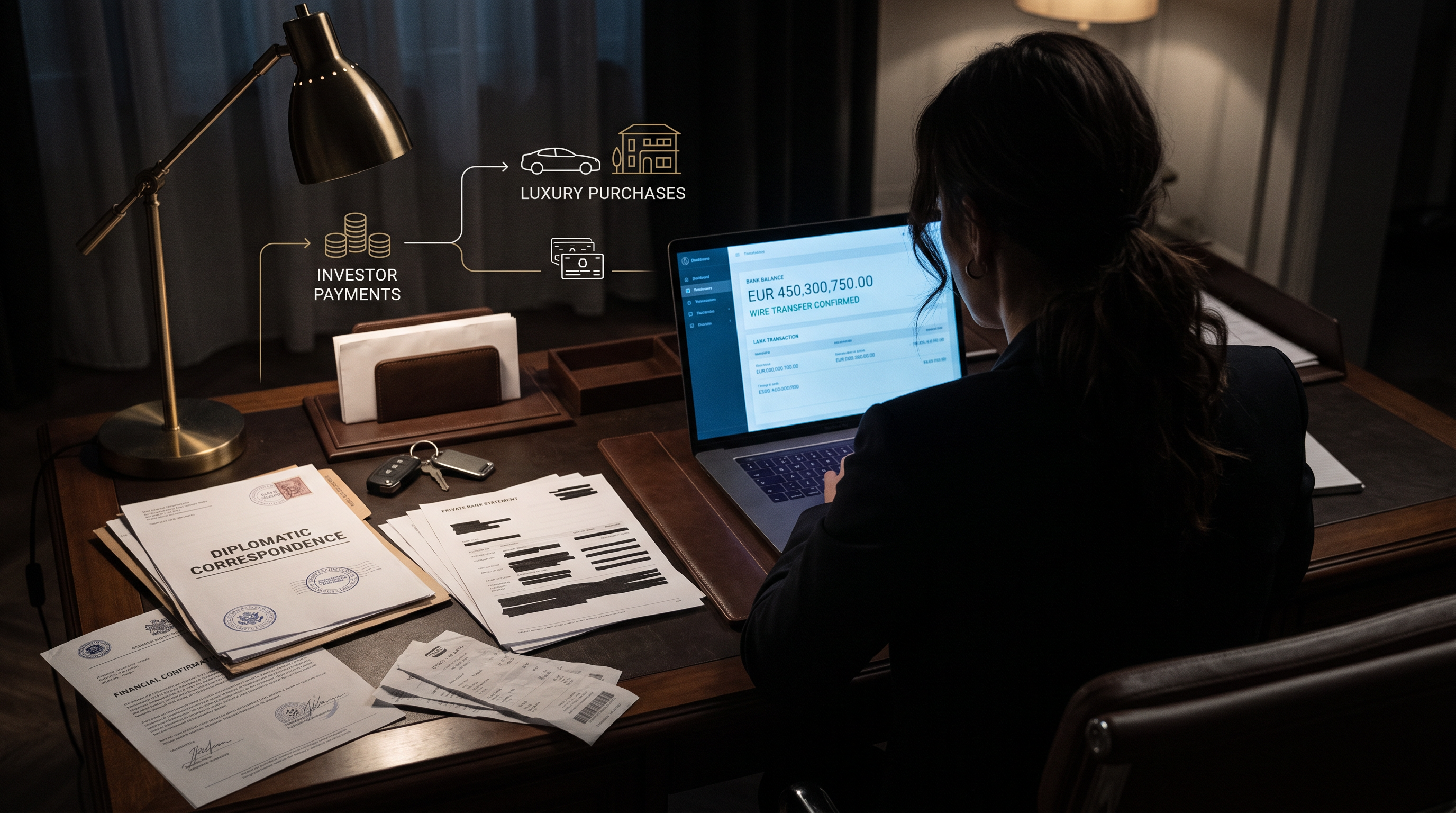
A Michigan businesswoman who allegedly passed herself off as a wealthy banker and diplomat is now at the center of a federal case that has pulled in national headlines. Federal investigators say Shannon Monet Steel, 42, used a made-up financial identity to persuade people to hand over large sums of money. The Shannon Steel fraud case grew from one $200,000 wire transfer into allegations involving at least eight victims and roughly $1.5 million. Steel has been charged with wire fraud, and the claims remain allegations. Guilt has not been established.
Key facts
- Shannon Monet Steel, 42, of metro Detroit has been charged with wire fraud in federal court, and the allegations have not been proven, according to reporting by The Detroit News.
- Newer court filings allege at least eight victims and roughly $1.5 million in losses, according to The Detroit News.
- The original federal wire-fraud complaint centers on a $200,000 transfer from a California investor, according to court records cited by The Detroit News.
- Investigators say Steel presented a purported bank confirmation claiming Steel Private Bank held more than 300 million euros at Deutsche Bank.
- Reporting says State Department records showed Steel was not an accredited diplomat and that her alleged bank was not FDIC-insured.
What the Shannon Steel fraud case alleges
According to federal investigators, Steel presented herself as a banker with deep financial resources and as a diplomat tied to the Central African Republic. She allegedly used the title Ambassador to the First Lady. Prosecutors say those claims gave her credibility with people who were asked to send money.
The Detroit News reported the story in detail in its coverage of the alleged elaborate con. Local station ClickOnDetroit also reported that federal authorities allege the Farmington Hills woman is not who she said she was.
The case drew wider attention after the New York Post covered it on Oct. 2, and national outlets followed on Oct. 2 and 3. Some of those headlines described her as a fake US ambassador. That wording is not the most precise reading of the court record, which describes claimed diplomatic status linked to the Central African Republic.
The $200,000 wire transfer behind the complaint
The original criminal complaint focuses on a single transaction. Investigators allege a California investor sent $200,000 after being shown financial credentials that turned out to be unreliable. That transfer is the basis of the wire-fraud charge.
Wire fraud is a federal offense that generally involves using electronic communications or transfers as part of a scheme to obtain money through false pretenses. Cases like this often start with one victim who contacts authorities. Investigators then look at bank records and find other people who sent money.
The alleged Deutsche Bank confirmation
A central piece of the government's account is a purported bank confirmation. Investigators say the document claimed Steel Private Bank held more than 300 million euros at Deutsche Bank. Prosecutors allege that this document was meant to show she had enormous wealth and could be trusted with other people's money.
The research available to us does not say how Deutsche Bank responded or what steps investigators took to test the document beyond what has been reported. Readers should treat the document claims as part of the government's allegations, not as proven fact.
A bank that was not FDIC-insured
Reporting also says the alleged bank was not FDIC-insured. That matters because FDIC insurance is the federal protection that covers deposits at qualifying US banks. A business that calls itself a private bank but lacks that coverage should prompt hard questions from anyone considering sending money.
Diplomat claims and the State Department
Investigators say State Department records showed Steel was not an accredited diplomat. Accreditation is how a government formally recognizes a foreign representative. A title that sounds official does not prove someone holds diplomatic standing.
The title Ambassador to the First Lady is also unusual. Honorary or invented titles can appear in business circles, charity events, and networking groups, and they can look convincing on a business card or social media profile. Prosecutors allege Steel used this kind of status to lend weight to her financial pitch.
Alleged $1.5 million in losses and a lavish lifestyle
Newer filings, as reported by The Detroit News, describe at least eight victims and about $1.5 million in losses. Earlier coverage, including the New York Post's report, used a figure closer to $1 million. The larger number comes from the more recent court filings.
Later filings also describe money allegedly going toward an extravagant lifestyle. The Detroit News described the allegations as a global spending spree in its September 30 report. The New York Post also covered the claims in its national story on the case.
The Biden-era volunteer award claim
One detail that spread quickly online is that Steel previously promoted a Biden-era presidential volunteer-service recognition. This should be read carefully. Reporting does not show that President Biden personally endorsed her, and it would be wrong to say so.
Volunteer-service awards are often issued through programs where organizations or individuals can apply or be nominated. Promoting such a recognition can still add to someone's reputation. That is why it is worth checking what a certificate or award actually means before treating it as proof of trust.
Why this fake diplomat scam stands out
Several elements make this alleged scheme unusual. Prosecutors point to a claimed diplomatic identity, a supposed private bank, a document asserting a huge balance at a major European bank, and spending on luxury items. Each piece reinforces the others, and together they can make a pitch feel safe.
Experts who study financial crime often describe this pattern as affinity or authority fraud. The person appears powerful, well connected, and respectable, so victims lower their guard. Similar tactics appear in other cases we have covered, including a semi truck investment fraud story and a Ponzi scheme case involving a famous victim.
How to check a banker or diplomat before sending money
Anyone asked to wire money to a stranger with big credentials can take a few steps first. None of these guarantees safety, but each one can expose a weak story.
- Verify the bank. Search the FDIC's BankFind tool and your state banking regulator to see if the institution is real and insured.
- Confirm documents directly. Contact the named bank using a phone number you find yourself, not one printed on the document you were given.
- Check diplomatic status. Diplomatic accreditation is a matter of government record, so ask which government recognized the person and verify it.
- Slow down on large transfers. Pressure to move quickly is a common warning sign in investment fraud.
- Ask for independent advice. A licensed attorney or financial adviser can review an offer before you commit funds.
Broader trends show how common these schemes have become. Our report on FinCEN data on crypto investment scams shows how large the losses can grow when victims trust false credentials.
Where to report suspected fraud
People who believe they were targeted by a similar scheme can file a report with the FTC at reportfraud.ftc.gov. Internet-enabled and wire-related crimes can also be reported to the FBI's Internet Crime Complaint Center at ic3.gov. Reports should include transaction records, messages, and any documents received.
What happens next in the case
Steel faces a federal wire-fraud charge, and the case will move through the court process. Prosecutors must prove their allegations beyond a reasonable doubt. The filings so far reflect the government's version of events, and Steel is presumed innocent unless a court finds otherwise.
The research for this article does not include a public response from Steel, so none is reported here. If a statement from her or her attorney becomes available, it will be an important part of the record.
The bottom line on the Shannon Steel fraud case
Federal investigators allege Steel built an image as a banker and diplomat to win trust and collect money from at least eight people. The reported losses stand at roughly $1.5 million, while the original complaint rests on a $200,000 transfer. The allegations are serious, but they are still allegations.
The lesson for everyone is simple. Impressive titles, official-looking letters, and talk of vast bank balances are not proof of anything. Verify before you wire, report anything suspicious to the FTC or IC3, and share this article with anyone who is weighing an investment pitch from a stranger.
Frequently Asked Questions
Who is Shannon Steel and what is she accused of?
Shannon Monet Steel is a 42-year-old Michigan businesswoman charged with federal wire fraud. Investigators allege she falsely presented herself as a wealthy banker and diplomat tied to the Central African Republic while soliciting money. The charges are allegations, and guilt has not been established.
How much money is Shannon Steel accused of taking?
Newer court filings reported by The Detroit News allege at least eight victims and roughly $1.5 million in losses. The original wire-fraud complaint centers on a $200,000 transfer from a California investor. Some earlier coverage cited a figure closer to $1 million.
Was Shannon Steel really a US ambassador?
No. Reporting says State Department records showed she was not an accredited diplomat. Investigators say she claimed diplomatic status connected to the Central African Republic, including the title Ambassador to the First Lady, so calling her a fake US ambassador is not the most accurate description.
Did President Biden endorse Shannon Steel?
There is no reporting showing that Biden personally endorsed her. Steel reportedly promoted a Biden-era presidential volunteer-service recognition, but that is not the same as an endorsement from the president.
How can I check if a private bank is legitimate?
Search the FDIC BankFind tool and your state banking regulator to see if the bank is licensed and insured. Contact the bank using contact details you find independently, and never rely only on documents handed to you. If something seems wrong, report it at reportfraud.ftc.gov or ic3.gov.