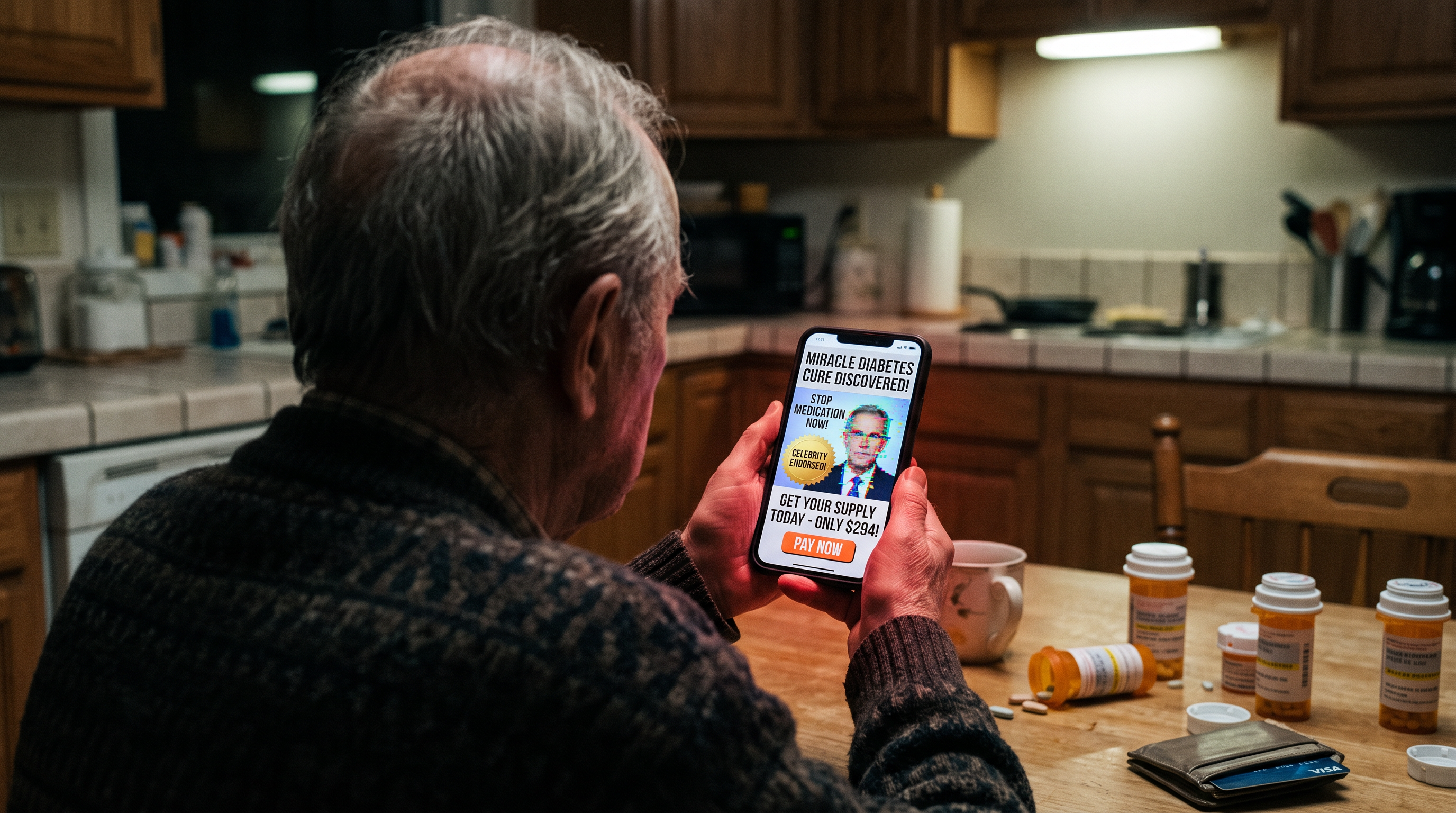
A billionaire investor says his face and voice are being used to sell a diabetes cure he never endorsed. The Mark Cuban diabetes scam, as described in a recent report, relies on AI-generated video that makes the Shark Tank star appear to pitch a treatment on Facebook. Older consumers reportedly believed the ads were real, and some said they paid money for the product.
Key facts
- According to FinanceBuzz, scammers used AI-generated versions of Mark Cuban to advertise an alleged diabetes treatment on Facebook, in a report published November 5, 2026 and updated November 10.
- FinanceBuzz reports that Cuban discussed the ads during an August 21 appearance on the Pivot podcast, saying older consumers contacted him believing he endorsed a diabetes cure.
- According to the report, some consumers said they had paid $294 for the supposed treatment, a figure that has not been verified as a total loss.
- Cuban is the person being impersonated, and he reportedly criticized Facebook for allowing the ads to circulate.
What the Mark Cuban Diabetes Scam Reportedly Involved
The story comes from a FinanceBuzz report on the fake Mark Cuban ads. It says scammers built advertisements around synthetic versions of Cuban's face and voice. The goal, according to the report, was to create the impression that a well-known businessman personally backed a diabetes product.
Cuban is a billionaire entrepreneur and a longtime investor on Shark Tank. That public profile makes him a convenient mask for fraudsters. A familiar face with a reputation for business sense lends instant credibility to a claim that would otherwise look suspicious.
It is important to be clear about roles here. Cuban is not accused of anything. He is the person being impersonated, and the people behind the ads have not been publicly identified in the research available so far.
How the AI-generated Mark Cuban ads worked
The reported ads used deepfake technology, meaning software that can clone a person's appearance and speech from public footage. Cuban has spent years on television, podcasts, and interviews, so there is plenty of material to copy. A short clip can be stitched together to make him appear to say nearly anything.
According to the report, the ads ran on Facebook and reached older users. Those users saw what looked like a celebrity endorsement of a diabetes treatment. Some then reportedly reached out to Cuban directly, which is how he learned how widely the ads were spreading.
What Cuban said on the Pivot podcast
FinanceBuzz cites remarks Cuban made on the Pivot podcast on August 21. He reportedly said that older people contacted him because they thought he backed the supposed cure. Some of them said they had paid $294.
Cuban also reportedly condemned the ads and criticized Facebook for letting them circulate. That criticism is his reported opinion. It is not a legal finding, and nothing in the research confirms any ruling or enforcement action against Meta, the parent company of Facebook.
What Remains Unverified
Several details are still unclear, and readers should treat them carefully. The story rests on a single directly identified report, so independent corroboration is limited. The podcast remarks date to August, while the FinanceBuzz article first appeared in November.
- The product: The identity of the alleged diabetes treatment has not been independently established.
- The victim count: No verified number of affected consumers has been published.
- The losses: The $294 figure is an amount some consumers reportedly mentioned. It is not a confirmed total or an average loss.
- The legal status: This is a reported impersonation scheme. No criminal conviction or confirmed regulatory finding is described in the research.
Those gaps matter. They separate what has been reported from what has been proven, and they are a reason to watch for updates from regulators, Meta, or additional news outlets.
Why Seniors Are Targets for Fake Celebrity Health Ads
Health claims are a favorite tool for online fraud. People managing a chronic condition such as diabetes want relief, and a promise of a simple cure can override normal caution. Pair that hope with a trusted celebrity face, and the pitch becomes persuasive.
Older consumers are often singled out in these campaigns. Many are active on Facebook, and fewer have had practical exposure to convincing AI video. A fake clip that would look odd to a person who follows deepfake news can pass as a genuine interview to someone who has never heard of the technology.
Medical claims add a second layer of risk. A person who pays for an unproven product may also stop or delay real treatment. Diabetes is a condition that requires ongoing medical management, so a fake cure can cause harm beyond the money lost.
How to Spot a Fake Celebrity Diabetes Ad
You do not need technical skill to protect yourself. A few habits catch most of these ads before any money changes hands.
- Be suspicious of any cure claim. No legitimate celebrity pitches a miracle cure for diabetes in a social media ad.
- Check the source. Look at the page that posted the ad. New pages, odd names, or few followers are warning signs.
- Watch the video closely. Mouth movements that do not match the audio, flat voice tone, or odd blinking can signal AI-generated content.
- Search for the claim. If a famous person really launched a health product, major news outlets would cover it. A search that returns only warnings is a bad sign.
- Talk to your doctor. Ask a physician or pharmacist before buying any supplement or treatment that promises to replace medication.
- Avoid urgent offers. Countdown timers and limited stock claims are pressure tactics.
What to Do If You Paid for a Fake Endorsed Product
If you paid for a product after seeing an ad like this, act quickly. The steps below can limit the damage and help investigators.
- Contact your bank or card issuer right away and ask about disputing the charge.
- Save screenshots of the ad, the page name, the website, and your receipt.
- Report the ad inside Facebook using the ad's report option.
- File a report with the FTC at reportfraud.ftc.gov.
- If the loss involved an online scheme, you can also file a complaint with the FBI's Internet Crime Complaint Center.
- Watch your statements for repeat charges, which some subscription traps use.
Tell older relatives about this case too. A short conversation can prevent a purchase, and it removes the shame that keeps many victims from speaking up.
A Wider Pattern of Deepfake Ads and Impersonation
The reported Cuban ads fit a broader pattern of AI-driven celebrity impersonation. Similar cases have surfaced around the world. One example is the Elon Musk deepfake scam arrest, which shows how famous faces get borrowed to sell schemes. Another is the Lee Ji Hye fake AI ad, where a public figure's likeness was again used without her involvement.
Pressure is also building on the platforms that carry these ads. Readers following that angle can look at how Rhode Island sued Meta over scam ads. That case is separate from the Cuban story, and nothing in the current research links the two. It does show that scam advertising on social platforms is drawing scrutiny.
The Bottom Line on the Mark Cuban Diabetes Scam
The core claim is simple. According to FinanceBuzz, AI-generated versions of Mark Cuban were used to sell an alleged diabetes treatment on Facebook, and some older consumers reportedly paid $294 believing the endorsement was real. Cuban reportedly condemned the ads and criticized Facebook for allowing them.
Much is still unknown, including the product, the number of people affected, and the total losses. Until more reporting arrives, the safest assumption is that any ad showing a celebrity selling a health cure is fake.
Before you click, buy, or share, pause and verify. If you see one of these ads, report it to Facebook and to the FTC, and send this article to a parent or grandparent who spends time on social media. One warning shared today can save someone hundreds of dollars and protect their health.
Frequently Asked Questions
What is the Mark Cuban diabetes scam?
It is a reported scheme in which scammers used AI-generated versions of Mark Cuban's face and voice to advertise an alleged diabetes treatment on Facebook. According to FinanceBuzz, older consumers believed he endorsed the product. Cuban is the person being impersonated, not a participant.
Did Mark Cuban really endorse a diabetes cure?
No. According to the FinanceBuzz report, the ads used synthetic versions of Cuban, and he reportedly condemned them. Any ad that shows him selling a diabetes cure should be treated as fake.
How much did victims lose in the Mark Cuban ad scam?
The report says some consumers told Cuban they had paid $294. That figure is not a verified total or average. The number of affected consumers and the overall losses have not been independently established.
How can I tell if a celebrity ad on Facebook is an AI deepfake?
Look for audio that does not match mouth movements, a flat or robotic voice, and claims that sound too good to be true, such as a cure for a chronic disease. Check the page that posted the ad and search for news coverage of the supposed product. When in doubt, do not buy.
Where do I report a fake celebrity endorsement scam?
Report the ad to Facebook, then file a complaint with the FTC at reportfraud.ftc.gov. If money was lost through an online scheme, you can also file with the FBI's Internet Crime Complaint Center at ic3.gov. Contact your bank as well to ask about disputing the charge.