Scammers are weaponizing artificial intelligence to impersonate South Korean actor Kim Seon-ho, circulating deepfake videos and fake social media profiles to extract money and personal data from fans around the world. His agency has now gone on record with a formal public warning and confirmed it is pursuing legal action against those responsible. The case is a sharp reminder of how quickly generative AI tools can turn celebrity trust into a financial weapon targeting devoted fan communities.
Key Facts
- Kim Seon-ho's agency publicly warned fans that fraudsters are using deepfake videos and AI-altered images of the actor to solicit money and personal benefits, according to the agency's official notice published on Weverse.
- The agency confirmed it will pursue legal action against individuals creating and distributing fake accounts and synthetic media using Kim Seon-ho's likeness, per reports from the Korea Times.
- Scammers are operating across multiple platforms including WhatsApp and Telegram, using cloned social profiles, fake landing pages, and rapidly rotating payment accounts to avoid detection, according to incident records reviewed by researchers.
- Victims risk losing both money and personal data, with evidence often scattered across apps and jurisdictions, making recovery and prosecution difficult.
- The AI Incident Database has catalogued this case as a documented instance of deepfake-enabled celebrity impersonation fraud, underscoring its significance beyond a single isolated event.
How the Kim Seon-ho Deepfake Scam Works
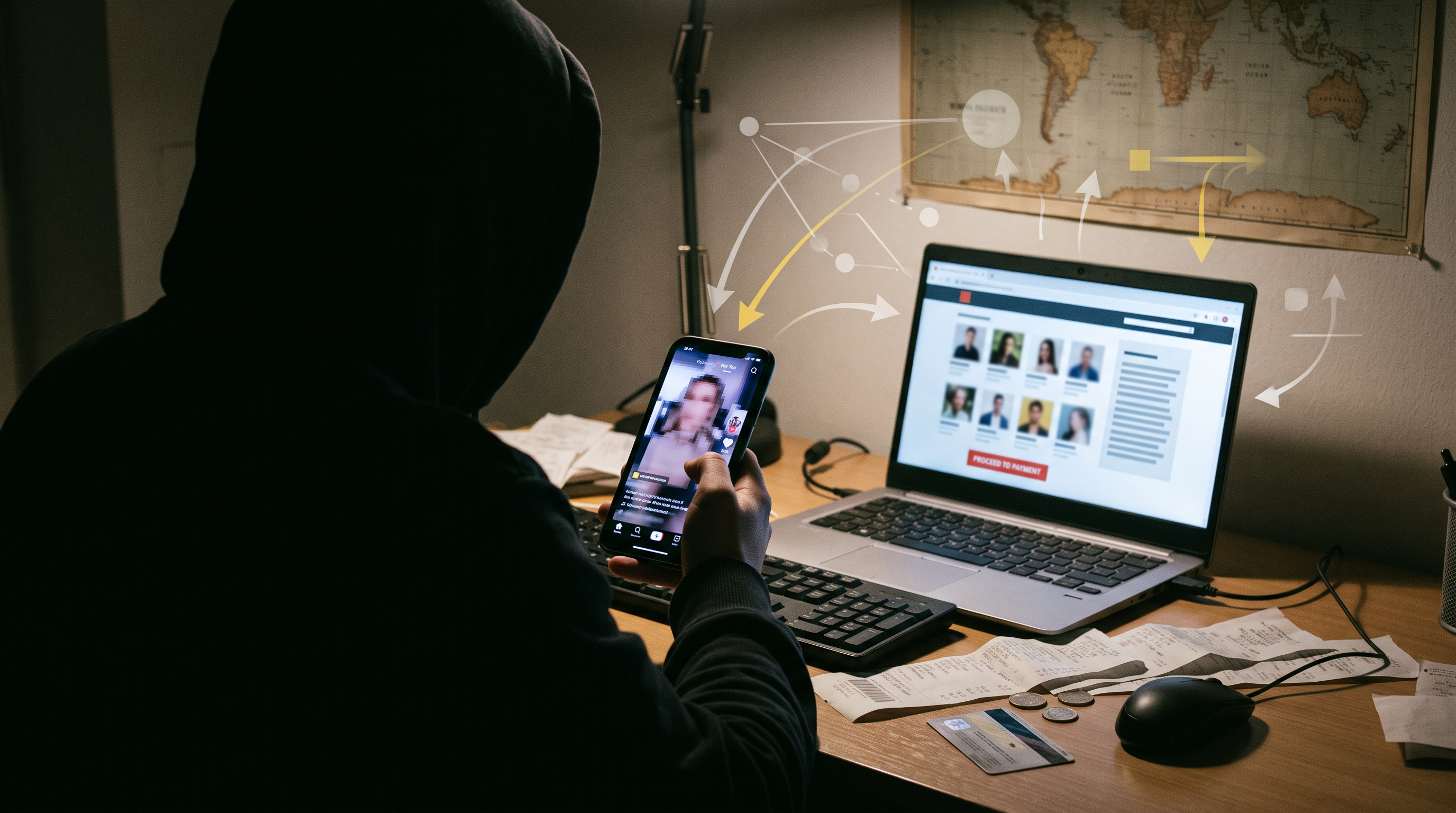
According to reports from the Times of India and the Korea Times, fraudsters follow a repeatable playbook. First, they generate short synthetic video clips or AI-altered images that convincingly mimic the actor's appearance and voice. They then build out social media profiles or messaging accounts designed to look like official or personal channels belonging to Kim Seon-ho.
Once those fake profiles are live, scammers reach out to fans directly. The approaches vary: fake casting offers, exclusive giveaways, urgent personal messages, or emotional pleas for help. In each case, the end goal is the same: persuade the victim to transfer money, send gift card codes, or hand over sensitive account details.
What makes this especially dangerous is the speed at which accounts rotate. When platforms remove one fake profile, another appears. Payment routes shift between bank transfers, gift cards, and cryptocurrency, which makes it harder for banks and law enforcement to trace and recover funds.
Why Deepfake Celebrity Scams Are Surging
The Kim Seon-ho case is not an isolated incident. Celebrity deepfake fraud has become one of the fastest-growing categories of online financial crime. Researchers estimate that losses tied to celebrity impersonation scams have reached billions of dollars globally, as documented in cases tracked by the broader celebrity deepfake scam landscape.
Generative AI tools have lowered the barrier to entry dramatically. A few publicly available images or video clips are enough to create a convincing synthetic persona. Fan communities built around loyalty and emotional connection are particularly vulnerable, because skepticism feels like a betrayal of the celebrity they admire. Scammers exploit that dynamic deliberately.
Similar tactics have been used against other public figures. The deepfake investment scam involving Australian Prime Minister Anthony Albanese showed that no public figure is off limits, and the Jennifer Aniston deepfake romance scam demonstrated how AI-generated likenesses can sustain long-term emotional manipulation of victims.
The Agency's Response and Legal Threat
Kim Seon-ho's agency moved quickly once the scam activity became widespread enough to notice. It published an official notice on Weverse, a fan-facing platform where the actor maintains an authenticated presence, warning fans not to engage with any accounts requesting money or personal information in his name.
The agency made clear it is not treating this as a minor nuisance. Legal action is being prepared against those creating and distributing deepfake content and fake profiles. That kind of formal agency response signals both the scale of the fraud and the very real reputational damage these scams cause, not just financial harm to fans but lasting harm to the celebrity's public image and the trust built with their audience.
What Legal Remedies Are Available
In South Korea, distributing manipulated media that defames or fraudulently impersonates someone can trigger criminal liability under the Act on Special Cases Concerning the Punishment of Sexual Crimes (for non-consensual deepfakes) and general fraud statutes. Civil remedies including damages are also available. Across jurisdictions, victims who paid money to scammers may have recourse through consumer protection laws, bank chargeback processes, and international fraud reporting channels.
How to Protect Yourself from Deepfake Impersonation Scams
If you are a fan of any public figure, the following steps can protect you from falling victim to a Kim Seon-ho deepfake scam or any similar scheme.
- Never send money to unsolicited contacts. No legitimate celebrity, agency, or giveaway will ask fans for payment upfront.
- Demand live video verification through official channels. A deepfake clip is pre-recorded. A live, real-time video call on a verified platform is much harder to fake, though not impossible with advanced tools.
- Avoid gift cards and cryptocurrency. These are the preferred payment routes for scammers because they are nearly impossible to reverse.
- Screenshot everything. Preserve profile URLs, message histories, and payment confirmation screens before accounts disappear.
- Contact your bank immediately if you already sent money. Some transfers can be recalled if you act within hours.
- Report fake accounts to the platform's safety team using the built-in reporting tools, and file a report with local authorities.
Where to Report Deepfake and Impersonation Fraud
If you are in the United States and have been targeted or defrauded, you can file a report with the Federal Trade Commission at reportfraud.ftc.gov and with the FBI's Internet Crime Complaint Center at ic3.gov. International victims should contact their national cybercrime unit. Documentation you preserve now will support any investigation or chargeback claim later.
The Bigger Picture for Fans and the Industry
When an agency issues a public legal warning about deepfake impersonation, it marks a shift in how the entertainment industry is treating AI-enabled fraud. These are no longer edge cases. They are organized operations running at scale, often across multiple countries simultaneously, with victims counted in the thousands per campaign.
Fan communities need to build the same healthy skepticism that protects people from phishing emails. The emotional pull of celebrity connection is real, but it is also the exact lever scammers press. Awareness is the first line of defense. Understanding what the Kim Seon-ho deepfake impersonation scam looks like makes it easier to recognize and reject similar attempts before any money changes hands.
If you want to stay ahead of these schemes, bookmark trusted tracking resources and verify any surprising contact through official, publicly listed agency channels only. The scammers are counting on urgency and emotion overriding judgment. Slow down, verify, and protect yourself.
Frequently Asked Questions
What is the Kim Seon-ho deepfake impersonation scam?
Scammers are using AI-generated deepfake videos and fake social media profiles that mimic actor Kim Seon-ho to solicit money, gift cards, and personal information from fans. His agency has confirmed the fraud publicly and is pursuing legal action against those responsible.
How do I know if a Kim Seon-ho account online is real?
Authentic accounts are verified through official platforms listed by his agency. If an account contacts you privately to ask for money, gift card codes, or personal details, it is a scam regardless of how convincing the profile or video appears.
What should I do if I already sent money to a fake Kim Seon-ho account?
Contact your bank or payment provider immediately to attempt a recall or chargeback. Preserve all screenshots, transaction records, and message histories. Report the incident to the platform where it occurred and file a complaint with your national cybercrime authority or, if in the US, at reportfraud.ftc.gov.
Can deepfake videos really fool fans into thinking they are real?
Yes. Modern AI tools can generate highly convincing synthetic video clips using only a handful of publicly available images or video samples. Short clips sent through messaging apps are particularly effective because poor lighting and compression make flaws harder to spot.
Are celebrities legally protected against deepfake impersonation scams?
In many jurisdictions, creating and distributing deepfake content to commit fraud is a criminal offense. South Korea has specific laws targeting non-consensual synthetic media, and fraud statutes apply broadly. Kim Seon-ho's agency has stated it intends to use those legal remedies against the perpetrators of this scam.