A wave of AI-powered celebrity deepfake scams has cost fans an estimated $5.3 billion in 2025, according to reporting from Complex, security researchers at McAfee and Bitdefender, and multiple consumer protection outlets. Fraudsters are using sophisticated artificial intelligence tools to clone the faces, voices, and social media presences of some of the world’s most recognizable artists, including Taylor Swift, Sabrina Carpenter, Billie Eilish, and Ed Sheeran. What was once a fringe threat has scaled into a global criminal industry, and experts warn the worst may still be ahead.
How Celebrity Deepfake Scams Actually Work
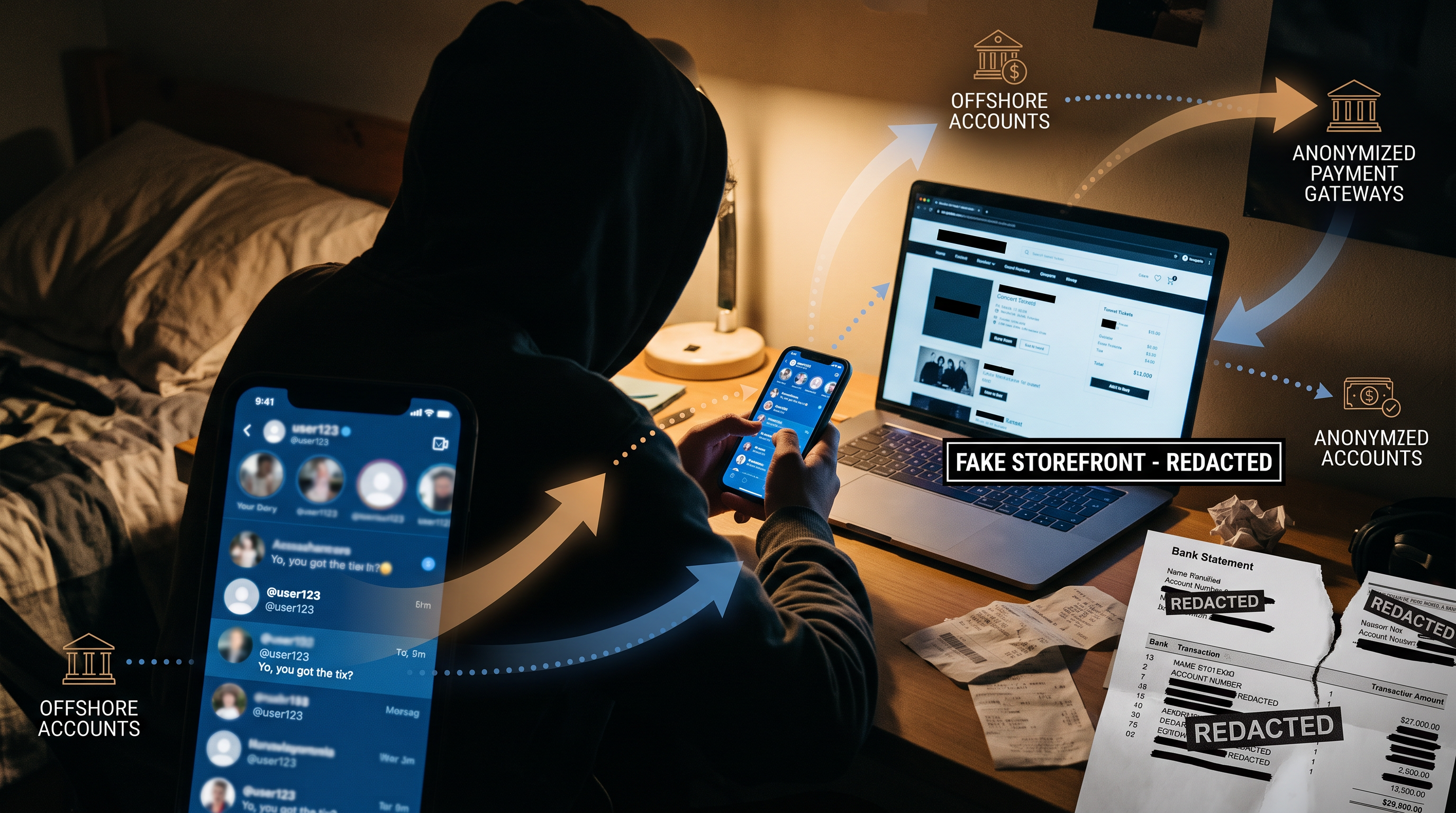
The mechanics behind these schemes are more organized than most people realize. Security firms tracking the networks describe a clear, repeatable funnel that moves victims from discovery to financial loss in as little as a few hours.
It starts with paid advertising. Fraudsters purchase ad placements on platforms like Facebook, Instagram, TikTok, and YouTube. Those ads feature AI-generated video or audio of a celebrity appearing to promote a giveaway, an investment opportunity, or a charity appeal. Because the synthetic media is increasingly indistinguishable from authentic footage, fans engage at high rates.
Once a user clicks or comments, automated bots or human operators slide into their direct messages. The conversation moves quickly off-platform to Telegram or WhatsApp, where there is less moderation and fewer records. Victims are then directed to counterfeit landing pages designed to mirror an artist’s official site or merchandise store.
Payment is requested in gift cards, wire transfers, or cryptocurrency sent to wallets controlled by the operators. Fake dashboards and fabricated receipts keep victims believing their money is working until withdrawals are blocked and the accounts vanish. Funds are laundered through micro-transfers and cryptocurrency mixers, making recovery extremely difficult, according to blockchain analysts cited in recent reporting.
The Celebrities Being Impersonated Most Often
According to McAfee’s research on the world’s most deepfaked celebrities, certain names appear far more often than others in scam networks. Taylor Swift tops nearly every list, a reflection of her enormous global fanbase and the high emotional investment her followers have in connecting with her. Sabrina Carpenter, whose profile has surged in recent years, has also become a frequent target.
Reporting from Complex and Yahoo News names the following artists as among the most impersonated in active scam campaigns:
- Taylor Swift
- Sabrina Carpenter
- Billie Eilish
- Ed Sheeran
- Scarlett Johansson
- Kylie Jenner
The Hollywood Reporter noted in earlier coverage that scammers deliberately target artists with passionate, younger fan communities, since those audiences are statistically more likely to act quickly on an unexpected message that appears to come from someone they admire.
Why Platforms Struggle to Stop AI Impersonation Fraud
Social media platforms do remove flagged content, but the takedown process creates a window that scammers exploit deliberately. By the time a report is reviewed and an ad account is suspended, operators have already churned through new domains and fresh ad accounts purchased with stolen payment credentials. Bitdefender researchers who tracked Taylor Swift deepfake scams on TikTok found that fraudulent accounts often ran for days before removal, reaching hundreds of thousands of views in that time.
Comment farms amplify the illusion of legitimacy. Accounts that exist solely to post things like “I got my prize yesterday, this is real!” fill the comment sections of fraudulent posts, providing social proof that pushes hesitant users to act. This coordinated manipulation is difficult to distinguish from organic engagement at scale.
The rapid cycling of ad accounts and domains means that standard platform enforcement, which is reactive by design, will always lag behind operators who are proactive and automated. Law enforcement agencies including the FBI’s Internet Crime Complaint Center (IC3) are tracking these networks, but recoveries remain limited given the cross-border nature of the operations and the speed at which funds are moved.
How to Identify a Celebrity Deepfake Scam
Security researchers and consumer protection advocates agree on several reliable warning signs. Being able to spot these patterns is currently the most effective defense available to ordinary fans.
- Unsolicited contact: No major celebrity or their verified team will reach out to a fan via a cold DM to offer prizes or investment returns.
- Off-platform pressure: Any request to continue a conversation on Telegram or WhatsApp, away from a platform with moderation, is a major red flag.
- Gift card or crypto payment requests: Legitimate giveaways and charities do not ask winners to pay fees in gift cards or send cryptocurrency to an unverified wallet.
- Urgency and secrecy: Scammers create artificial time pressure and frequently ask victims not to tell others about the opportunity.
- Visual glitches in video: Look for unnatural eye movement, blurring around the hairline, mismatched audio sync, or teeth that look unusually smooth, all common artifacts in AI-generated video.
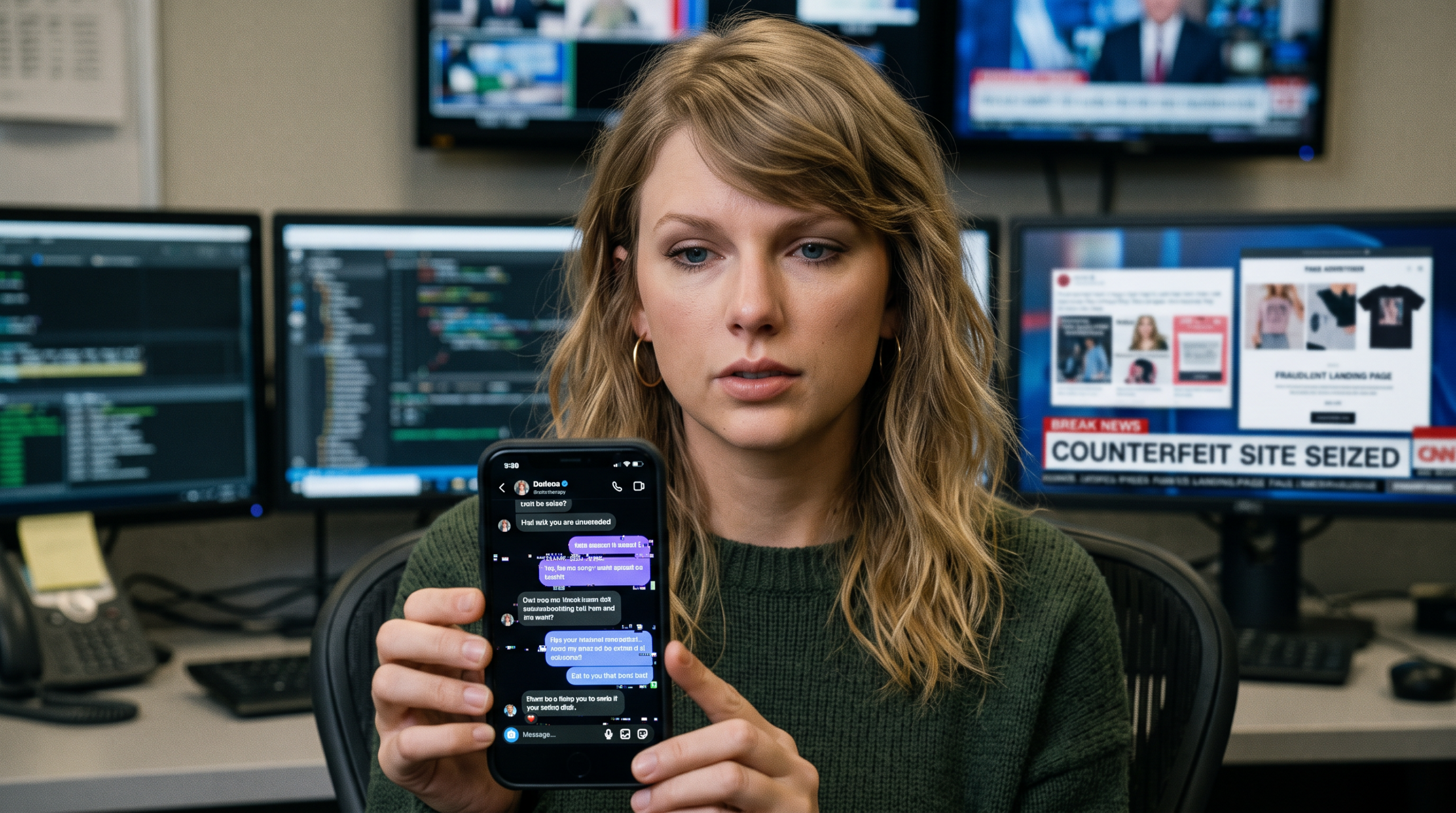
If you encounter a suspicious account or message, preserving screenshots before reporting is important. Those records can support investigations by platform trust and safety teams and law enforcement.
What Victims Should Do Right Now
If you or someone you know has already sent money in response to what appears to be a celebrity deepfake scam, act immediately. Contact your bank or card issuer to attempt a transaction reversal. For cryptocurrency payments, contact the exchange used to send funds, since some platforms have fraud recovery protocols for recent transactions.
Report the scam to the Federal Trade Commission at ReportFraud.ftc.gov and file a complaint with the FBI’s Internet Crime Complaint Center at IC3.gov. These reports feed into databases that help investigators identify patterns, link cases across jurisdictions, and build prosecutable files against organized networks.
Checking whether a celebrity’s social accounts are verified against their official website is a fast, free step that can prevent most impersonation fraud before it starts. Services that aggregate known scammer profiles, such as Blacklist, can also help users verify whether a profile or scheme has already been flagged by other victims.
The Bigger Picture for AI Fraud in 2025
The $5.3 billion figure is striking, but researchers caution that it likely understates actual losses. Many victims, particularly those who were defrauded through schemes framed as investment opportunities, do not report out of embarrassment. The true scale of AI-enabled impersonation fraud is almost certainly larger than current estimates reflect.
What is clear is that the cost of producing convincing synthetic media has dropped to near zero, while the potential return for fraud operators has grown sharply. Until platforms develop faster detection, governments establish clearer liability frameworks, and consumers become more skeptical of unsolicited celebrity contact, this category of fraud will continue to grow.
Frequently Asked Questions
How can I tell if a celebrity video is a deepfake?
Look for subtle visual inconsistencies such as blurring around the face edges, unnatural blinking, teeth that look overly smooth or uniform, and audio that does not quite sync with lip movement. When in doubt, find the same content on the celebrity’s verified official channels. If it does not appear there, treat it as suspect.
Why are Taylor Swift and Sabrina Carpenter targeted so frequently?
Scammers target celebrities with large, emotionally invested fan communities. Taylor Swift and Sabrina Carpenter both have fanbases known for high engagement and a strong desire to connect with the artists personally, which makes fans more likely to act quickly on a message that appears to come from them.
Can I get my money back if I was scammed through a celebrity deepfake scheme?
Recovery depends on the payment method used. Credit card and bank wire disputes have the best odds if reported quickly. Cryptocurrency payments are harder to recover, though some exchanges will assist if you act fast. Filing reports with the FTC and FBI IC3 is important and can contribute to broader recovery efforts.
Are social media platforms doing enough to stop these scams?
Platforms do remove reported content, but enforcement is reactive and scammers rotate ad accounts and domains faster than takedown processes can respond. Security researchers at Bitdefender and McAfee have documented fraudulent posts running for days and reaching large audiences before removal, suggesting current systems are not keeping pace with the threat.
Where should I report a celebrity impersonation scam?
Report directly to the platform where you encountered the content, and file formal complaints with the FTC at ReportFraud.ftc.gov and the FBI IC3 at IC3.gov. Keep screenshots of all communications and payment records, as these details support investigations significantly.