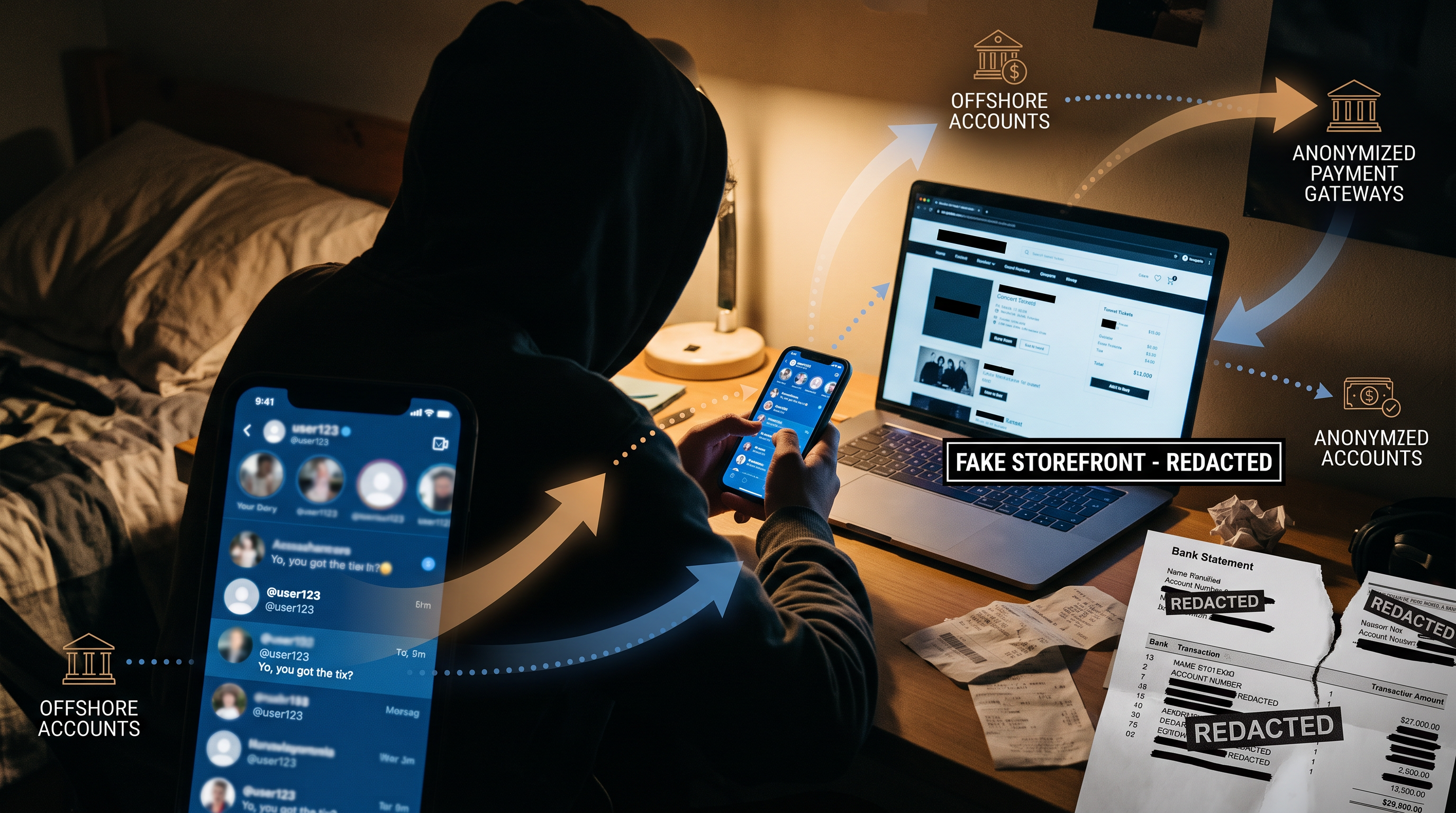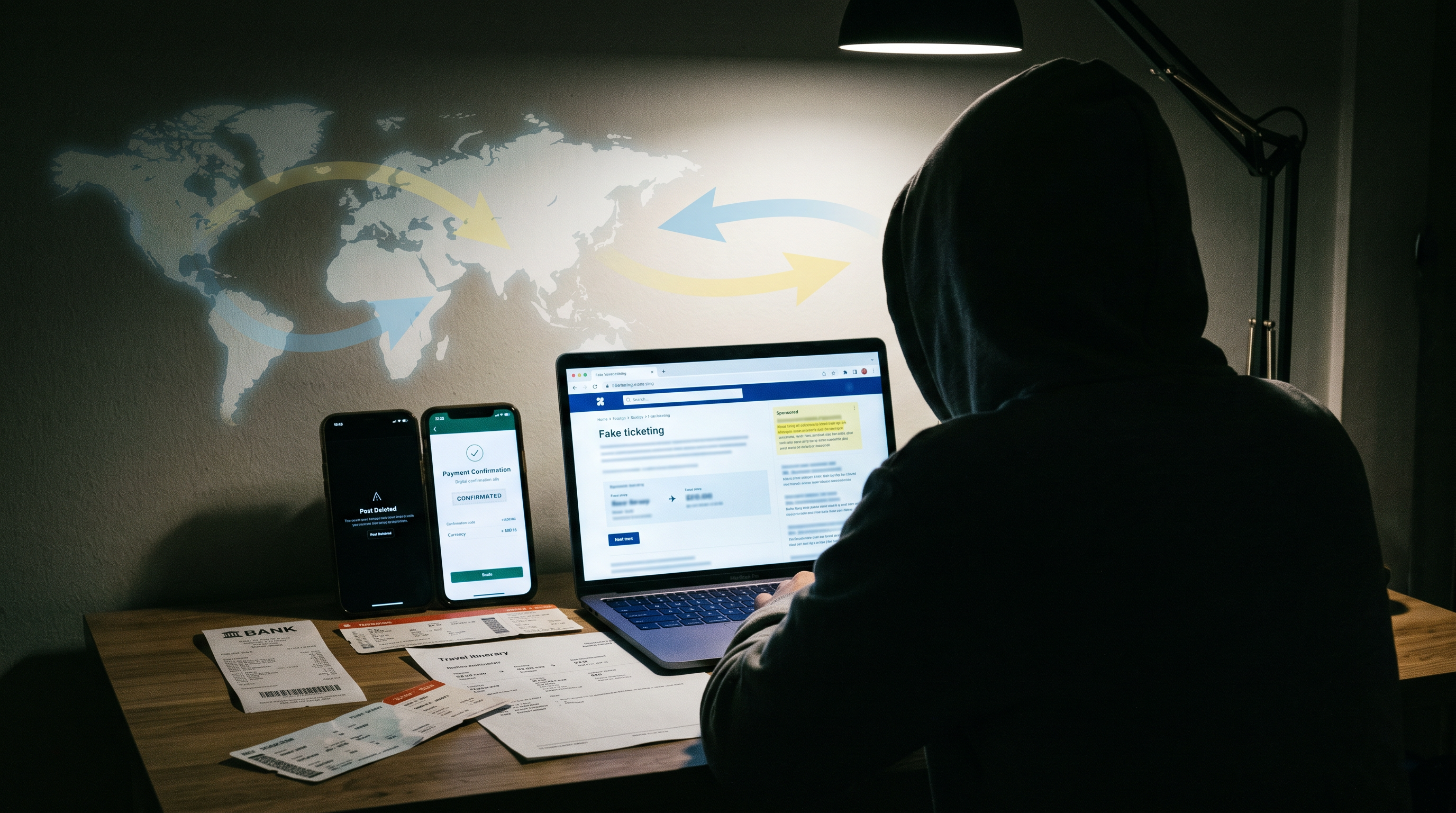
Millions of soccer fans are hunting for World Cup 2026 tickets right now, and cybercriminals are exploiting that demand at scale. The FBI and its Internet Crime Complaint Center (IC3) issued a formal public service announcement warning consumers about a surge of fake FIFA websites, fraudulent ticket resale listings, and phishing campaigns designed to steal payment data and deliver counterfeit or nonexistent tickets. With the tournament kicking off across the United States, Canada, and Mexico, the fake FIFA World Cup ticket websites scam has become one of the most active fraud campaigns of 2026.
Key Facts
- The FBI's IC3 issued PSA260527 on May 27, 2026, warning consumers that scammers are building lookalike FIFA and World Cup ticketing websites to steal money and personal data from fans.
- Fraudulent sites are promoted through sponsored search ads and social media, making them appear at the top of Google results above legitimate FIFA.com listings.
- Victims of fake FIFA World Cup ticket websites risk financial loss, identity theft, and receiving counterfeit or never-delivered tickets, according to the IC3 advisory.
- The FBI instructs all victims and witnesses to report suspicious FIFA-related websites and transactions directly to IC3 at ic3.gov.
- FIFA's only authorized ticketing channels are FIFA.com and its officially named ticketing partners, which the agency urges fans to access by typing URLs directly rather than clicking search ads.
How the Fake FIFA World Cup Ticket Websites Scam Works
Scammers behind this operation use several well-documented techniques to appear legitimate. They register domains that closely mimic official FIFA or World Cup branding, a tactic known as typosquatting. A domain like "fifaworldcuptickets2026.com" or "officialwc26tickets.net" looks credible at a glance, especially when paired with cloned logos, copied legal text, and professional-looking checkout flows.
Once a fan lands on one of these sites, they are presented with realistic ticket listings at prices just low enough to feel like a deal. At checkout, victims hand over credit card numbers, billing addresses, and sometimes passport details for "identity verification." The scammer collects the data and either disappears or sends a counterfeit PDF ticket that will not scan at the gate.
According to the IC3 public service announcement, attackers are also running fake hospitality package offers and bogus livestream subscriptions, widening the pool of potential victims well beyond in-person attendees.
Sponsored Search Results Are a Primary Attack Vector
One of the most alarming aspects of this scam is how fraudulent sites surface at the very top of Google and Bing results. Criminals purchase pay-per-click ads that appear above organic listings, complete with official-looking headlines and display URLs. A fan searching for "buy World Cup 2026 tickets" may see a sponsored result before they ever reach FIFA.com.
The FBI specifically warns consumers not to click on sponsored search results when looking for World Cup tickets. Instead, type "fifa.com" directly into the browser address bar and navigate from there. This single habit can eliminate the most common entry point into the fake FIFA World Cup ticket websites scam.
Social Media Ads and Fake Resale Listings
Beyond search engines, scammers are running targeted ads on Facebook, Instagram, X, and TikTok. These ads often use FOMO-driven copy such as "Last tickets available" or "Flash sale ends tonight." Some campaigns impersonate well-known resale platforms or travel agencies, lending a false sense of credibility.
Fake resale listings also appear on peer-to-peer marketplaces. In these cases, a seller may provide a real-looking PDF ticket and then resell the same barcode to multiple buyers. Only one person scans in. Everyone else is turned away at the gate with no recourse if they paid via bank transfer, cryptocurrency, or gift cards.
This pattern of impersonation-driven fraud is not new. Fans who follow sports online have already seen similar schemes, including a fake NFL player romance scam targeting 49ers fans and broader imposter scam losses reported by the FTC in 2025 that ran into billions of dollars.
Red Flags That Signal a Fake FIFA Ticketing Site
- The domain is not FIFA.com or a partner named on FIFA.com's official ticketing page.
- The site appeared in a sponsored search result or social media ad rather than organic results.
- Prices are significantly below face value or listed as "exclusive deals" with countdown timers.
- The checkout accepts wire transfer, cryptocurrency, or gift cards as payment methods.
- The site requests passport numbers, national ID data, or excessive personal information upfront.
- There is no verifiable physical address, no working customer service number, and no clear refund policy.
- The domain was registered recently, which you can verify for free using a WHOIS lookup tool.
What the FBI and IC3 Are Telling Fans to Do
The IC3 advisory is direct in its guidance. Fans should purchase tickets exclusively through FIFA.com or the officially listed ticketing partners published on that site. Never buy from a third-party site discovered through a search ad, a social media post, or an unsolicited email.
If you must use a secondary market, pay with a credit card. Credit cards offer chargeback rights that give you a path to recovering funds if tickets turn out to be fraudulent. Wire transfers, crypto payments, and gift card payments are irreversible and offer no consumer protection.
The FBI also recommends taking screenshots of any suspicious listing, recording the domain name and any communication, and preserving email headers if you received a phishing message. All of this documentation strengthens a fraud report and helps investigators trace the operation.
Report fake FIFA World Cup ticket websites and related scams to the FBI's Internet Crime Complaint Center at IC3.gov and to the FTC at ReportFraud.ftc.gov. Also notify your bank or card issuer immediately if you believe you have already submitted payment to a fraudulent site.
Protect Your Personal Data, Not Just Your Money
Financial loss is the most obvious risk, but identity theft can follow a fan for years. Scammers who collect passport numbers, driver's license scans, or national identification data can sell that information on dark web markets. According to reporting by TechRadar, some fraudulent World Cup sites are pairing ticket forms with phishing pages that harvest login credentials for email and banking accounts.
If you entered personal information on a suspicious site, change your email and banking passwords immediately, enable two-factor authentication on all accounts, and consider placing a credit freeze with the three major bureaus: Equifax, Experian, and TransUnion.
Why World Cup 2026 Is an Especially High-Value Target
The 2026 FIFA World Cup is the largest in tournament history, spanning 16 host cities across three countries. Global demand for tickets is extraordinary, and supply is limited. That combination creates ideal conditions for fraud: motivated buyers, scarce legitimate inventory, and millions of fans who may not be familiar with official purchase channels.
Scammers rotate domains quickly, often pulling a site down and relaunching under a new address within days of complaints. This rapid cycling makes enforcement difficult and means new fraudulent sites can appear faster than platforms can remove them. Consumers are the last line of defense, which is exactly why the FBI issued this warning ahead of peak tournament traffic.
Conclusion: Verify Before You Buy
The fake FIFA World Cup ticket websites scam is active, well-funded, and sophisticated. It targets fans at their most vulnerable, when excitement overrides caution. The simplest protection is verification: navigate directly to FIFA.com, buy only through named official partners, and pay with a credit card. If a deal feels too good or a site surfaced through an ad, treat it as suspicious until proven otherwise. Report anything unusual to IC3 and the FTC, and share this warning with fellow fans who may be searching for tickets right now.
Frequently Asked Questions
How do I know if a FIFA World Cup ticket website is legitimate?
Legitimate tickets for the 2026 FIFA World Cup are sold only through FIFA.com and the official ticketing partners listed on that site. Any other domain, especially one found through a sponsored search ad or social media post, should be treated as suspicious. Always type FIFA.com directly into your browser rather than clicking links from ads or emails.
What should I do if I already paid on a fake FIFA ticketing site?
Contact your bank or credit card issuer immediately to dispute the charge and request a chargeback. File a report with the FBI's IC3 at ic3.gov and with the FTC at reportfraud.ftc.gov. If you also provided personal identity documents, consider placing a credit freeze with Equifax, Experian, and TransUnion to prevent further misuse of your data.
Why are scammers targeting World Cup 2026 ticket buyers specifically?
The 2026 FIFA World Cup is the largest in history, spanning 16 host cities across the United States, Canada, and Mexico. Extremely high global demand combined with limited ticket supply creates pressure on fans to act fast, which scammers exploit by creating urgency through countdown timers and "last tickets available" messaging. This environment makes fans more likely to skip verification steps and fall for fraudulent listings.
Can I safely buy World Cup tickets from a resale or secondary market?
FIFA recommends against using unauthorized resale platforms and warns that counterfeit barcodes are common on peer-to-peer markets. If you do use a secondary market, pay only with a credit card so you have chargeback rights, verify the seller's identity and history, and be aware that a single barcode can be sold to multiple buyers, meaning only the first person to scan it will gain entry.
How do I report a fake FIFA website to the FBI?
Submit your report directly to the FBI's Internet Crime Complaint Center at ic3.gov. Include the full URL of the suspicious site, screenshots of listings or communications, any receipt or transaction confirmation, and the email address or phone number used by the suspected scammer. The more documentation you provide, the more useful your report is to investigators tracking the broader operation.