A sweeping wave of AI-powered celebrity fraud is hitting fans of Taylor Swift and other pop stars with devastating financial consequences. Industry trackers now estimate that celebrity impersonation scams cost victims approximately $5.3 billion in 2025 alone, according to reports from Spikerz and related social media security researchers. The scams are growing faster than platforms can remove them, and ordinary fans are bearing the cost.
How the Taylor Swift Impersonation Scam Actually Works
The mechanics behind these schemes are more sophisticated than a basic fake profile. Fraudsters combine several tools to build convincing illusions of access to a real celebrity, then exploit that illusion to extract money.
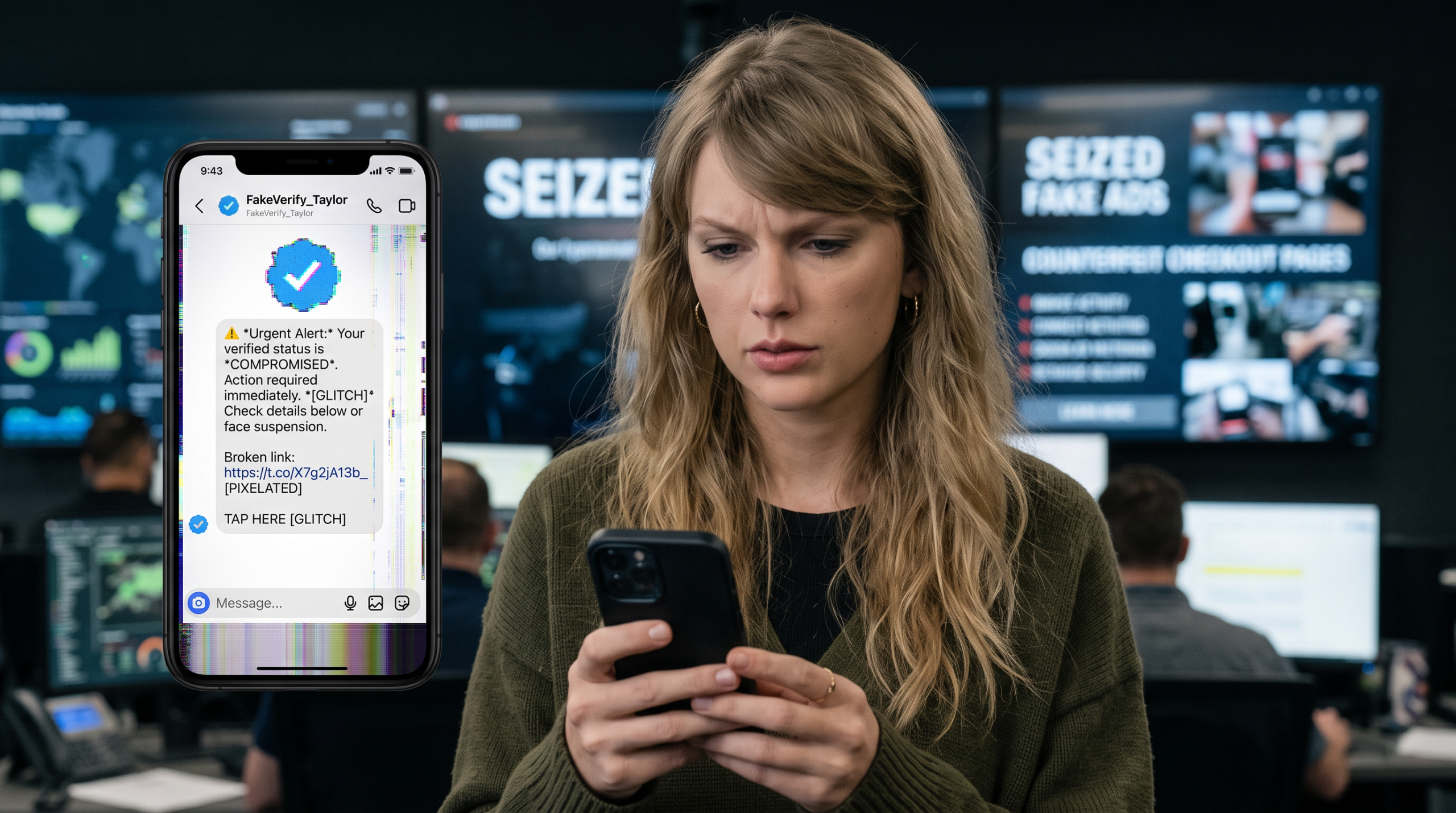
According to reporting by Complex, scammers first create cloned accounts on platforms like Instagram, TikTok, and Facebook. These profiles use stolen photos, verified-looking usernames, and follower counts inflated through bot networks. Some operators go further, producing short deepfake video clips that place a celebrity’s likeness in a custom setting, making the account appear genuine at a glance.
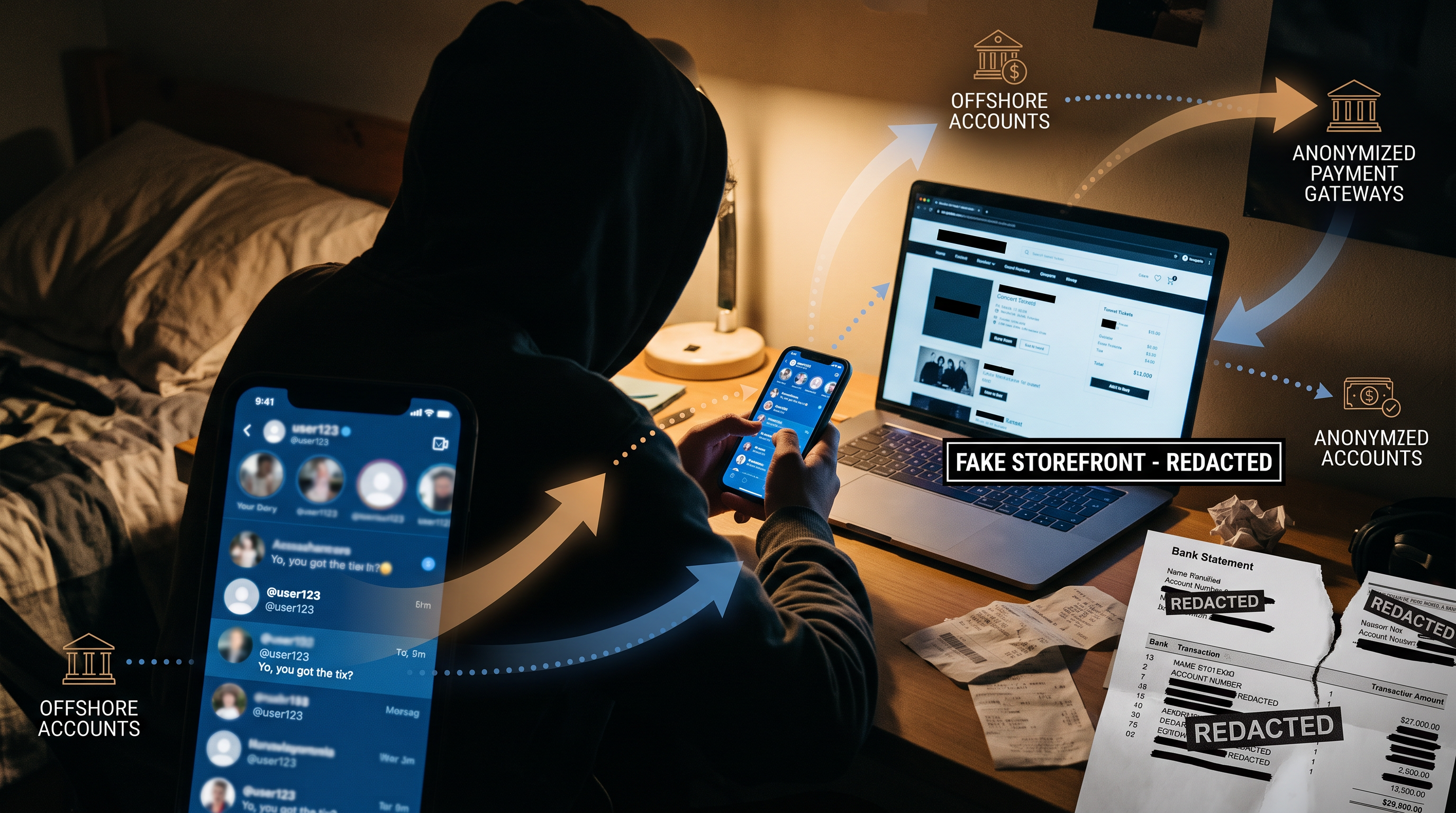
Once the fake profile is live, scammers purchase sponsored ads to amplify reach. Paid promotion lends the account institutional credibility and puts it in front of fans who would never have stumbled across it organically. That ad spend is treated as a cost of doing business, quickly recouped from even a handful of victims.
The Ad-to-DM-to-Checkout Pipeline
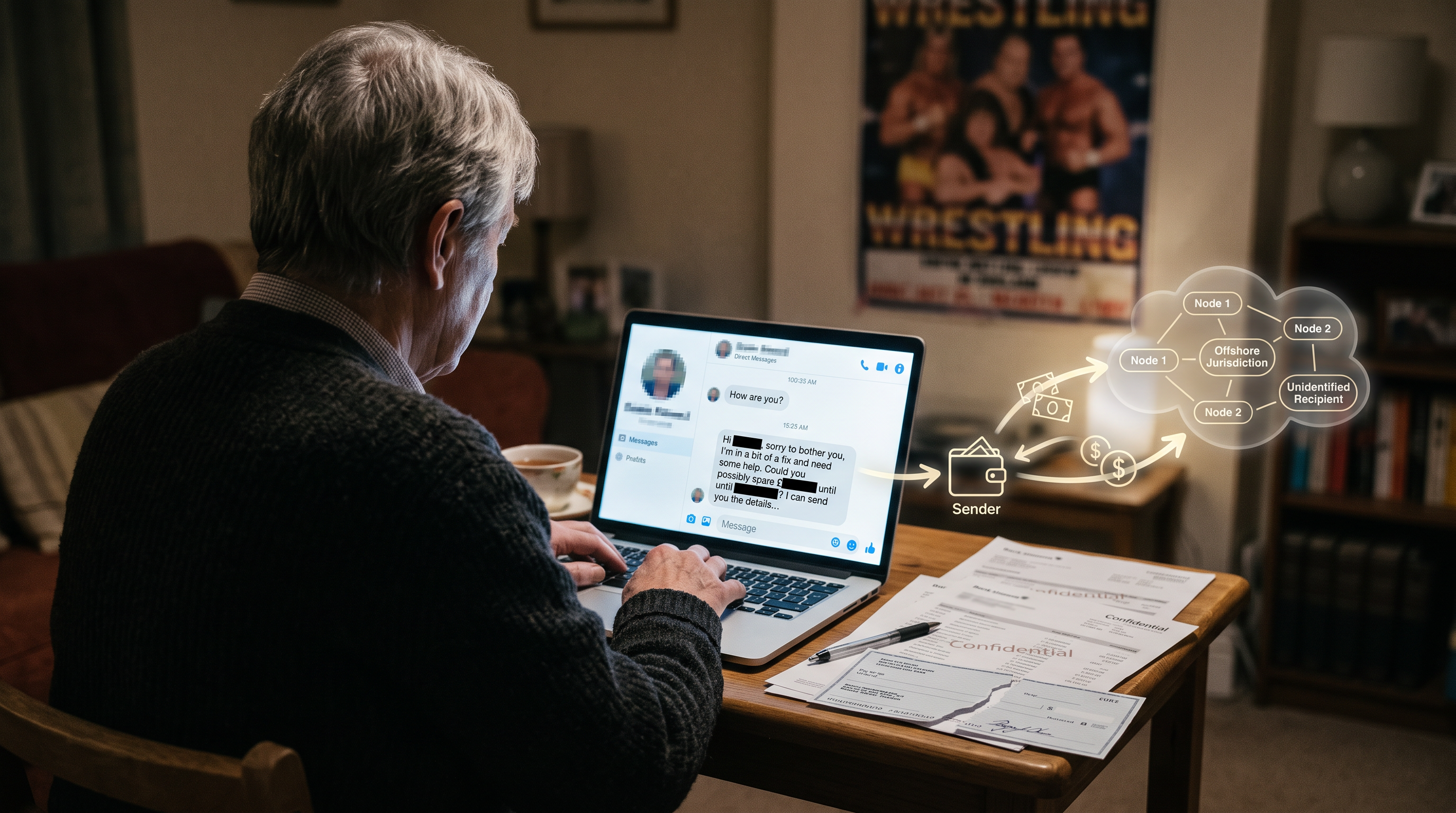
After an ad draws in a fan, the scammer moves the conversation to a direct message. Common hooks include exclusive meet-and-greet opportunities, early ticket access, signed merchandise giveaways, or personal fan appreciation packages. The urgency is always manufactured: slots are running out, the offer expires in hours, or a limited number of fans were personally selected.
Victims are then steered toward counterfeit landing pages designed to mirror official artist websites. At checkout, payment methods shift from traceable credit cards to gift cards, wire transfers, or cryptocurrency deposits. Scammers sustain the illusion with fake confirmation dashboards and fabricated receipts, keeping victims calm while funds are laundered through micro-transactions and crypto mixing services.
Why AI Makes These Scams Harder to Detect
Generative AI has fundamentally changed the economics of impersonation fraud. Creating a convincing deepfake video or cloning a voice once required expensive production resources. Today, free and low-cost tools can produce realistic synthetic media in minutes.
As Bitdefender’s security researchers have documented, deepfake scams using Taylor Swift’s likeness have circulated widely on TikTok and similar platforms. These clips are short enough to avoid extended scrutiny but convincing enough to reinforce the credibility of a fake account when a fan sees them in a feed.
Three factors combine to make the current environment particularly dangerous for fans:
- Emotional parasocial bonds: Fans who feel a deep personal connection to an artist are more likely to believe that artist would reach out to them directly.
- Platform ad verification gaps: Sponsored content policies have not kept pace with synthetic media creation, allowing fraudulent ads to run before human reviewers can flag them.
- Rapid domain and account churn: Scammers abandon flagged accounts and spin up replacements within hours, staying ahead of takedown requests.
The Scale of the Problem in 2025
Taylor Swift is the most targeted celebrity in this wave of fraud, but she is far from alone. Sabrina Carpenter and other high-profile artists have also had their likenesses used in impersonation campaigns, according to the Complex investigation. The broader category of celebrity impersonation scams has become one of the fastest-growing segments of online fraud.
The BBC has previously reported on the wider challenge platforms face in policing deepfake content, noting that detection technology consistently lags behind creation tools. For law enforcement and consumer protection agencies, the cross-border nature of these operations adds another layer of complexity to prosecution.
Victim losses are not abstract numbers. Reported cases include fans who paid hundreds to thousands of dollars believing they had secured a personal experience with a favorite artist, only to discover the account had vanished and the payment was irretrievable.
How to Recognize a Celebrity Impersonation Scam
The Federal Trade Commission has warned consumers about celebrity impersonation on social media for years, and the core red flags remain consistent. Watch for these warning signs:
- An account slides into your DMs offering exclusive access, prizes, or personal contact with a celebrity.
- The offer demands payment via gift card, wire transfer, or cryptocurrency.
- You are pressured to act immediately due to a limited time window.
- The account was created recently or has a username with extra characters or slight misspellings.
- You are asked to keep the interaction private or move to a different platform.
- The landing page URL does not match the artist’s official verified domain.
What to Do If You Have Been Targeted
If you believe you have encountered or fallen victim to a Taylor Swift impersonation scam or any celebrity fraud scheme, act quickly. Speed matters when attempting to recover funds or limit damage.
- Stop all communication with the account immediately and do not send any additional payments.
- Preserve every screenshot, transaction ID, username, and message thread before the account disappears.
- Contact your bank or crypto exchange right away and report the transaction as fraudulent.
- Report the account directly to the platform where you encountered it.
- File a report with the FTC at reportfraud.ftc.gov and submit a complaint to the FBI’s Internet Crime Complaint Center at ic3.gov.
You can also use tools like Blacklist to check whether a username, domain, or account has been flagged by other users who have encountered suspicious celebrity impersonators.
Policy Responses and What Platforms Are Being Asked to Do
Consumer advocates and cybersecurity researchers are pushing for structural changes at the platform level. Key demands include mandatory synthetic media labeling for any AI-generated content, stronger identity verification before advertising accounts can run sponsored posts, and faster takedown pipelines for reported impersonation profiles.
On the financial side, analysts are calling for tighter know-your-customer requirements on crypto onramps to make it harder to launder fraud proceeds through mixing services. Without friction at the cash-out stage, the financial incentive to run these scams at scale remains largely intact.
Protecting Yourself Going Forward
The simplest defense against a Taylor Swift impersonation scam or any celebrity fraud is to apply a single rule: no legitimate celebrity, management team, or official contest will ever ask you to pay via gift card, wire transfer, or cryptocurrency through a direct message. Any request that fits that pattern is a scam, regardless of how convincing the account looks or sounds.
Always verify offers through official verified channels, such as the artist’s own website or verified social accounts with long posting histories. If something feels urgent or too good to be true, treat that feeling as a warning signal rather than a reason to act fast.
Frequently Asked Questions
How much money have Taylor Swift impersonation scams cost victims?
Industry security researchers, including Spikerz, estimate that celebrity impersonation scams broadly cost victims approximately $5.3 billion in 2025. Taylor Swift is cited as one of the most frequently impersonated celebrities in these schemes.
How do scammers make fake Taylor Swift accounts look real?
Fraudsters use stolen photos, bot-inflated follower counts, and AI-generated deepfake video clips. They also run paid sponsored ads to add perceived legitimacy and reach fans who would not otherwise encounter the fake profile organically.
What payment methods do celebrity impersonation scammers request?
Scammers typically ask for gift cards, wire transfers, or cryptocurrency deposits because these methods are difficult to reverse and easier to launder. Any solicited DM requesting these payment types should be treated as fraudulent.
Where should I report a Taylor Swift impersonation scam?
Report the fake account to the platform where you found it. Then file a complaint with the FTC at reportfraud.ftc.gov and the FBI’s Internet Crime Complaint Center at ic3.gov. Contact your bank or crypto exchange immediately if you have already sent money.
Can I recover money lost to a celebrity impersonation scam?
Recovery depends on how quickly you act and the payment method used. Credit card payments offer the best chance of a chargeback. Wire transfers and cryptocurrency transactions are much harder to reverse, which is why scammers prefer them. Contacting your financial institution within hours of the transaction gives you the best possible chance.