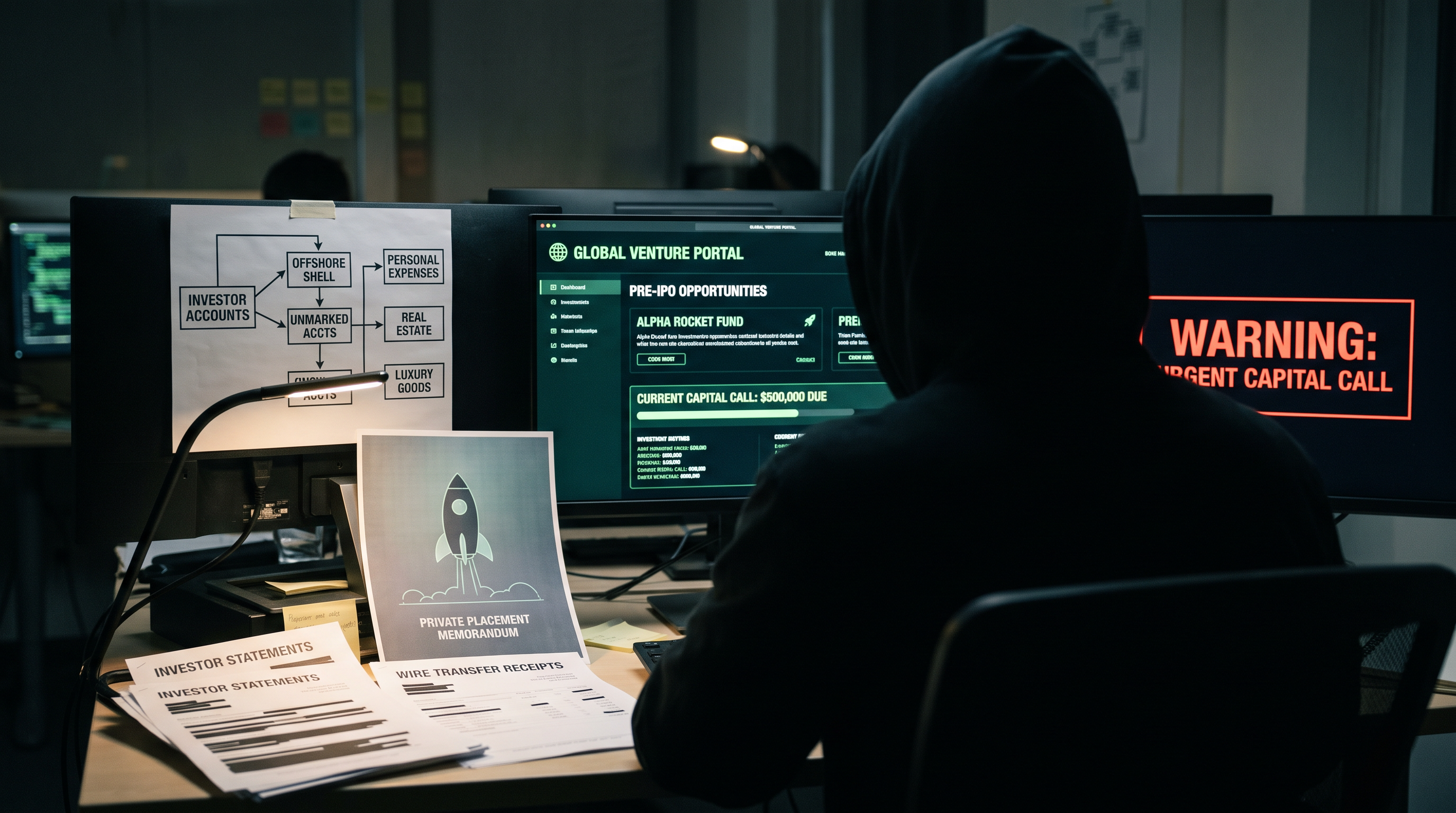
Investors who believed they were buying a piece of SpaceX before it went public may have received something very different, according to U.S. regulators. On Sept. 30, the Securities and Exchange Commission charged Meyer Global Management (MGM) and its CEO, Owen E.H. Meyer, with allegedly defrauding retail investors through private funds marketed as holding stakes in sought-after pre-IPO companies. This alleged SpaceX private fund fraud case has kept circulating in the news cycle since, and it carries a clear warning about how easily the promise of exclusive access can be used to move money.
Key facts
- The SEC charged Meyer Global Management and CEO Owen E.H. Meyer on Sept. 30 with allegedly defrauding investors in private funds marketed as holding pre-IPO company stakes, including SpaceX.
- According to the SEC, Meyer raised at least $18.5 million from nearly 100 investors between 2019 and 2024.
- The SEC alleges Meyer misappropriated at least $1.27 million in client assets.
- The SEC says one fund forfeited a nearly $3 million SpaceX investment after Meyer repeatedly failed to resolve a capital-call deficiency.
What the SEC alleges in the SpaceX private fund fraud case
The SEC filed a civil action against MGM and Meyer in federal court in Manhattan. According to the agency's press release, the funds were pitched to retail investors as vehicles that held interests in highly desirable private companies. SpaceX was among the names used in that marketing.
The full allegations are laid out in the SEC's complaint, and the agency also posted a litigation release on the matter. Reuters and Fortune both reported on the filing the same day.
Money raised and allegedly misappropriated
The SEC says Meyer raised at least $18.5 million from nearly 100 investors over a five-year period, from 2019 to 2024. Of that money, regulators allege at least $1.27 million in client assets was misappropriated.
The agency describes the investors as retail investors, meaning ordinary individuals rather than large institutions. That matters because retail investors often have fewer ways to verify what a private fund actually owns.
The forfeited SpaceX investment
One of the most striking allegations involves a fund's investment of nearly $3 million in SpaceX. The SEC says Meyer repeatedly failed to resolve a capital-call deficiency, and as a result the fund forfeited that investment.
In plain terms, a capital call is a request for investors or a fund to send in committed money. If a shortfall is not fixed, the fund can lose its position. According to the SEC, that is what happened here, and the loss fell on the fund and its investors.
The Starship VI fund
The complaint also focuses on a fund called Starship VI. The SEC alleges investors were led to believe the fund owned SpaceX-related assets when it did not.
Regulators further allege that hundreds of thousands of dollars from Starship VI were misappropriated. If those claims are proven, investors would have paid for exposure to a company they did not actually hold through the fund.
SpaceX is not accused of wrongdoing
This point is central to the story. Nothing in the SEC's public materials accuses SpaceX of taking part in the alleged scheme. The company's name appears because investors were allegedly sold access to funds tied to its private shares.
That pattern is common in investment fraud. Fraudsters borrow the credibility of a famous brand to make a pitch feel safe, even when the brand has no connection to the person selling the product.
Why pre-IPO fund pitches attract retail investors
Shares of highly valued private companies are hard to buy. Most trade in closed markets with limits on who can invest and how shares are transferred. That scarcity creates demand from people who want to get in before a possible public listing.
Advisers who say they can offer that access can be very persuasive. The pitch often relies on a few familiar elements:
- A famous company name that suggests safety and growth.
- Claims of exclusive or limited availability.
- Pressure to commit money quickly.
- Fund names that sound connected to the company, such as a space-themed label.
None of these features proves wrongdoing on its own. They are, however, reasons to ask for documents before sending money.
Where the case stands
Meyer and MGM are defendants in a civil action. The allegations have not been established by a final judgment, and the defendants are entitled to respond in court. Readers should treat the claims as allegations until a judge or jury decides otherwise, or the case is resolved by other means.
The SEC brings civil cases, which differ from criminal prosecutions brought by the Justice Department. This filing is the SEC's enforcement action, and the public record so far comes from the agency's own documents and news coverage of them. You can read the initial reporting from Reuters and Fortune.
How to check a private fund adviser before you invest
Cases like this one show why basic checks matter, especially when an offer involves a household-name company. Consider these steps before committing money:
- Ask what the fund legally owns. Request documents showing whether it holds shares directly, or holds an interest in another vehicle that holds them.
- Verify the adviser. Search the SEC's adviser database and review any disciplinary history.
- Ask about capital calls. Understand how additional funding requests work and what happens if they are missed.
- Seek independent statements. Where possible, confirm holdings with a custodian or administrator rather than only the adviser.
- Be wary of urgency. A deadline that leaves no time for review is a warning sign.
Investment schemes come in many forms. A recent case involving alleged semi truck investment fraud shows how a tangible-sounding asset can be used to attract money, while the story of a Ponzi scheme victim linked to Travis Kelce shows that even well-connected people can be caught out. For the wider picture, see our report on FinCEN's findings on crypto investment scams.
Reporting suspected investment fraud
If you think you were misled about an investment, document everything. Keep emails, fund statements, wire confirmations, and marketing material. Then report it to the right agencies.
- File a report with the FTC at reportfraud.ftc.gov.
- If money was sent electronically, file a complaint with the FBI's Internet Crime Complaint Center at ic3.gov.
- Contact the SEC to flag suspected securities fraud, and speak with a licensed attorney about recovery options.
What this case means for investors
The allegations against Meyer Global Management and Owen E.H. Meyer are serious, but they remain unproven. What the SEC describes is a gap between what investors were told and what the funds allegedly held, along with claims that client money was taken for other purposes.
The takeaway is simple. A famous name in a pitch is not proof of ownership. Before you put money into any fund that promises access to SpaceX or another sought-after private company, demand proof of what it owns and who controls the cash.
If you have been approached with a pre-IPO offer, share this article with anyone considering it, check the adviser's record, and report anything suspicious. Follow Blacklist for updates as this case develops.
Frequently Asked Questions
Who did the SEC charge in the SpaceX private fund case?
The SEC charged Meyer Global Management and its CEO, Owen E.H. Meyer, on Sept. 30. The agency alleges they defrauded investors in private funds marketed as holding stakes in pre-IPO companies, including SpaceX. The case is a civil action filed in federal court in Manhattan.
Is SpaceX accused of fraud in this case?
No. SpaceX is not accused of wrongdoing in the SEC's case. Its name appears because investors were allegedly sold access to funds tied to its private shares.
How much money did investors allegedly lose?
The SEC says Meyer raised at least $18.5 million from nearly 100 investors between 2019 and 2024. It alleges at least $1.27 million in client assets was misappropriated. It also says one fund forfeited a nearly $3 million SpaceX investment after a capital-call deficiency went unresolved.
What is the Starship VI fund?
Starship VI is a fund named in the SEC's complaint. The agency alleges investors were led to believe it owned SpaceX-related assets when it did not, and that hundreds of thousands of dollars from the fund were misappropriated.
Have Meyer and MGM been found guilty?
No. The allegations have not been established by a final judgment. Meyer and MGM are defendants in an SEC civil action, and the claims remain allegations until the court rules or the case is resolved.