Imagine getting a private message from who you believe is Keanu Reeves. The voice sounds real, the face matches, and the personality is warm and genuine. Then, weeks later, you wire your life savings to a stranger. This is not a hypothetical story. It is happening to real people right now, and the numbers are staggering.
The Keanu Reeves Impersonation Scam Explained
Scammers have zeroed in on Keanu Reeves for one very specific reason: people trust him. His reputation as a kind, humble, and approachable celebrity makes him the perfect bait for a romance or investment scam. His team has reportedly filed tens of thousands of takedown requests against fake profiles, cloned accounts, and fraudulent ads that use his likeness. Yet the accounts keep coming back.
According to Vice, people are collectively losing billions of dollars to celebrity romance scammers. The Keanu Reeves angle is one of the most active fraud campaigns circulating on social media platforms today, fueled almost entirely by artificial intelligence.
Why Keanu Reeves Is the Perfect Scam Target
Fraudsters do not pick celebrities at random. They run calculated operations and choose public figures whose personas lower a victim’s guard. Keanu Reeves checks every box. He is well known for personal generosity stories, he engages warmly with fans in real life, and his name has consistent global search volume. That combination makes the initial contact feel plausible and the emotional manipulation that follows feel believable.
How AI Has Completely Changed the Celebrity Impersonation Scam Game
This is not your 2018 version of a romance scam where the profile photo looked slightly off. Today’s Keanu Reeves impersonation scam uses technology that removes almost every classic red flag victims were once trained to spot.
The Three Layers of AI Deception
- Cloned audio: Scammers use publicly available clips of Reeves speaking to train voice synthesis models. The result is a synthetic voice memo that sounds almost identical to the real person. Victims receive what sounds like a personal voice message, and they believe it.
- Deepfake video: Short video clips using Reeves’ face are generated and shared through direct messages or private channels. The quality is no longer obviously fake. These videos are designed to bypass simple verification methods that worked just a few years ago.
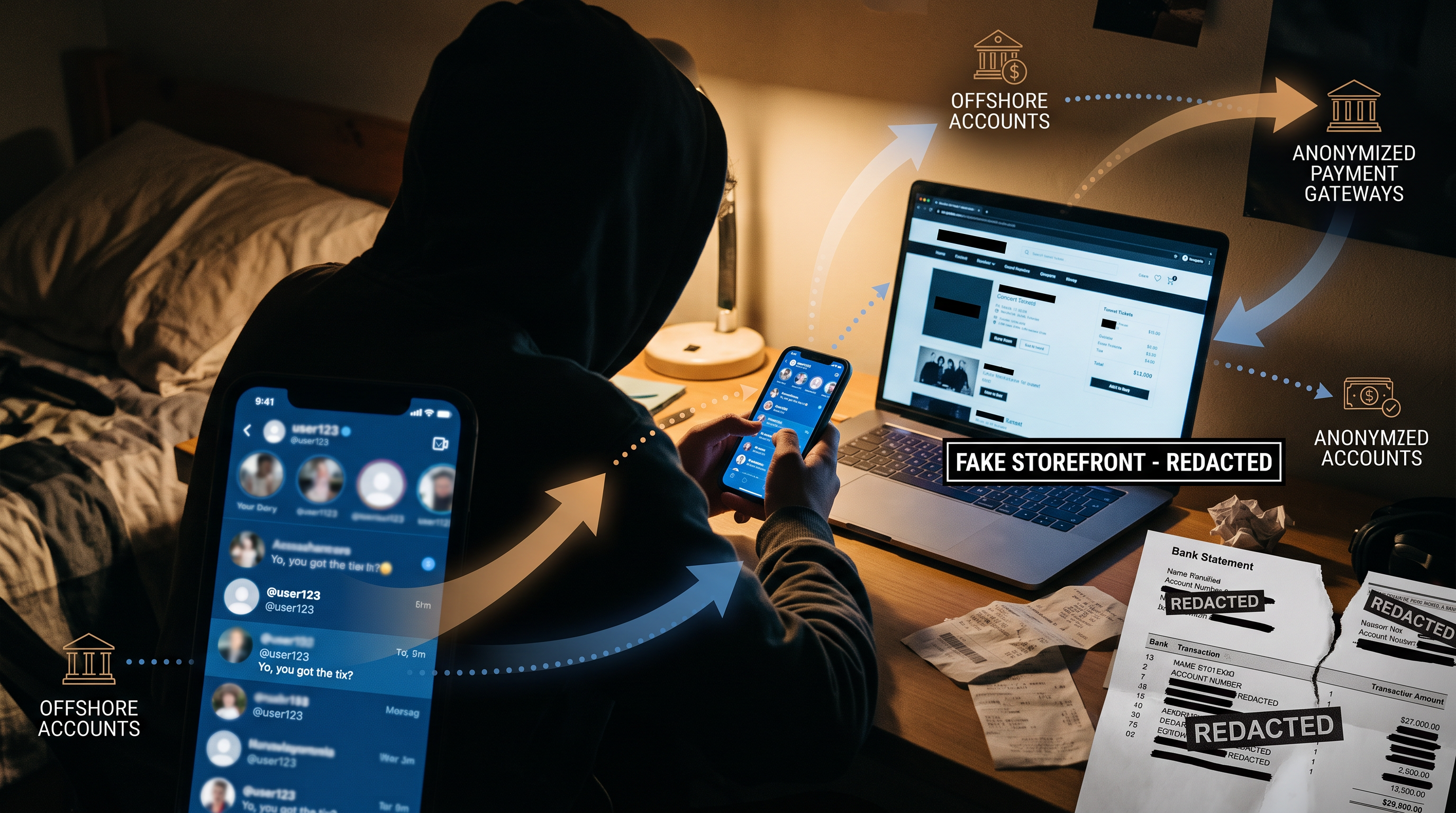
- Fake private profiles with paid amplification: Fraudsters do not just create one account and hope for the best. They use paid ad tools to push these profiles in front of targeted audiences, often using ad cloaking techniques to hide the malicious destination from platform moderators.
The FTC has extensively documented how these tactics evolve, noting that online romance scams cost victims more than any other type of consumer fraud. What was once a slow-moving, easy-to-detect con has become a sophisticated, fast-moving operation backed by real technology infrastructure.
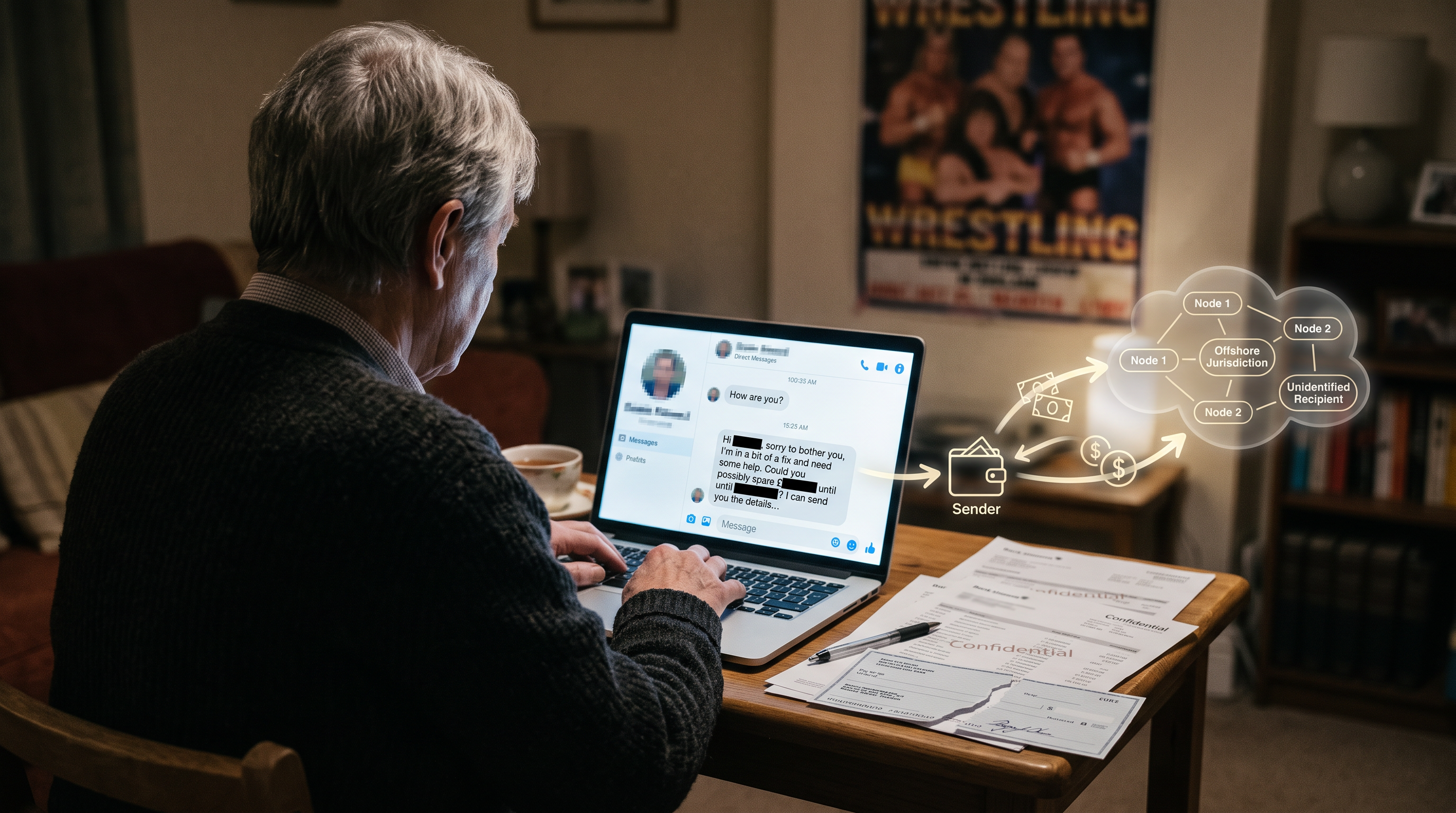
The Scam Flow: From First DM to Untraceable Payment
Understanding the exact playbook these scammers use is the single best protection you can give yourself or someone you love. The Keanu Reeves impersonation scam follows a very predictable pattern once you know what to look for.
- The initial contact: A message arrives through Instagram, Facebook, TikTok, or even WhatsApp. The account looks legitimate, sometimes featuring verified-looking badges or thousands of followers built through bot activity.
- Building the relationship: Over days or weeks, the fake Keanu persona sends thoughtful messages, voice memos, and video clips. The conversation becomes personal. Victims report feeling a genuine emotional connection. This phase is deliberate and patient.
- Introducing the crisis: Once trust is established, a problem appears. It might be a stuck business payment, a customs fee on a package, or a one-time investment opportunity. The urgency is always carefully crafted.
- The payment request: Victims are asked to send gift cards, wire cryptocurrency, or transfer money through services that are difficult or impossible to reverse. Some victims have reported losses reaching six and even seven figures.
- Disappearance: Once the money moves, the persona vanishes, the account gets deleted, and the operation resets with a new target list.
Real Losses That Destroy Real Lives
One woman reportedly lost her home and her entire life savings after falling for an AI deepfake video scam involving a celebrity impersonation. These are not people who were careless or naive. They are ordinary individuals who were targeted by sophisticated criminal organizations using tools that were not available to scammers just a few years ago. The emotional and financial damage is life-altering.
How to Protect Yourself From the Keanu Reeves Impersonation Scam
The good news is that knowing the tactics gives you real power to protect yourself. These scams are beatable, but only if you know the rules before you need them.
Verification Steps You Should Take Immediately
- Always verify through official channels: Keanu Reeves, like every celebrity, communicates publicly through verified official accounts. If someone reaches out privately claiming to be him, that alone is a massive red flag. No A-list celebrity slides into fan DMs for private conversations.
- Demand a live, dated video through a verified account: Ask the person to record a live video holding a piece of paper with today’s date and a specific phrase you choose. Pre-recorded deepfakes cannot pass this test in real time.
- Never send gift cards or cryptocurrency to anyone you met online: This is the clearest signal of a scam in existence. Legitimate people do not ask for payment in gift cards. Ever. Full stop.
- Preserve all screenshots and metadata: If you suspect you are being targeted, screenshot everything before accounts disappear. This evidence is critical for reporting.
- Report to platforms and your bank immediately: File reports on the platform where contact was made and contact your bank the moment you realize money has moved. Time matters enormously in reversing fraudulent transfers.
- Contact law enforcement for large losses: For significant financial losses, file a report with your local police and with the FBI’s Internet Crime Complaint Center (IC3). Cross-border payment rails make these crimes international in scope, and federal involvement is often necessary.
Why These Scams Keep Spreading Despite Takedowns
Platform moderation cannot keep up with the volume. When one fake Keanu Reeves account gets removed, dozens more replace it within hours. Scam operations are run like businesses, with dedicated teams handling account creation, contact management, and payment processing. The cross-border nature of these fraud rings means law enforcement faces serious jurisdictional hurdles.
The sad reality is that the technology creating these scams is more accessible than ever, while the platforms bearing the enforcement burden are dealing with millions of reports across hundreds of millions of accounts daily. The responsibility of protection has to shift, at least in part, to individuals being aware of how these scams work.
Conclusion: Awareness Is Your Best Defense
The Keanu Reeves impersonation scam is not slowing down. It is expanding, getting more technically sophisticated, and finding new victims every single day. The moment you understand that AI can clone a voice, generate a convincing video, and sustain a weeks-long relationship through automation, you stop being an easy target. Share this information with the people you care about. The scam only works when people do not see it coming. Now you do.
If you or someone you know has been targeted by a celebrity impersonation scam, report it to the FTC at reportfraud.ftc.gov and your local law enforcement immediately. Do not wait and do not feel embarrassed. These are professional criminal operations, and reporting them helps protect the next potential victim.
Frequently Asked Questions
Is Keanu Reeves actually on social media reaching out to fans directly?
No. Keanu Reeves does not have verified personal social media accounts that he uses to contact fans privately. Any account claiming to be him and sending you direct messages is almost certainly a scam operation. His official presence online is managed through production companies and publicists, not personal DMs.
How can I tell if a voice memo or video is a deepfake?
AI-generated voice and video content is increasingly difficult to detect by ear or eye alone. The most reliable test is to ask for a live, spontaneous video response that includes a specific phrase you choose in the moment, along with today’s date on a visible piece of paper. Pre-generated deepfakes cannot respond to real-time custom requests. Also look for unnatural blinking, inconsistent lip sync, and audio that sounds slightly too clean.
What should I do if I already sent money to someone I now think is a scammer?
Act immediately. Contact your bank or financial institution the moment you suspect fraud and ask them to attempt a reversal. File a report with the platform where you were contacted. File a complaint with the FTC at reportfraud.ftc.gov and with the FBI’s IC3 at ic3.gov. For large losses, contact your local police and request that the report reference potential wire fraud or cyber fraud statutes.
Why do scammers specifically ask for gift cards or cryptocurrency?
Both payment methods are extremely difficult to reverse and hard to trace back to the recipient. Unlike a bank wire, which can sometimes be recalled, a gift card number shared with a scammer is gone the moment it is redeemed. Cryptocurrency transactions are similarly final once confirmed on the blockchain. These are not coincidental preferences. Scammers specifically train victims toward these payment rails because they protect the criminal from recovery efforts.
Where can I report a celebrity impersonation scam?
You should report the fake account directly on the platform where you encountered it. Additionally, file a report with the FTC at reportfraud.ftc.gov, the FBI Internet Crime Complaint Center at ic3.gov, and your local law enforcement agency. If significant money has been lost, your local police can coordinate with federal agencies that specialize in cyber-enabled fraud investigations.