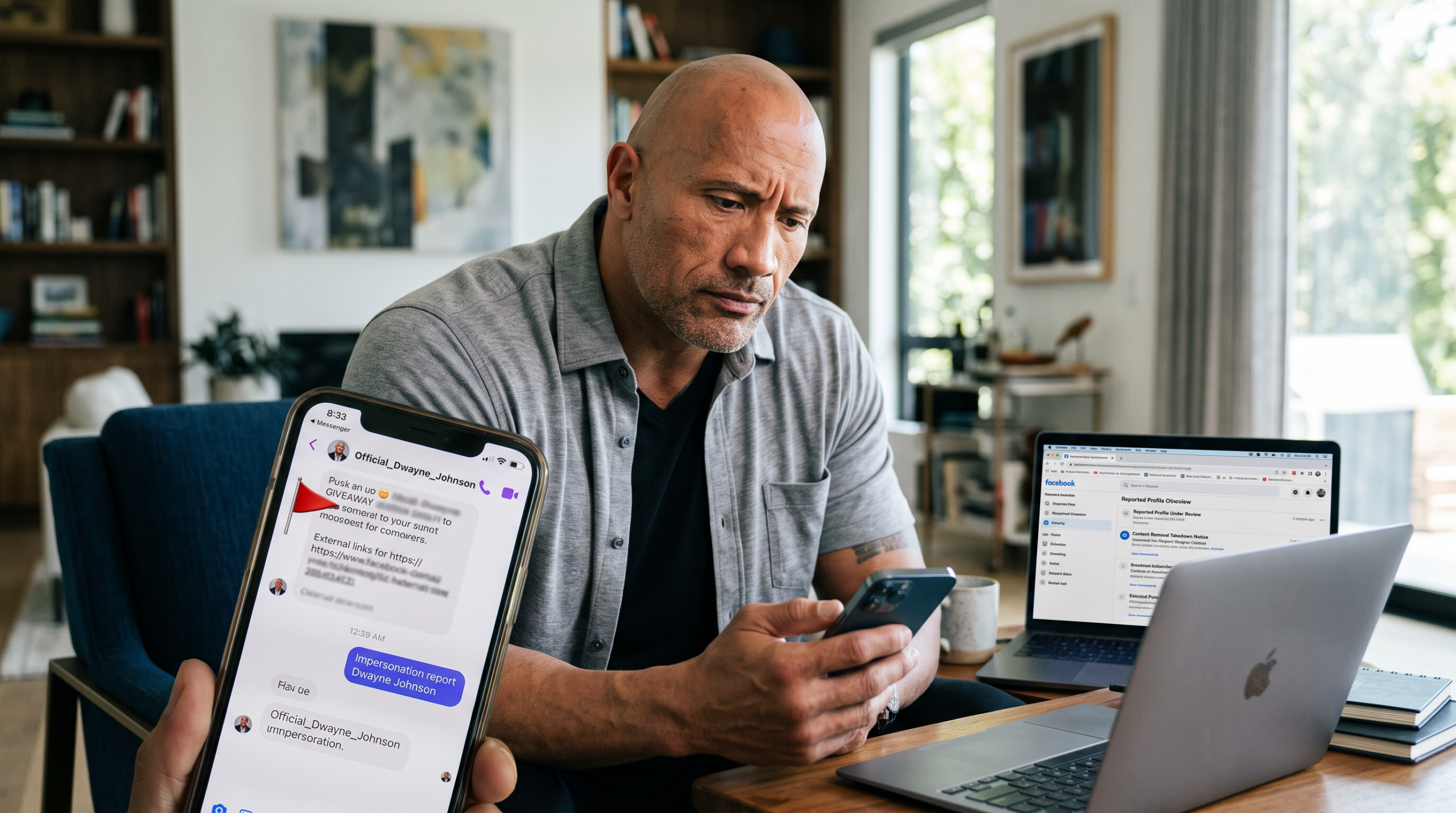
Dwayne “The Rock” Johnson has issued an urgent public warning after dozens of fraudulent Facebook accounts began impersonating him to target fans with fake giveaways and money solicitations. The scammers created convincing copycat profiles using stolen photos and cloned page assets, then slid into fans’ inboxes with promises of cash prizes, merchandise drops, and exclusive personal contact. What followed, according to Johnson and fraud experts, is a textbook celebrity impersonation playbook designed to drain victims of money and personal data.
What the Dwayne Johnson Facebook Scam Looks Like
According to Fox News, scammers constructed Facebook profiles that closely mirrored Johnson’s authentic presence, replicating his profile photo, cover image, and bio details to pass a casual inspection. Once a fake page was live, operators sent unsolicited direct messages to fans informing them they had won a prize or been personally selected for a giveaway.
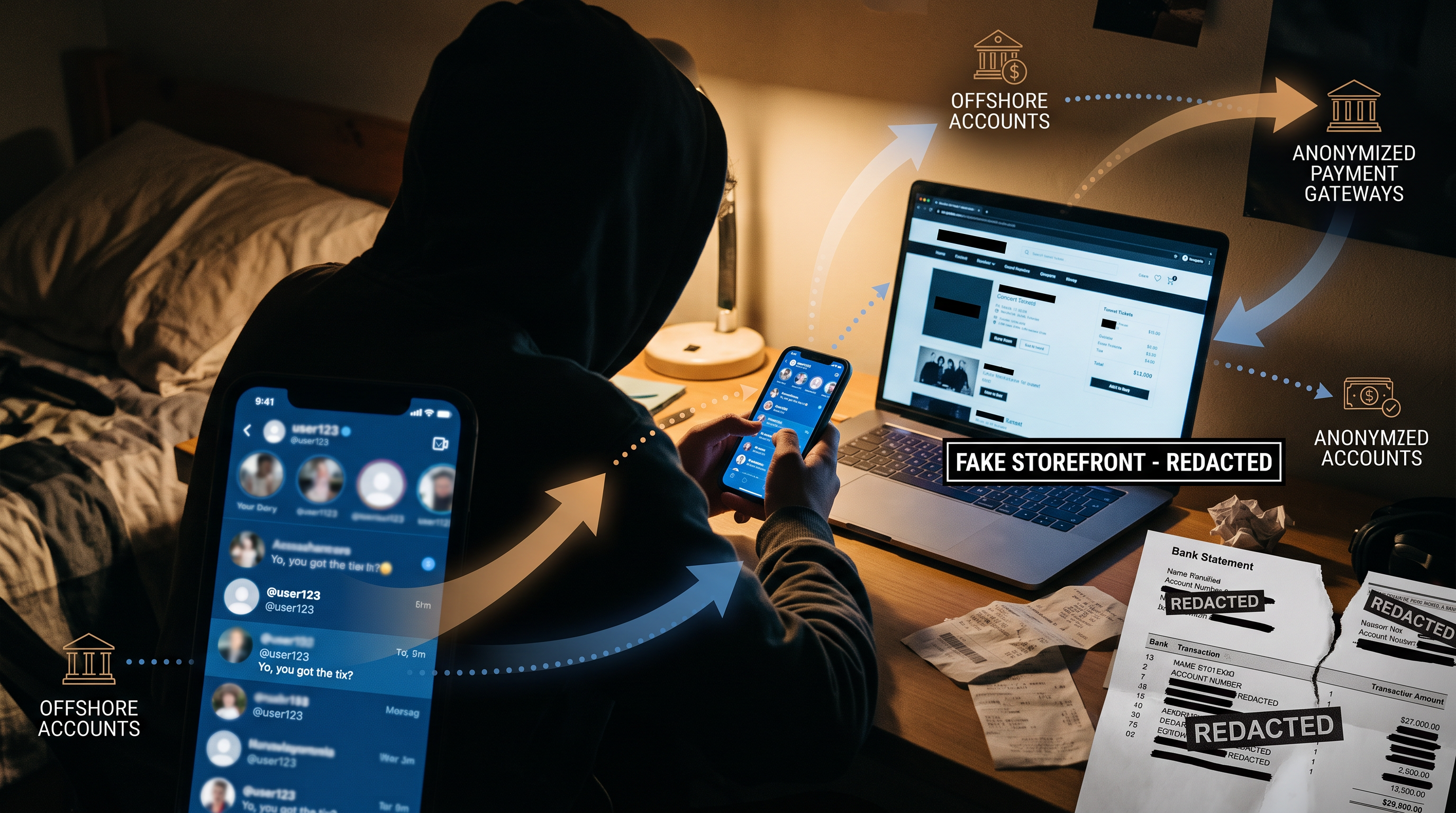
The messages then escalated to financial requests. Victims were asked to pay a small “shipping fee” to claim their prize, hand over personal information including home addresses and phone numbers, or transfer funds through gift cards or cryptocurrency. Fabricated receipts and fake checkout pages were used to add a layer of false legitimacy to the scheme.
Johnson took to his verified social media accounts to distance himself from the fraud. He urged fans to be smart, stay vigilant, and not engage with any account claiming to be him that sends unsolicited messages requesting money or personal details.
Why Celebrity Impersonation Scams Scale So Fast
Celebrity impersonation is one of the fastest-growing categories of online fraud because it exploits what researchers call parasocial trust. Fans develop a genuine emotional connection with public figures through years of content consumption. When a message appears to come from someone they admire, skepticism drops sharply and the instinct to engage takes over.
Platform verification gaps make the problem worse. Scammers cycle through accounts rapidly, abandoning flagged profiles and spinning up new ones before takedown teams can act. The Better Business Bureau has documented this pattern in detail, noting in its celebrity impersonation scam alert that fraudsters routinely move victims off the original platform and onto WhatsApp or Telegram to avoid automated detection systems.
Common tactics used in these schemes include:
- Cloning verified page aesthetics to pass visual inspection
- Sending mass DMs referencing a fake contest or prize win
- Requesting gift card payments or cryptocurrency transfers to avoid chargebacks
- Using fabricated receipts or spoofed checkout pages to build false credibility
- Moving conversations to encrypted apps to evade platform moderation
- Laundering proceeds through gift card resellers or crypto mixing services
How to Tell a Real Celebrity Profile from a Fake One
Spotting an impostor account requires looking past the surface. Scammers are skilled at visual mimicry but tend to slip on the details that platforms and savvy users notice.
Check the Verification Badge and Account Age
Authentic profiles belonging to major public figures carry a verified badge issued directly by the platform. Always click on that badge to confirm it is genuine and not a lookalike character or a recently applied label. Account creation date is also a strong signal. A page claiming to belong to a global celebrity but created in the past few weeks is almost certainly fraudulent.
Examine the Username and URL
Impostor accounts frequently add extra characters, numbers, or underscores to a celebrity’s name to create usernames that look legitimate at a glance. Dwayne Johnson’s real Facebook presence will use a consistent, clean URL tied to his verified page. Any variation on that URL should be treated as suspicious.
Never Act on Unsolicited Prize Notifications
No legitimate celebrity or their management team will contact fans through unsolicited direct messages to announce a prize and then request payment to claim it. That request for an upfront fee, no matter how small, is the defining hallmark of an advance fee fraud scheme. The FTC’s impostor scam guidance is clear: real prizes do not require winners to pay anything in advance.
What to Do If You Were Targeted
If you received a message from an account impersonating Dwayne Johnson or any other celebrity, act immediately. The steps below can limit harm and help authorities track the scam operation.
- Do not respond or send money. Engaging with the scammer, even to argue, confirms your account is active and can invite further contact.
- Screenshot everything. Capture the profile URL, the messages, and any payment requests before blocking the account. These records support reports to platforms and law enforcement.
- Block and report the impostor using Facebook’s built-in reporting tools, selecting the impersonation category.
- Contact your bank or exchange immediately if you transferred any money. Gift card payments are difficult to reverse, but acting fast may limit further charges.
- Report to the FTC at reportfraud.ftc.gov and file a complaint with the FBI’s Internet Crime Complaint Center (IC3).
- Verify official accounts by navigating directly to a celebrity’s profile from a trusted source rather than clicking links inside messages.
Protecting yourself also means staying informed about how these scams evolve. Tools like UseBlacklist help consumers identify and avoid known scam accounts and fraudulent operations before they cause financial harm.
Platform Responsibility and Takedown Speed
Facebook’s parent company Meta operates automated systems designed to detect impersonation at scale, but scammers have learned to stay one step ahead by churning through new accounts faster than moderation teams can remove them. Account churn is the core problem. A network of operators can launch dozens of fresh profiles in the time it takes a single flagged page to be reviewed and removed.
Johnson’s public warning adds social pressure on Meta to accelerate its response. High-profile celebrities calling out impersonation publicly tend to generate faster takedowns than individual user reports alone, because the reputational stakes for the platform rise sharply. Still, experts caution that platform action alone is not enough. Consumer awareness and fast personal reporting remain the most reliable first line of defense.
A Warning That Applies to Every Fan Community
While this incident centers on Dwayne Johnson, the underlying fraud model is not unique to him. Celebrity impersonation scams have targeted fans of musicians, athletes, actors, and social media influencers across every major platform. Any public figure with a large, engaged following is a potential identity to clone. Fans who follow multiple celebrities should apply the same critical eye to any unsolicited message that promises something too good to be true.
Johnson’s response, going directly to his verified channels to warn fans rather than waiting for platforms to act, is the approach fraud prevention advocates recommend for any public figure who discovers they are being impersonated. Speed matters. The longer a fake profile stays active, the more victims it can reach.
Frequently Asked Questions
Is Dwayne Johnson giving away money on Facebook?
No. Any Facebook account claiming to be Dwayne Johnson and offering cash prizes or giveaways through direct messages is fraudulent. Johnson has publicly confirmed he does not conduct giveaways through unsolicited private messages on any platform.
How do I report a fake Dwayne Johnson Facebook profile?
Click the three-dot menu on the impostor profile, select “Find support or report,” and choose the impersonation option. You can also report the specific message thread. After reporting, file a complaint with the FTC at reportfraud.ftc.gov and the FBI IC3 at ic3.gov.
Can I get my money back if I paid a Facebook scammer?
Recovery depends on how you paid. Credit card payments offer the best chargeback prospects. Bank transfers have a narrow window for reversal if you act immediately. Gift card payments and cryptocurrency transfers are rarely recoverable. Contact your financial institution the moment you realize you have been scammed.
What are the signs of a celebrity impersonation scam on Facebook?
Key warning signs include an unsolicited message announcing a prize, a request for any upfront payment, a profile created recently with no long post history, a username with extra characters or numbers, and pressure to move the conversation to WhatsApp or Telegram.
How do I verify which Facebook page actually belongs to a celebrity?
Navigate to the celebrity’s official website or another verified social media account and follow the link they provide to their Facebook page. Never click a link sent inside a direct message. Confirm the blue verification badge is present and genuine by clicking it to see the verification details.