Deepfake celebrity scams have exploded across social media platforms in 2025, with investigators and consumer-protection agencies worldwide raising urgent alarms about the speed and scale of attacks. Fraudsters are using generative AI to clone celebrity voices, fabricate convincing video appearances, and flood paid advertising networks with synthetic content that funnels fans toward fake giveaways, bogus investment schemes, and dangerous romance cons. The losses are mounting fast, and the technology behind the attacks is only getting cheaper and more accessible.
What Are Deepfake Celebrity Scams?
Deepfake celebrity scams combine AI-generated audio, images, and video to impersonate well-known public figures in ways that look and sound authentic to the average viewer. Unlike older, cruder photo-edit scams, modern synthetic media tools can clone a celebrity’s voice from a short audio sample, animate a still photograph into a talking video clip, and produce results that pass casual inspection on a phone screen.
Operators then push these synthetic clips through paid social media advertisements and comment-farming networks, reaching millions of potential victims at a fraction of the cost of a traditional ad campaign. According to reporting by the Organized Crime and Corruption Reporting Project (OCCRP), celebrities themselves have expressed deep anger and frustration at finding their likenesses weaponized against their own fan bases, often with little recourse for fast removal.
How the Fraud Funnel Works
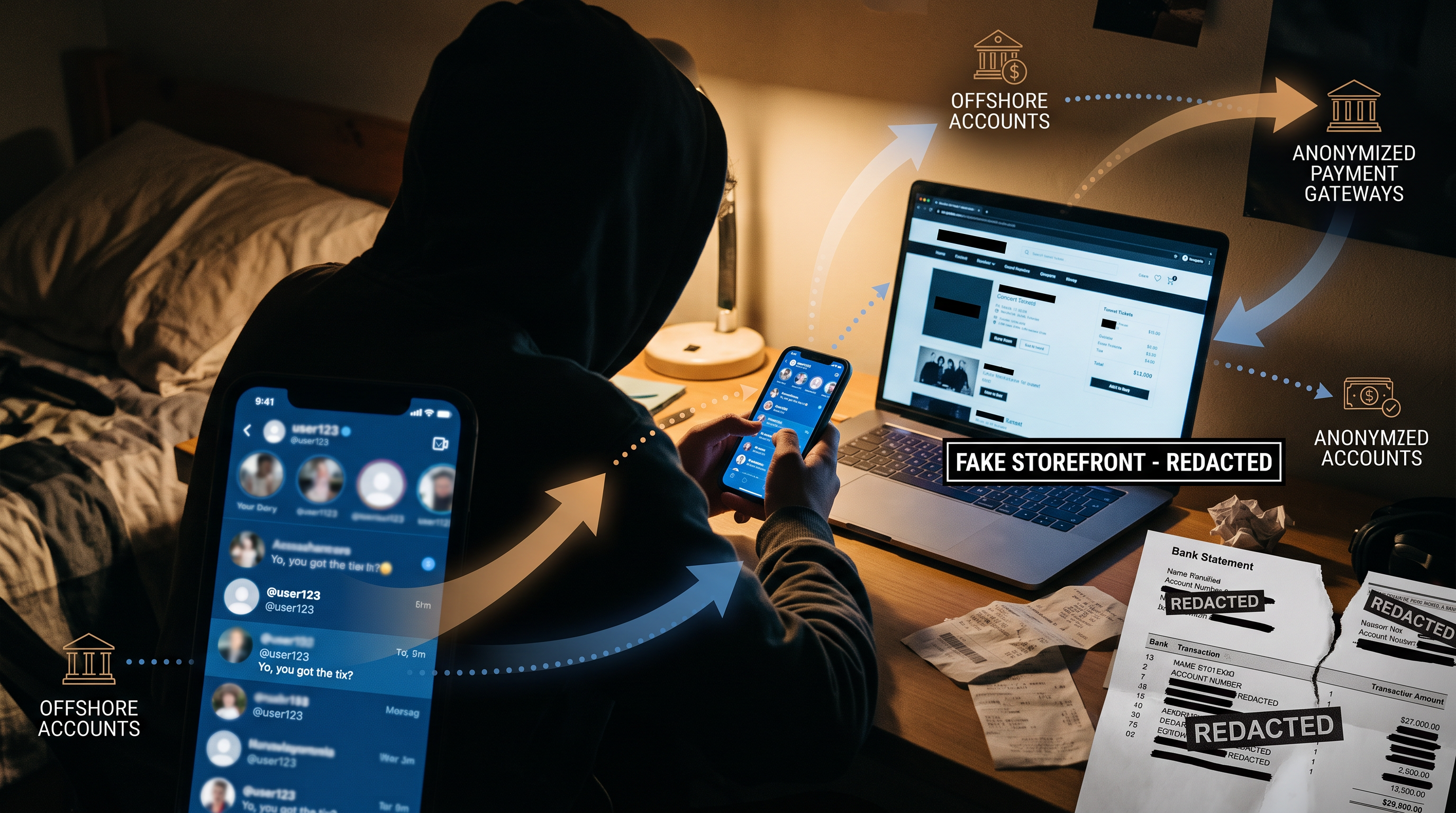
The mechanics of a typical deepfake celebrity scam follow a predictable but highly effective sequence. Understanding each stage helps consumers recognize a con before handing over money or personal information.
- Synthetic content creation: Scammers generate a video or audio clip of a celebrity announcing a fake giveaway, endorsing a cryptocurrency platform, or promoting a miracle investment return.
- Paid ad amplification: The clip is loaded into a social media ad account, often purchased or hijacked, and targeted at the celebrity’s known fan demographics.
- Comment farming: Automated accounts and hired commenters flood the post with fake testimonials and excitement, manufacturing social proof.
- Counterfeit landing pages: Clicks route victims to convincing replica websites that collect credit card details, crypto wallet addresses, or personal identification data.
- Subscription traps or direct theft: Some victims face repeated unauthorized card charges through hidden subscription terms. Others lose cryptocurrency instantly to wallets the fraudsters control.
High-Profile Cases Driving the Surge
Several cases have drawn widespread media attention and illustrate just how brazen these operations have become. CBS News reported on AI-generated ads using Taylor Swift’s likeness to promote fake Le Creuset cookware giveaways, tricking fans into entering personal and payment details on counterfeit sites. The ads spread rapidly before platforms took action, and copycat versions reappeared within days.
Deepfaked videos of Elon Musk have been used repeatedly to pitch bogus cryptocurrency platforms, with the synthetic clips presented as live-streamed announcements to create urgency. Bitdefender’s security research team documented a major wave of these campaigns, noting that creators and celebrities should pay close attention to how their digital likeness is being exploited at scale.
The BBC has also covered cases in which celebrity imagery was embedded in mass ad campaigns leading to subscription traps, with victims discovering recurring charges on their bank statements weeks after a single interaction with a fake promotion.
Why AI Makes These Scams More Dangerous Than Ever
The core danger is scalability. A fraudster no longer needs a sophisticated studio or technical expertise to fabricate a convincing celebrity endorsement. Consumer-grade AI tools available online can produce a clone of almost any well-documented public voice in minutes, and image synthesis has reached a point where static deepfakes are difficult to distinguish from genuine photographs without specialized detection software.
Generative AI also dramatically lowers the cost per victim. Because paid social ads can micro-target fan communities with surgical precision, scammers spend very little per impression while reaching exactly the audience most likely to trust a celebrity’s supposed message. This combination of low cost and high emotional trust creates an environment where even a small conversion rate generates substantial criminal revenue.
Regulator and Platform Responses
Both the FTC and Europol have issued public calls for faster takedowns of synthetic scam content, stronger identity verification on ad accounts, mandatory labeling of AI-generated media, and tighter Know Your Customer requirements on cryptocurrency payment onramps. The FTC’s consumer alert hub has flagged imposter scams, including celebrity deepfakes, as one of the fastest-growing fraud categories of 2026, with new trend reports published at consumer.ftc.gov.
Social media platforms remove many reported incidents, but the replacement rate is high. New ad accounts appear within hours of a takedown, and the synthetic content is often slightly modified to evade automated detection filters. Critics argue that the ad revenue generated by these campaigns creates a structural conflict of interest for the platforms tasked with removing them.
How to Protect Yourself From Deepfake Celebrity Scams
Awareness is the first and most important line of defense. The following steps significantly reduce your risk of becoming a victim.
- Verify through official channels only. If a celebrity is supposedly giving something away, check their verified official website and authenticated social profiles before clicking any link in an ad.
- Never pay with gift cards or unknown crypto wallets. No legitimate giveaway or investment platform asks for payment in gift card codes or requires you to send cryptocurrency to claim a prize.
- Look for off details in the video. Deepfakes often show unnatural blinking, slight lip-sync delays, blurry ear or hair edges, and inconsistent lighting around the face and neck.
- Treat urgency as a red flag. Scam ads almost always create artificial time pressure. Legitimate promotions do not expire in the next 10 minutes.
- Preserve evidence before reporting. Take screenshots and note the URL, time, and platform before you report. This metadata helps investigators trace the campaign.
- Report to the platform and to authorities. File a complaint at ReportFraud.ftc.gov and, for significant financial losses, submit a report to the FBI Internet Crime Complaint Center (IC3).
For ongoing protection and to check whether a person or platform has already been flagged by other users, tools like Blacklist let you search reported scam accounts and share warnings with the wider community.
The Stakes for Celebrities and Their Fans
The reputational damage extends well beyond individual victims. Celebrities whose likenesses are abused without consent face fan distrust, brand dilution, and the exhausting legal work of issuing public denials for schemes they knew nothing about. Many have taken to their own social channels to warn followers, but those warnings compete with the paid reach of the very ads they are trying to debunk.
For fans, the emotional betrayal compounds the financial loss. Believing you received a direct offer from an admired public figure and then discovering it was a machine-generated lie causes real psychological harm, and victims are often reluctant to report because they feel embarrassed. That silence protects the fraudsters and allows the same campaigns to run longer.
Conclusion and Call to Action
Deepfake celebrity scams represent one of the most serious and fast-moving consumer fraud threats of the current era. Generative AI has handed criminal operators a near-unlimited supply of convincing synthetic media, and the paid advertising infrastructure of major social platforms gives them the reach to deploy it globally within hours. Regulators are pushing for systemic fixes, but those changes will take time. Right now, the best protection is an informed public that knows how to question what it sees online.
If you encountered a deepfake celebrity scam or suspect one, report it immediately to the FTC at ReportFraud.ftc.gov and flag the ad directly on the platform where you saw it. Share this article with friends and family who follow celebrities online. The more people who recognize the warning signs, the harder these schemes become to run profitably.
Frequently Asked Questions
How can I tell if a celebrity video online is a deepfake?
Look for subtle visual glitches such as uneven blinking, slight mismatches between lip movement and audio, blurry or flickering edges around the hair and ears, and inconsistent skin tone under different lighting within the same clip. When in doubt, search for the same announcement on the celebrity’s verified official accounts before taking any action.
What should I do if I already gave my card details to a deepfake scam site?
Contact your bank or card issuer immediately to dispute charges and request a new card number. File a report with the FTC at ReportFraud.ftc.gov and with the FBI IC3 at ic3.gov. Also monitor your credit report for signs of identity fraud in the weeks that follow.
Are social media platforms legally required to remove deepfake scam ads?
Current legal requirements vary by country. In the United States, platforms are not automatically liable for third-party ad content under Section 230, though that debate is ongoing. Regulators including the FTC and Europol are actively pushing for new rules requiring faster removal and stronger advertiser verification standards.
Can celebrities sue scammers who use their deepfaked likeness?
Yes, celebrities can pursue civil claims under right-of-publicity laws and, in some jurisdictions, under new statutes specifically targeting AI-generated impersonation. However, many scam operations run from overseas or behind layers of anonymized accounts, making identification and enforcement difficult in practice.
Why do these scams keep coming back after platforms remove them?
Scam operators maintain large inventories of ad accounts and slightly modified versions of their synthetic content. When one account is removed, another is activated within hours. Until platforms require stronger identity verification at account creation and mandate labeling of AI-generated media, the replacement cycle is extremely fast and low-cost for the fraudsters.