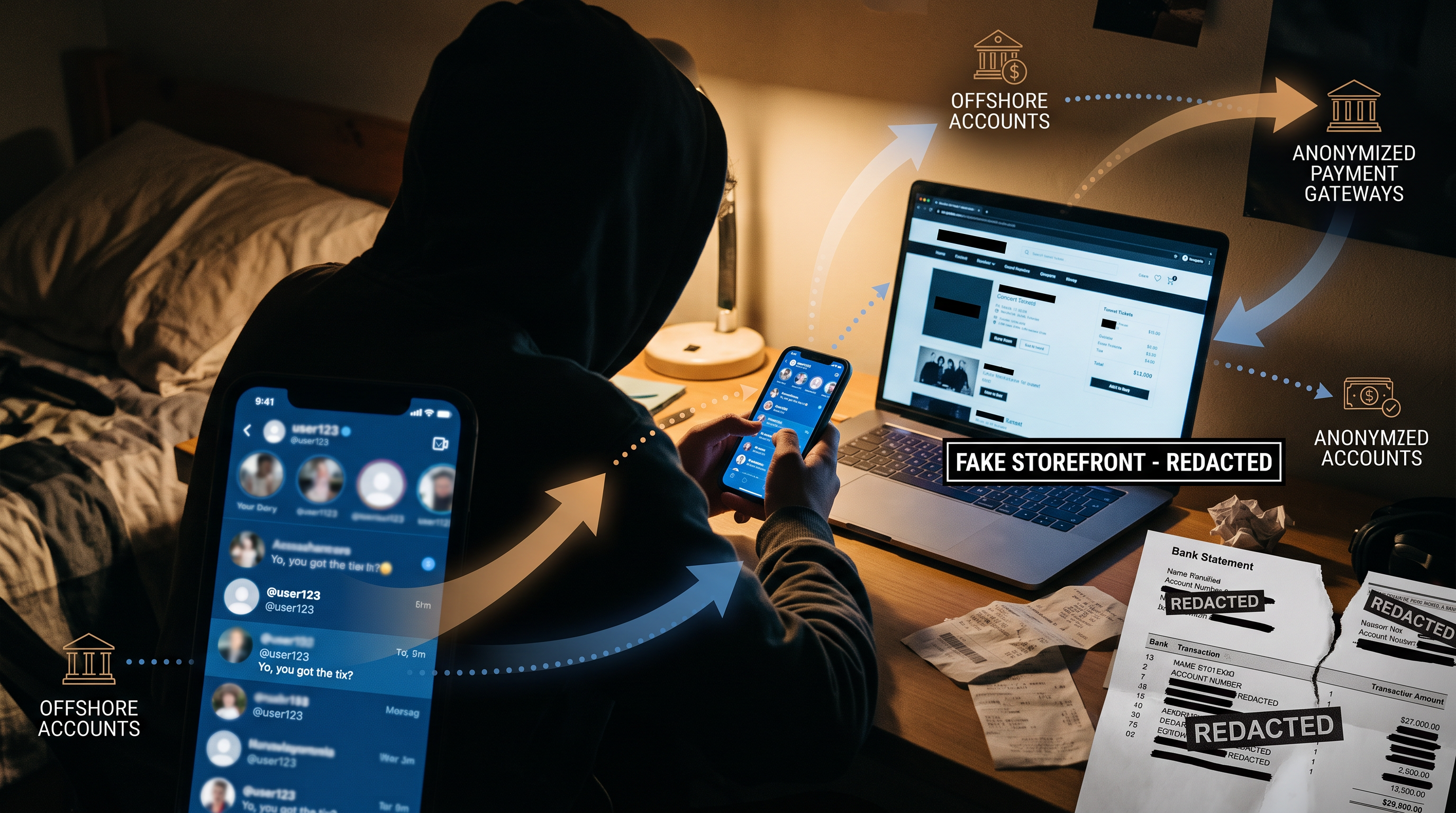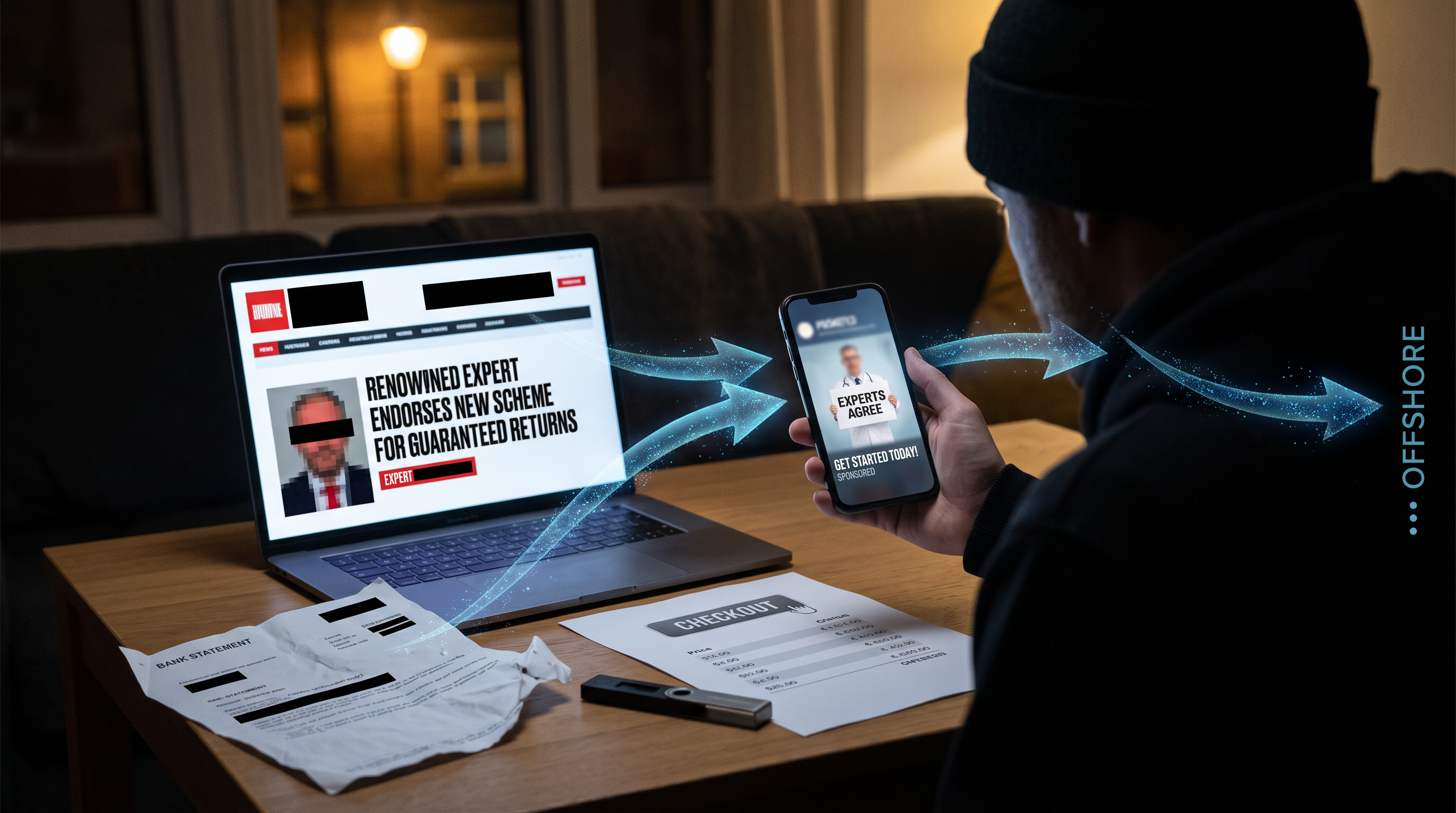
Fraudsters have turned UK consumer champion Martin Lewis into one of the most impersonated figures in online financial fraud. Scammers are running large-scale paid ad campaigns across social media and search platforms, using AI-generated deepfake videos, cloned news websites, and fake press styling to make bogus investment offers appear legitimate. According to The Guardian, victims have been tricked into handing over their life savings, with losses running into the millions.
Key Facts
- Fraudsters are impersonating Martin Lewis, founder of MoneySavingExpert, in fake paid social and search ads to promote bogus investment schemes, with losses estimated in the millions, according to MoneySavingExpert and The Guardian.
- Scam campaigns use AI-generated deepfake video and voice clips of Martin Lewis to simulate endorsements he has never given, as reported by the BBC in 2026.
- Cloned news pages mimicking reputable UK outlets are used to route ad clicks to fraudulent landing pages that pressure victims into bank transfers or crypto payments.
- Meta announced legal action against scam advertisers running fake celebrity ad campaigns in February 2026, according to Meta's official newsroom.
- Martin Lewis has repeatedly and publicly stated he never endorses commercial investments, and MoneySavingExpert maintains a dedicated page warning consumers about fake ads using his identity.
How the Martin Lewis Fake Ad Scam Works
The Martin Lewis fake ad scam follows a well-structured playbook designed to exploit trust at every step. Attackers start by purchasing paid ads on platforms such as Facebook, Instagram, and Google. These ads feature either stolen images of Martin Lewis or AI-generated deepfake video clips that make it appear as though he is recommending an investment platform or financial product.
Clicking the ad does not take the victim to a real news article. Instead, they land on a cloned webpage designed to look like a BBC News article, a Guardian feature, or a MoneySavingExpert post. The fake page reinforces the fraudulent endorsement with fabricated quotes and professional-looking formatting.
From there, a persuasive landing page pressures the visitor to deposit funds, typically by bank transfer or cryptocurrency, into a platform that does not exist or is not regulated. Once money is sent by these irreversible methods, recovery is extremely difficult.
Deepfake Technology Is Making the Scam Harder to Spot
What separates the current wave of Martin Lewis impersonation scams from earlier versions is the quality of the synthetic media being deployed. Earlier scams relied on poorly photoshopped images or out-of-context clips. Today, scammers use AI-generated video and voice synthesis to create convincing footage of Martin Lewis apparently speaking directly to camera about a specific product.
This is not an isolated tactic. Similar deepfake campaigns have targeted other public figures, and readers who want context on how this method is used more broadly can read about a documented AI deepfake investment scam that cost one victim $250,000. The pattern of using a celebrity face to sell a fake financial product is consistent across dozens of documented cases.
Detecting deepfake artifacts requires looking for subtle visual glitches such as unnatural blinking, lip-sync mismatches, and inconsistent lighting around the hairline. Most consumers do not know to look for these signs, which is exactly what fraudsters are counting on.
Why Platforms Struggle to Stop These Ads
Ad review systems at major platforms are largely automated. Fraudsters have learned to submit ads that pass initial review by using benign creative assets, then swap in the scam content after approval. Some campaigns rotate multiple ad creatives to avoid detection patterns.
Meta announced in February 2026 that it was taking legal action against scam advertisers running fake celebrity endorsement campaigns on its platforms. While this signals increased awareness, the volume of new fake accounts and ad accounts being created continues to outpace enforcement.
Martin Lewis himself has called on platforms to do more, telling The Guardian that the scale of impersonation fraud is destroying people's financial security and that platforms are profiting from ads they should be blocking. He has also pursued legal options, though the cross-border nature of many fraud operations complicates enforcement.
The Real Financial Damage to Victims
Victims of the Martin Lewis fake ad scam are not a small or unsophisticated group. Many are financially aware people who trust Martin Lewis precisely because of his long record of consumer advocacy. The fake endorsement provides enough social proof to bypass their usual caution.
Losses are often total. Because most payments are made by bank transfer or crypto, chargebacks are not available and banks treat the transfers as authorised payments. Some victims have reported losing their entire retirement savings in a single transaction.
This mirrors the experience of victims in other high-profile celebrity impersonation scams. A similar pattern was documented in a case involving Mark Cuban deepfake ad scams, where victims were funnelled into fake investment platforms through manipulated video content.
How to Protect Yourself from Celebrity Endorsement Scams
The most important rule is straightforward: a celebrity appearing in an ad does not mean that celebrity endorses the product. Martin Lewis has said publicly and repeatedly that he does not endorse investment products. If you see his face or name attached to one, it is a scam.
Here is what you can do to protect yourself:
- Go directly to the official MoneySavingExpert website at moneysavingexpert.com to verify any claim before acting on it.
- Search the name of any investment platform you are offered on the FCA register at fca.org.uk to confirm it is regulated.
- Never send money by bank transfer or cryptocurrency to a platform you found through an ad.
- Screenshot the ad and the landing page immediately. This evidence is critical for reporting.
- Report fake ads directly to the platform where you saw them using the in-app reporting tools.
- Report the fraud to your bank immediately, then to the FTC or, if you are in the UK, to Action Fraud.
- File a complaint with the FBI's Internet Crime Complaint Center (IC3) if you are based in the US and have lost money.
What Regulators and Platforms Must Do Next
The Martin Lewis fake ad scam is a symptom of a wider failure in ad ecosystem accountability. Platforms earn revenue from every ad impression, including fraudulent ones. There is currently no consistent requirement for platforms to verify the identity of advertisers before allowing financial promotion ads to run.
Regulators in the UK, including the FCA and the ASA, have increased pressure on platforms to take responsibility for paid financial promotions. The Online Safety Act introduces new obligations, but enforcement timelines remain slow relative to the speed at which fraud campaigns are launched.
Consumer groups are pushing for real-time ad library transparency, mandatory identity verification for financial advertisers, and faster takedown requirements with financial penalties for non-compliance. Until those measures are in place, the burden falls heavily on consumers to stay alert.
Frequently Asked Questions
Is Martin Lewis promoting investment platforms online?
No. Martin Lewis has stated clearly and repeatedly that he does not endorse commercial investment products. Any ad, video, or article claiming he recommends an investment platform is fraudulent. Verify all claims directly on his official site at moneysavingexpert.com.
How can I tell if a Martin Lewis investment video is a deepfake?
Look for visual inconsistencies such as unnatural blinking, lips that do not sync precisely with the audio, and odd lighting or blurring around the edges of the face. If the video appeared in a paid ad and is promoting a financial product, treat it as a scam regardless of how convincing it looks.
What should I do if I already sent money to a fake investment platform?
Contact your bank immediately and explain you have been the victim of fraud. Then report the incident to Action Fraud in the UK, or to the FTC at reportfraud.ftc.gov and the FBI IC3 at ic3.gov if you are in the US. Gather all screenshots and transaction records before you call.
Why are these scam ads so hard for platforms to remove?
Fraudsters exploit automated ad review systems by submitting compliant-looking creatives initially, then switching to scam content after approval. They also create new ad accounts faster than platforms can ban them. Meta has begun legal action against some scam advertisers, but the overall volume of fake accounts remains high.
Can I get my money back if I was scammed by a fake Martin Lewis ad?
Recovery is difficult but not always impossible. If you paid by bank transfer, your bank may be able to recall the payment if you act quickly. Cryptocurrency payments are generally unrecoverable. The UK's authorised push payment fraud reimbursement rules, introduced in 2024, mean some bank transfer victims can now receive refunds from their bank, but this depends on the circumstances.